The Problem
Most houses in Rogers went up between 1987 and 2013
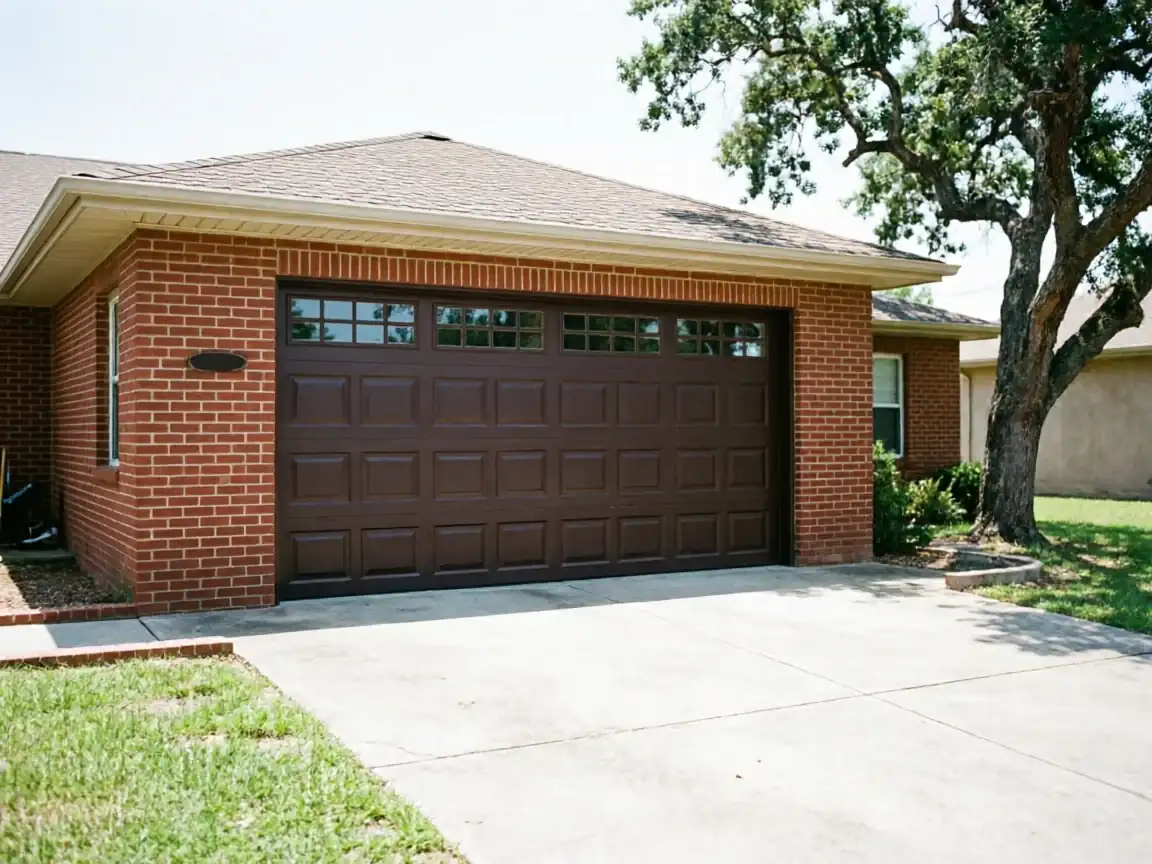
With the typical build year landing around 1997. That's the window a lot of production builders were still hanging single-layer steel doors - one sheet of 24 or 26 gauge metal, a seam of ribs stamped in for rigidity, and nothing behind it. No foam, no vapor barrier, no second skin. It kept the price of the house down, and the door did its job: it kept rain and raccoons out. It was never built to keep temperature in.
That door is now anywhere from a dozen to thirty-plus years old
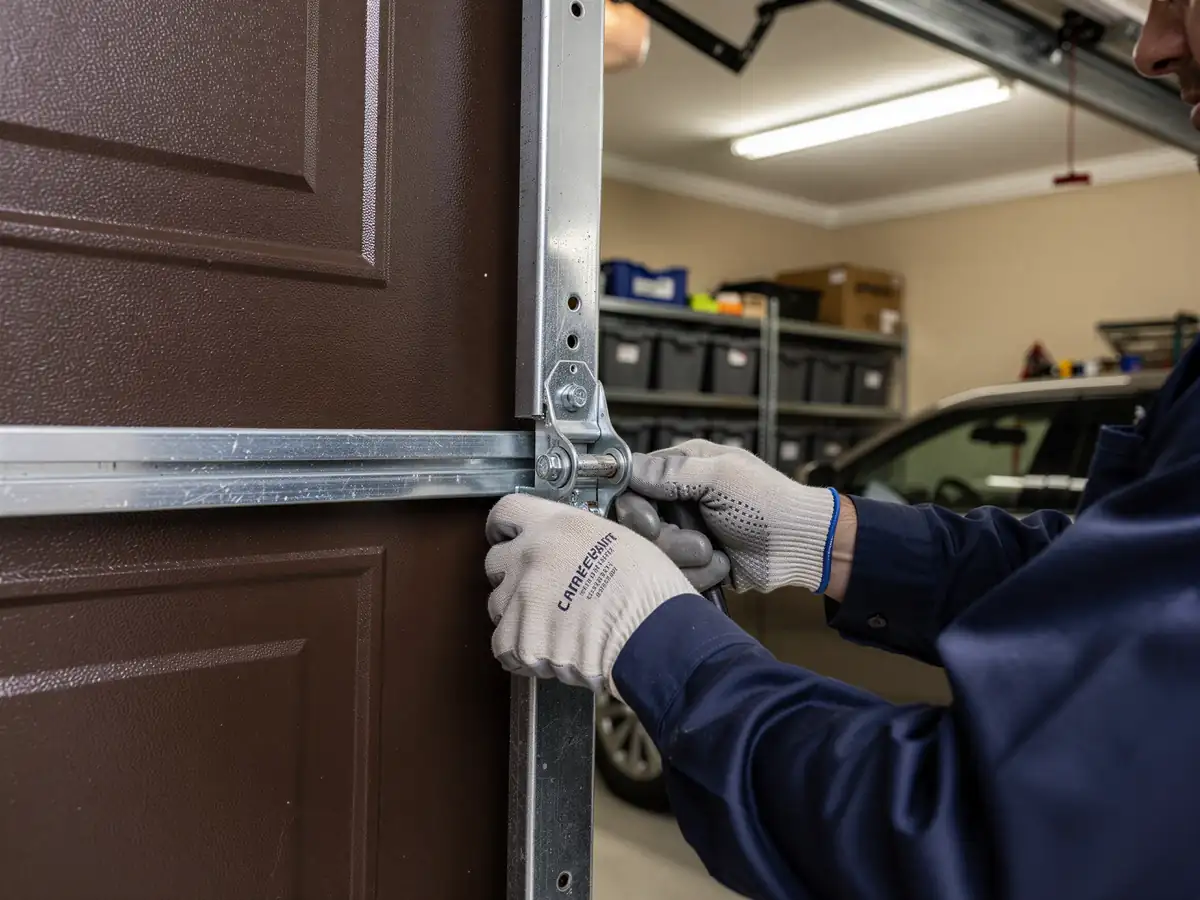
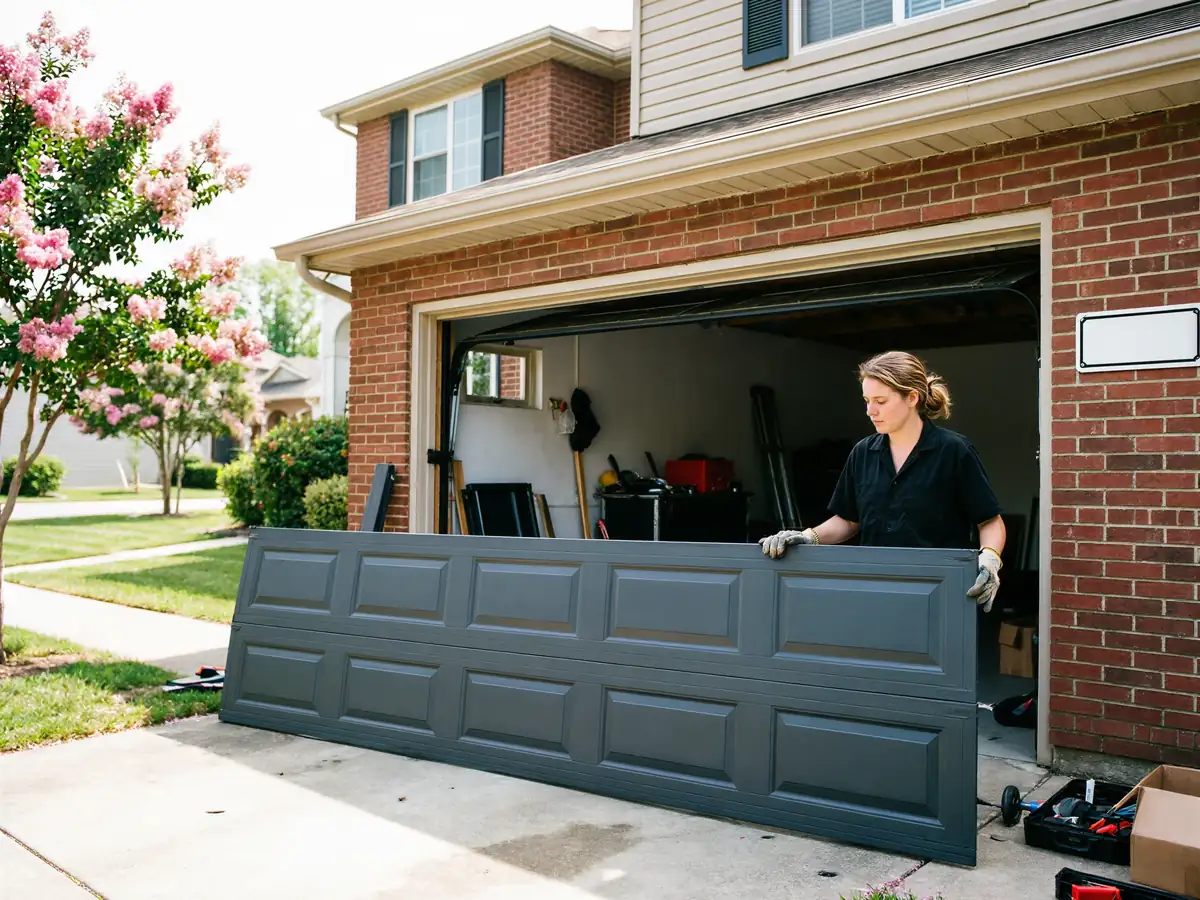
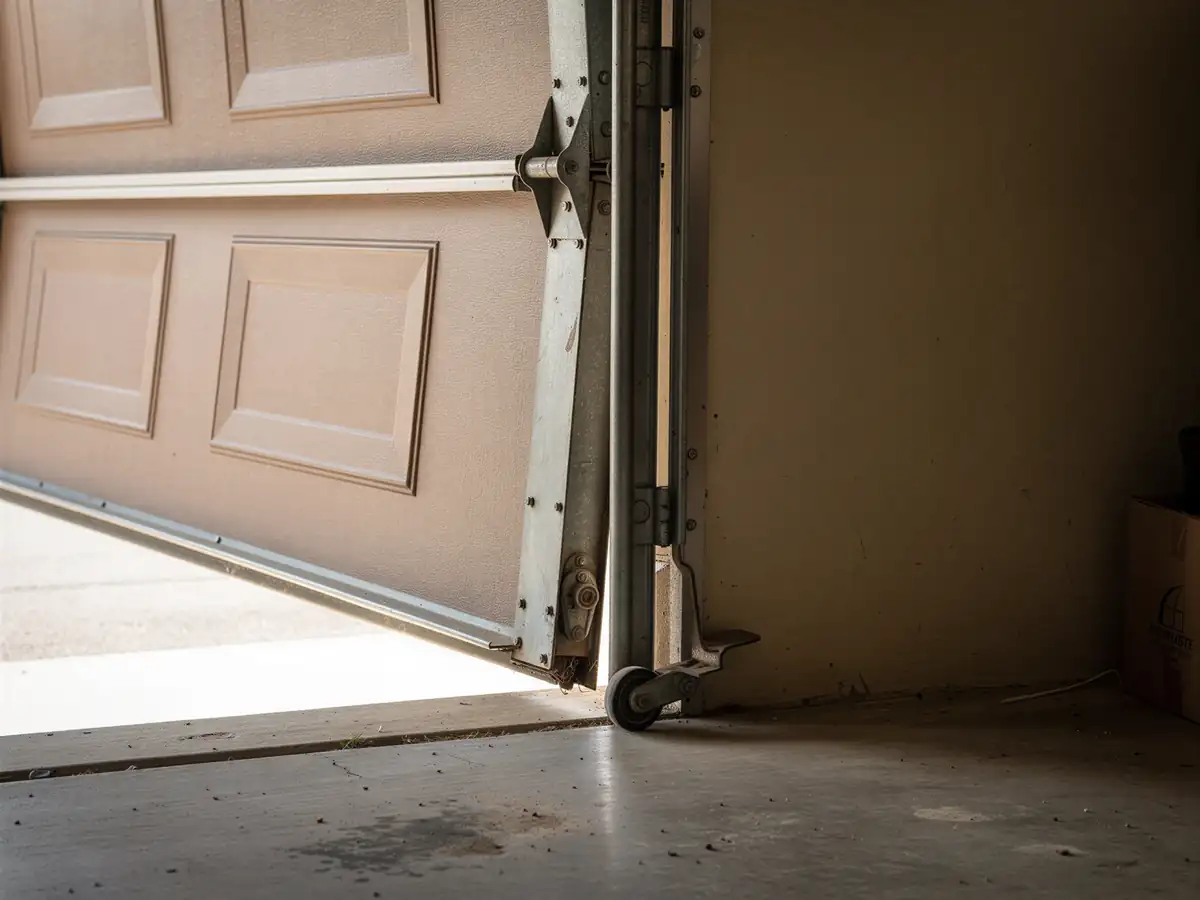
The steel doesn't rust through fast, so a lot of owners assume it's fine. What actually fails first is everything attached to it - the weatherstrip at the bottom, the seals at the jambs, the hinges where a thin panel flexes more than a thick one. On an insulated door, the extra skin adds stiffness that keeps the panel from racking. On a bare single-layer door, every slam and every gust works the hinges a little looser over the years.
The honest limit here
If the panel itself isn't bent or rusted through, insulating it after the fact rarely makes sense. Retrofitting foam into an old single-skin door is a patch, not a fix, and most of the time a new insulated panel costs about the same as doing it right.
How Local Conditions Play In
Rogers sits in a climate band that's cold-moderate - not the deep freeze of the upper Midwest, but enough real winter that an uninsulated garage swings from a humid summer afternoon to a hard overnight freeze more than once a season. That swing is what a single-layer steel door handles worst. Metal conducts heat and cold straight through, so the inside face of the door can run close to outdoor temperature even with the heat on in the house.
The practical result shows up as condensation on the inside of the panel on cold mornings, water finding the bottom seal and freezing it to the slab, and anything stored near the door - paint, batteries, a second fridge - living through bigger temperature swings than it should. If you've looked at the same flat steel panel on a neighbor's garage in Lowell or Cave Springs, a few miles down the road, you've probably seen the identical trim and the same hairline rust starting at the bottom corners. Same build era, same door, same weak points.
None of this means the door is unsafe. A cold garage with an uninsulated door isn't a structural problem. It's a comfort and moisture problem, and it's one that tracks directly back to when the house - and the door - went in.
Checking It Yourself
You can tell in under five minutes whether your door has any insulation at all. Open it partway and knock on the inside face of a panel. A hollow, tinny sound means bare steel. A dull thud means there's a foam core behind the skin. You can also look at the edge of a panel from inside the garage - insulated doors usually show a second thin steel or vinyl backing a half inch or so behind the front skin, with foam sandwiched between.
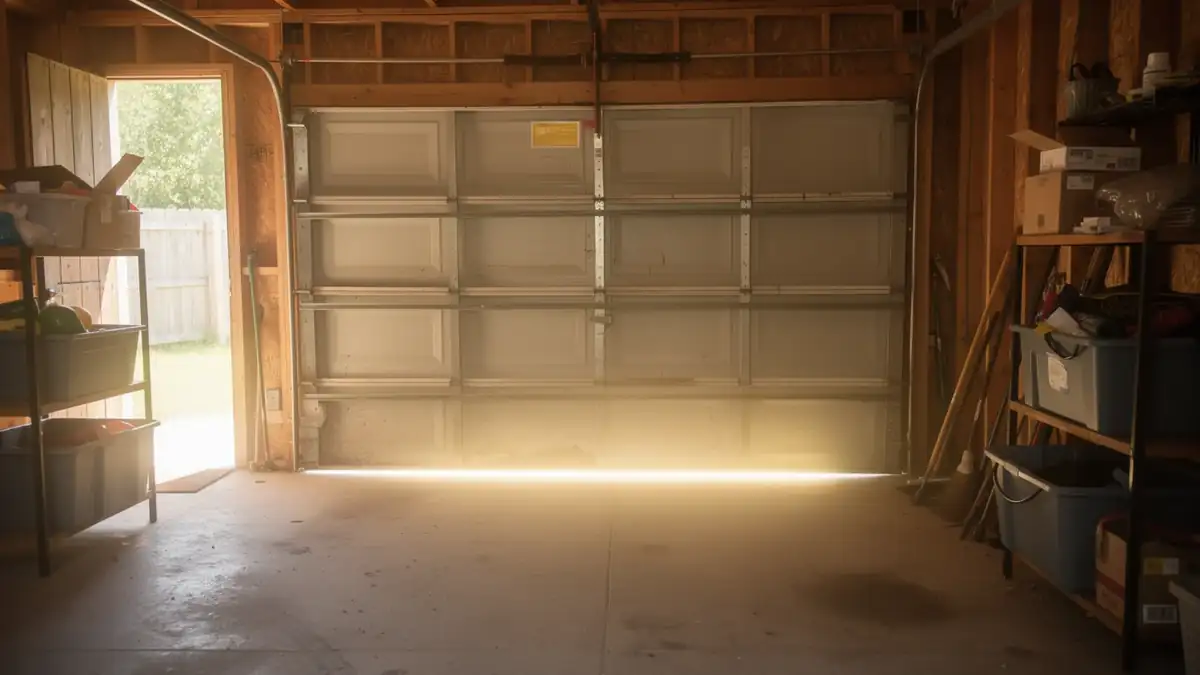
Check the weatherstrip at the bottom while you're down there. On a door from the late 1980s or 90s, that rubber strip has likely been replaced once already, or needs it now - it's usually the first thing to crack and let daylight, cold air, and water underneath.
Last thing worth fifteen seconds: run a hand along the inside of the top panel on a cold morning. If it's noticeably colder than the wall next to it, that's your uninsulated door telling you exactly what it is. This isn't a diagnosis that needs a truck and a toolbox - it's a thing you can confirm standing in your own garage.
The Cost of This Job
We don't have a flat number to hand you here
Because the range depends on door size, whether the opener and hardware are being reused, and what insulation level you're after. What we can tell you is how the decision usually breaks down for houses in this build-year range.
Across the service area there are roughly 28,308 owner-occupied houses out of about 40,545 households
And a lot of them share this same 1987-to-2013 door. If your panel is straight, the track is good, and the springs are sized right, swapping in an insulated door without touching the rest of the system is usually the lower-cost path. If the hinges are loose, the track is dented, or the opener is original too, you're often better served pricing the whole assembly at once rather than insulation alone.
- 28,308 owner-occupied
- 40,545 households
Median household income in the area runs around $87,150
Which is the kind of number that supports doing the job once, correctly, rather than patching a 25-year-old door every other winter. Ask for a number specific to your door and opener before you decide anything - don't let a general estimate stand in for a look at your actual garage.