The Problem
When the power drops, the opener drops with it
That's true everywhere, but in Rogers it matters more than people expect, because most of the opener installs we see in the 17 neighborhoods around town date to homes built between 1987 and 2013, with the median landing at 1997. A lot of those openers were installed with the house and never had a battery backup to begin with - that feature wasn't standard equipment on mid-grade units through most of that build window. So when a storm knocks the circuit out, the door stops wherever it was in its travel. If it was closing, it's closed, and the car inside is stuck. If it was open, the door won't shut, and the house sits open until someone pulls the manual release.
- 17 neighborhoods
The other half of this problem is the breaker, not the opener
A lot of garage circuits in homes from that era share a line with a freezer, a shop light, or an outlet bank. One tripped breaker and the opener looks dead even though nothing's actually broken. We get calls for 'opener failure' that turn out to be a breaker flipped by something else in the garage entirely.
How Local Conditions Play In
Rogers sits in a moderate-cold climate band, not the deep-freeze zone further north, but still cold enough that winter storms are the real driver behind most of the power cuts that strand these openers mid-cycle. Ice on the lines, wind load on a transformer, a short outage while crews reset a feeder - any of it drops power to the garage circuit, and the opener just stops where it is.
The housing stock plays into this too. Homes built in that 1987-2013 window, clustered mostly in the 1980s-and-90s wave across this area, were wired to the code and habits of their decade. Battery backup on garage door openers became common later than that median 1997 build year, so a lot of these houses are running openers that were never built to ride out an outage on their own. Add a winter storm that knocks power out for a stretch, and you've got a door that won't move until either the grid comes back or someone goes to the manual release by hand. This isn't a defect - it's just what the equipment was designed to do, and not do, at the time it went in.
Checking It Yourself
Before you call anyone, there are three things worth checking yourself.
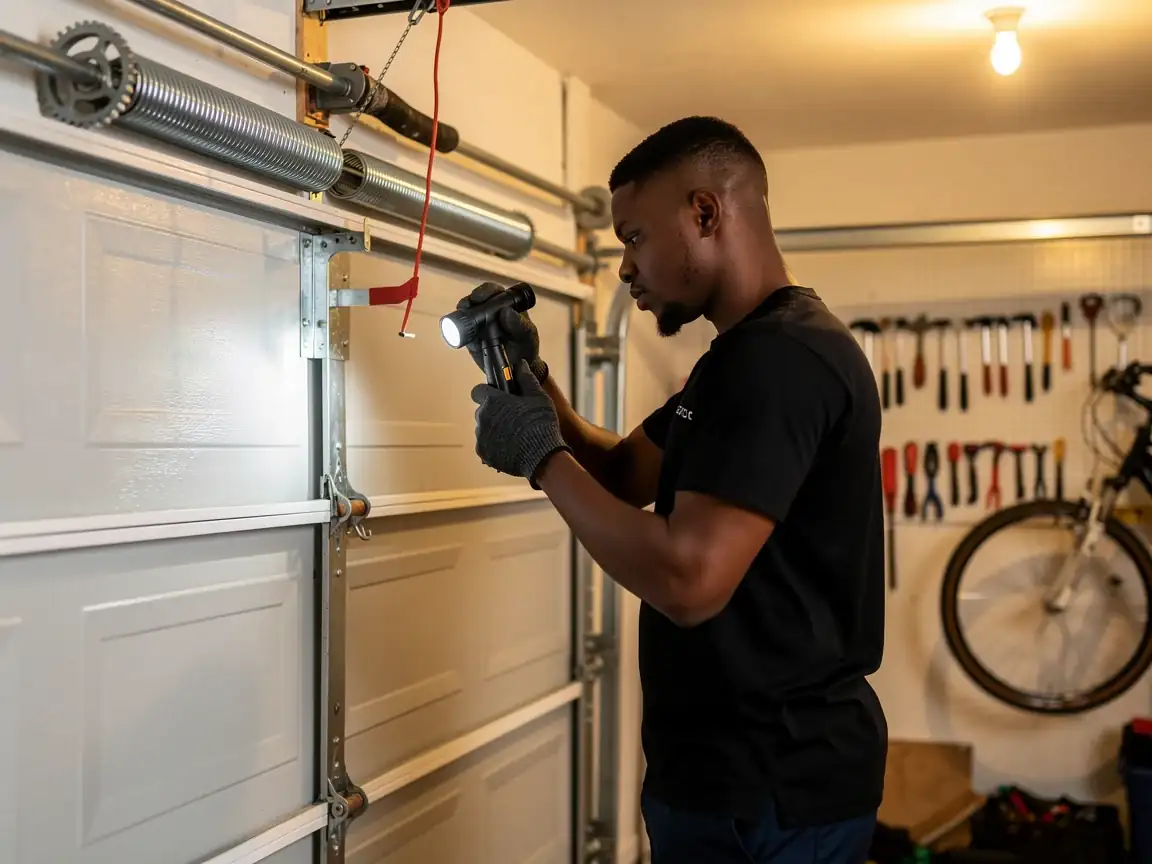
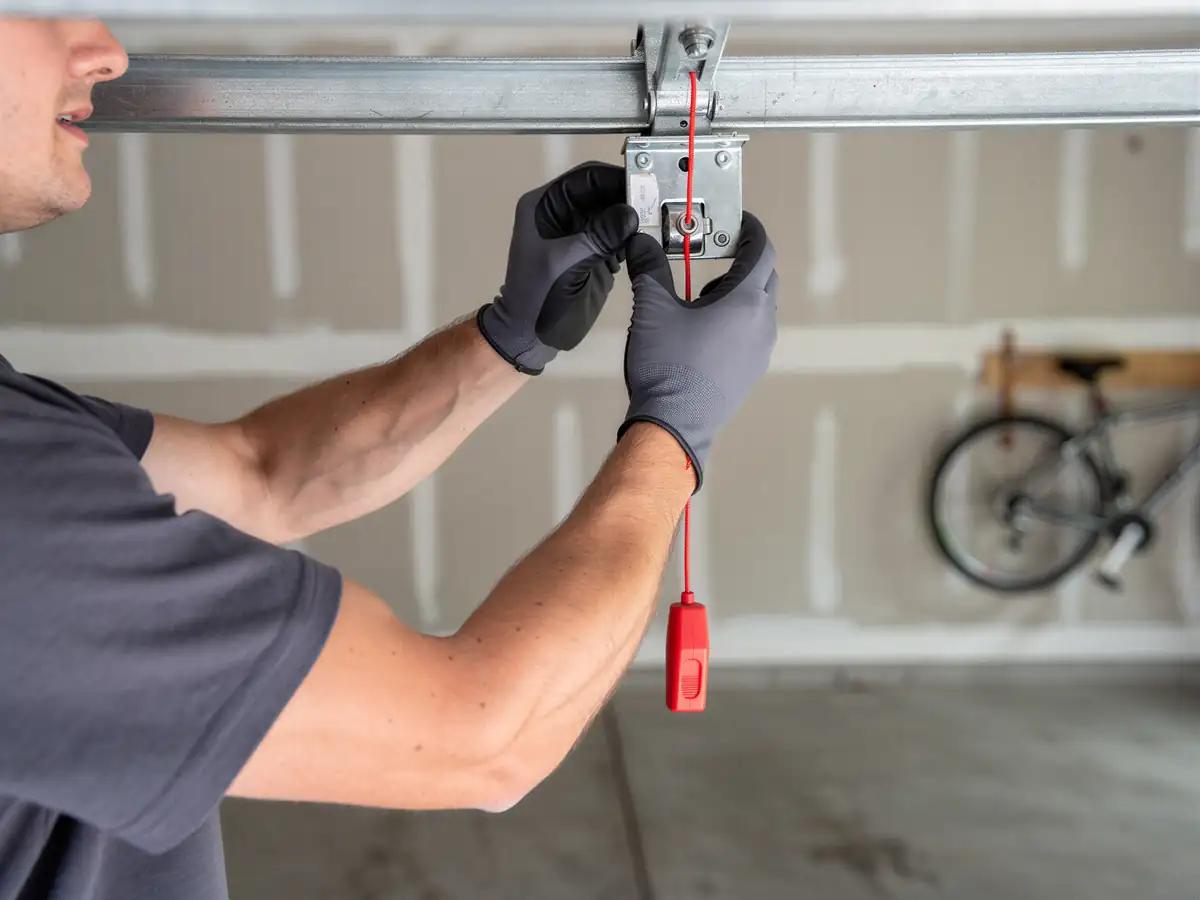
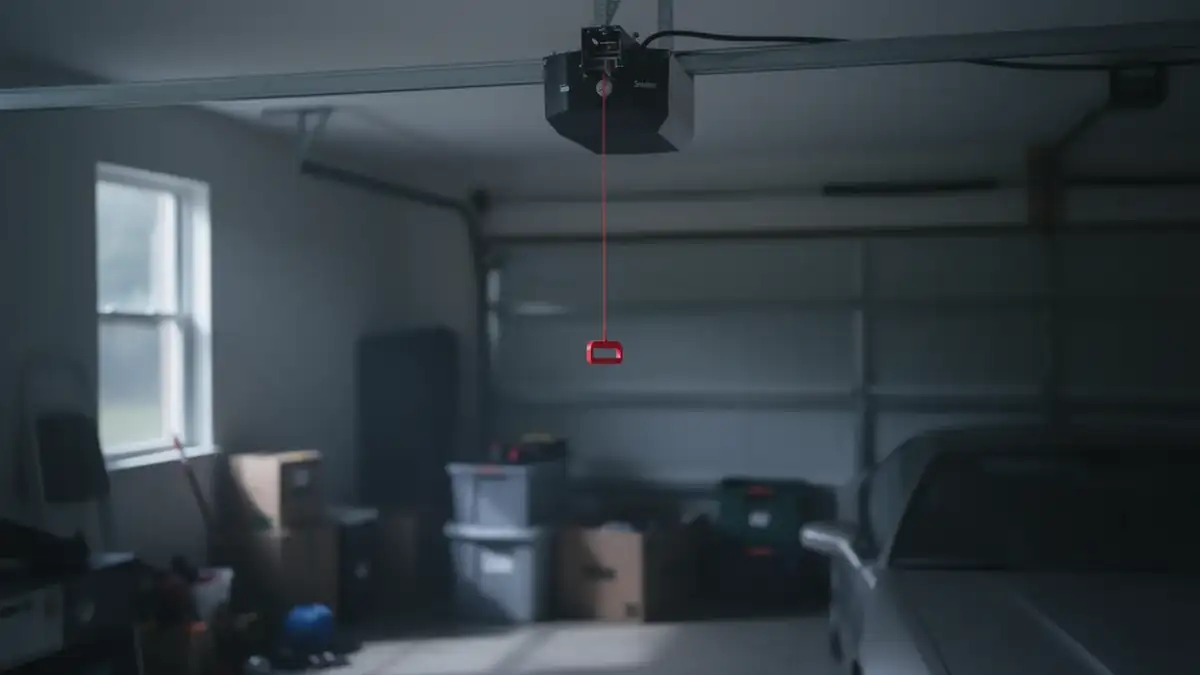
First, find the manual release - the red cord hanging from the trolley on the opener rail. Pull it and the door disengages from the opener so you can lift it by hand. This is how you get a car out during an outage, and it's worth knowing where it is before you actually need it in the dark.
Second, check the breaker panel, not just the opener. If the garage circuit trips from something else in the garage, the opener looks dead but there's nothing wrong with it. Reset the breaker and see if the opener comes back before you assume it's broken.
Third, if your opener does have a battery backup unit - usually a small box mounted next to the opener head - check whether its indicator light is lit. These batteries degrade over a few years and often fail silently, so the first time you learn it's dead is during the outage when you need it.
None of this fixes a bad circuit board or a worn logic board, but it rules out the two most common false alarms before you spend money on a service call.
The Cost of This Job
We don't have a flat number to hand you here
Because the cost depends on what's actually wrong - a tripped breaker costs nothing, a dead backup battery is a part swap, and a board that's failed from a power surge during an outage is a different repair than either of those.
What we can tell you honestly
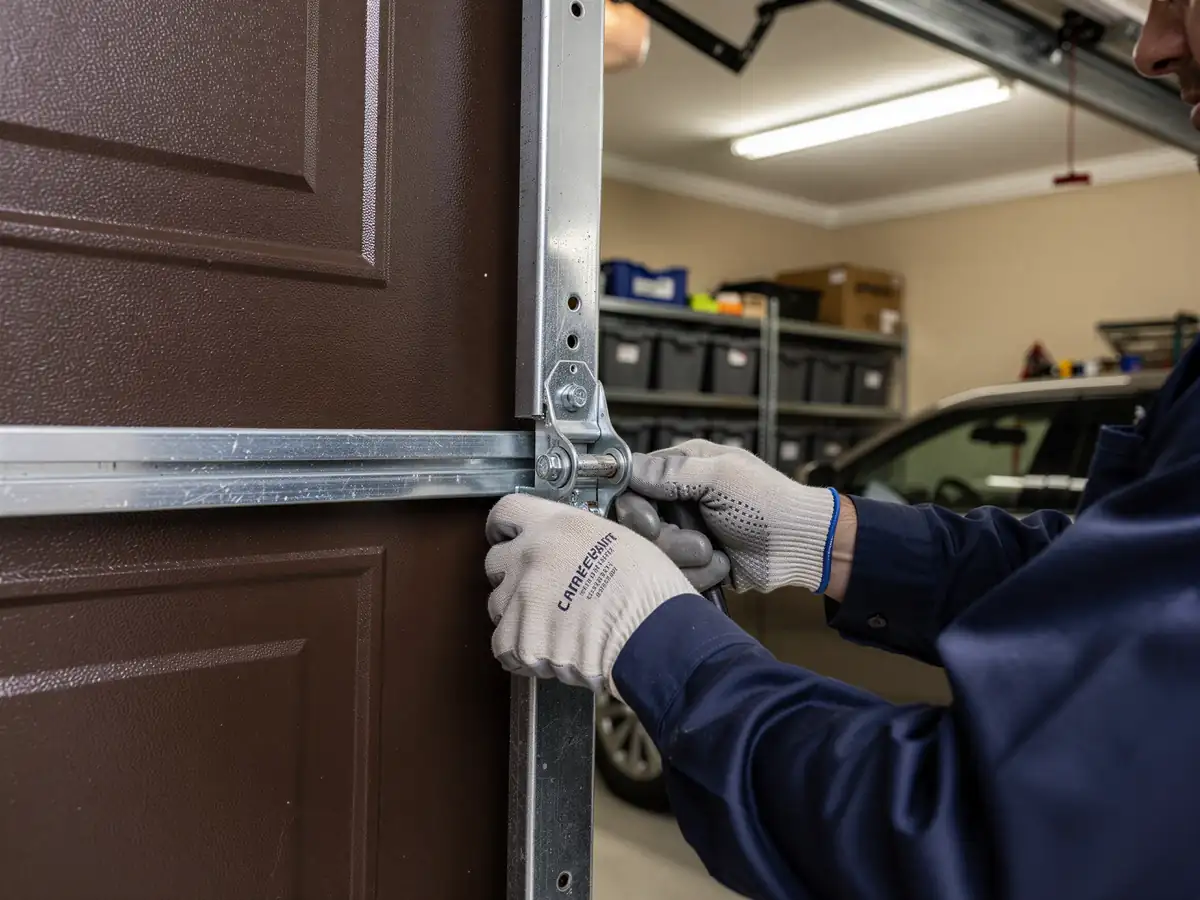
We work on the opener and its wiring up to the outlet or junction box. If the problem traces back into the breaker panel itself or the home's main electrical service, that's outside what we do, and we'll say so rather than poke around in a panel we're not licensed to touch. That's the one limitation worth knowing up front - call an electrician for panel-level work, and call us for the opener, the drive, the backup unit, and anything on the garage door side of the outlet.
For houses in this area built in that 1987-2013 stretch
The most common fix after a power-cut call isn't a full opener replacement - it's either a breaker reset, a battery backup swap, or occasionally a logic board that took a hit from the surge when power came back on. Replacement only makes sense when the opener itself is old enough that parts are getting hard to source.