The Complications
Most houses across the Rogers service area went up between 1987 and 2013
With the median build year sitting around 1997. That's a specific window for garage door hardware: extension and torsion spring setups from that era are now 10 to 35 years old, well past the rated cycle count on the original springs, and the galvanized coating on a lot of that hardware has started to flake. Across the 17 named areas in this service territory, the stock is mostly 1980s-90s construction, which means openers from that generation too - chain-drive units with worn sprockets, logic boards that have outlived their relays, and safety sensors that were bolted on as an afterthought rather than built in.
- 35 years
The cold-moderate climate band this region sits in adds its own wear pattern
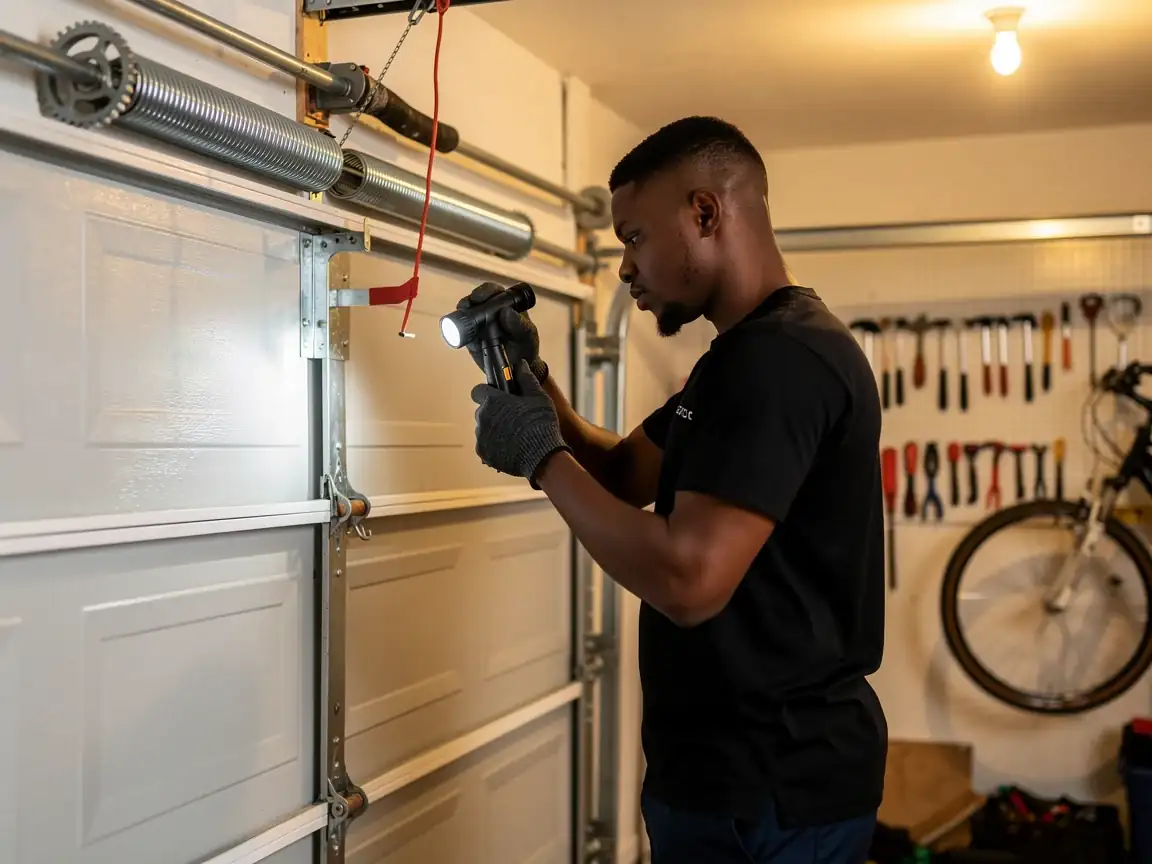
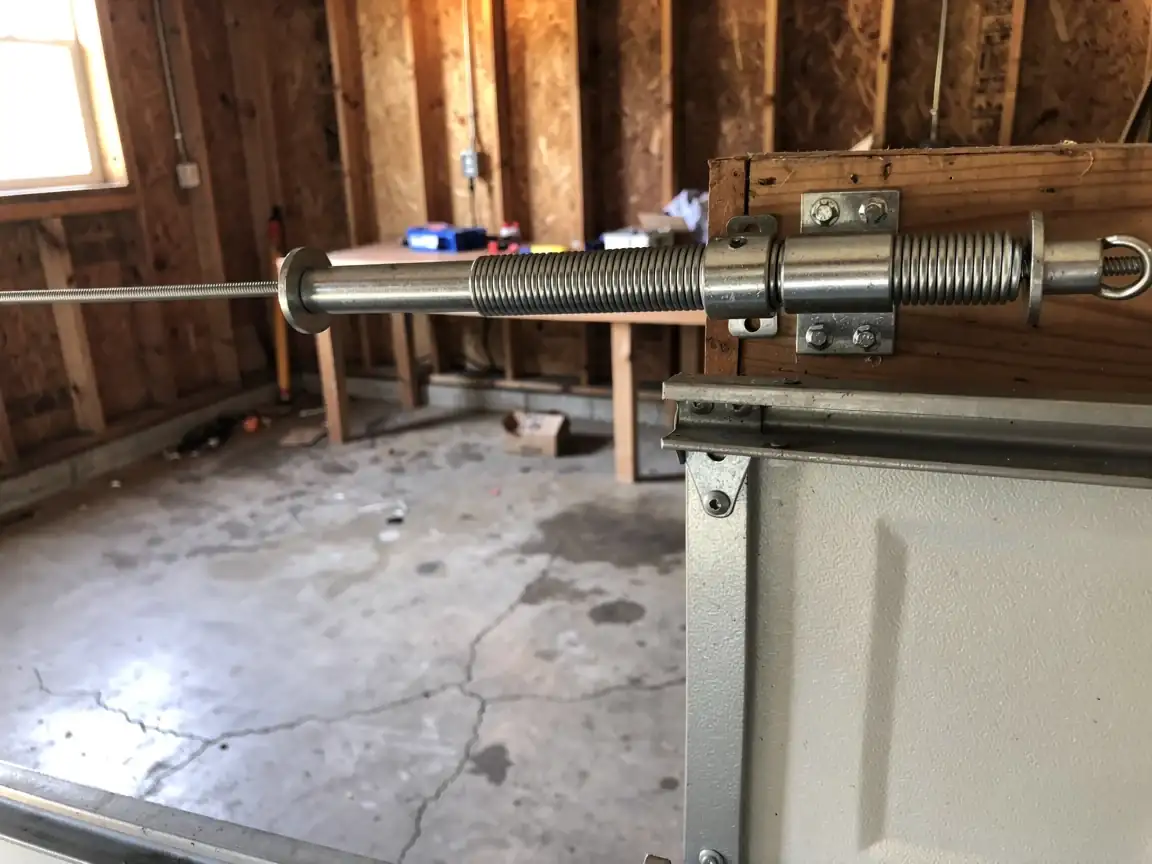
Steel track and torsion bars contract in winter cold snaps and expand again through humid summer stretches, and that cycling loosens track bolts and bends roller brackets faster than a steady-climate house would see. None of this shows up as a dramatic failure overnight. It shows up as a door that's a little harder to lift by hand, an opener that strains a bit longer before the chain catches, a spring that's lost just enough tension that the door doesn't sit flush anymore.
A maintenance visit is built around catching that drift before it becomes a broken spring or a jammed track at 6am
The Symptom
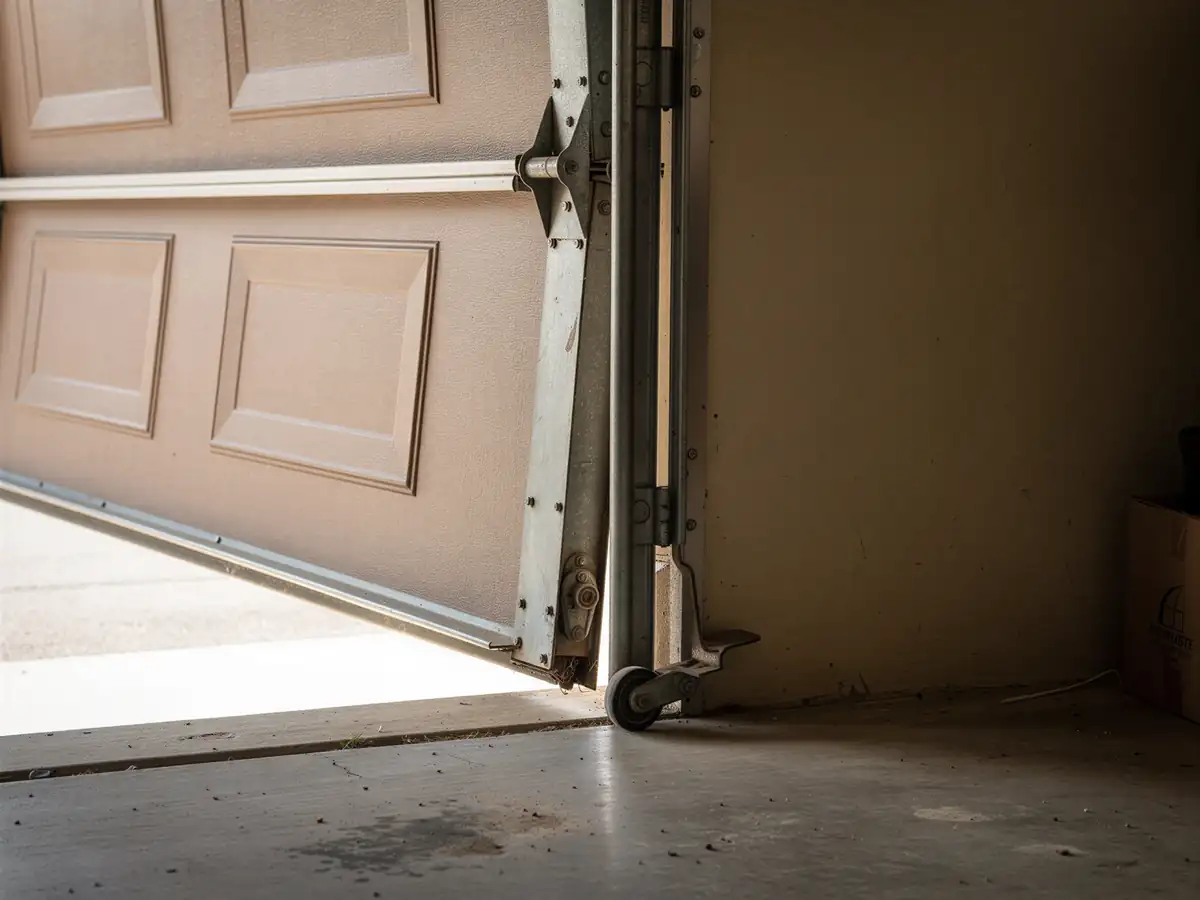
The complaint we hear is rarely "my garage door is broken." It's smaller than that. The door closes a half-inch crooked. It bangs on the way down instead of settling. The opener motor runs a beat longer than it used to before the door actually moves. Someone notices the door feels heavier when they lift it manually during a power outage.
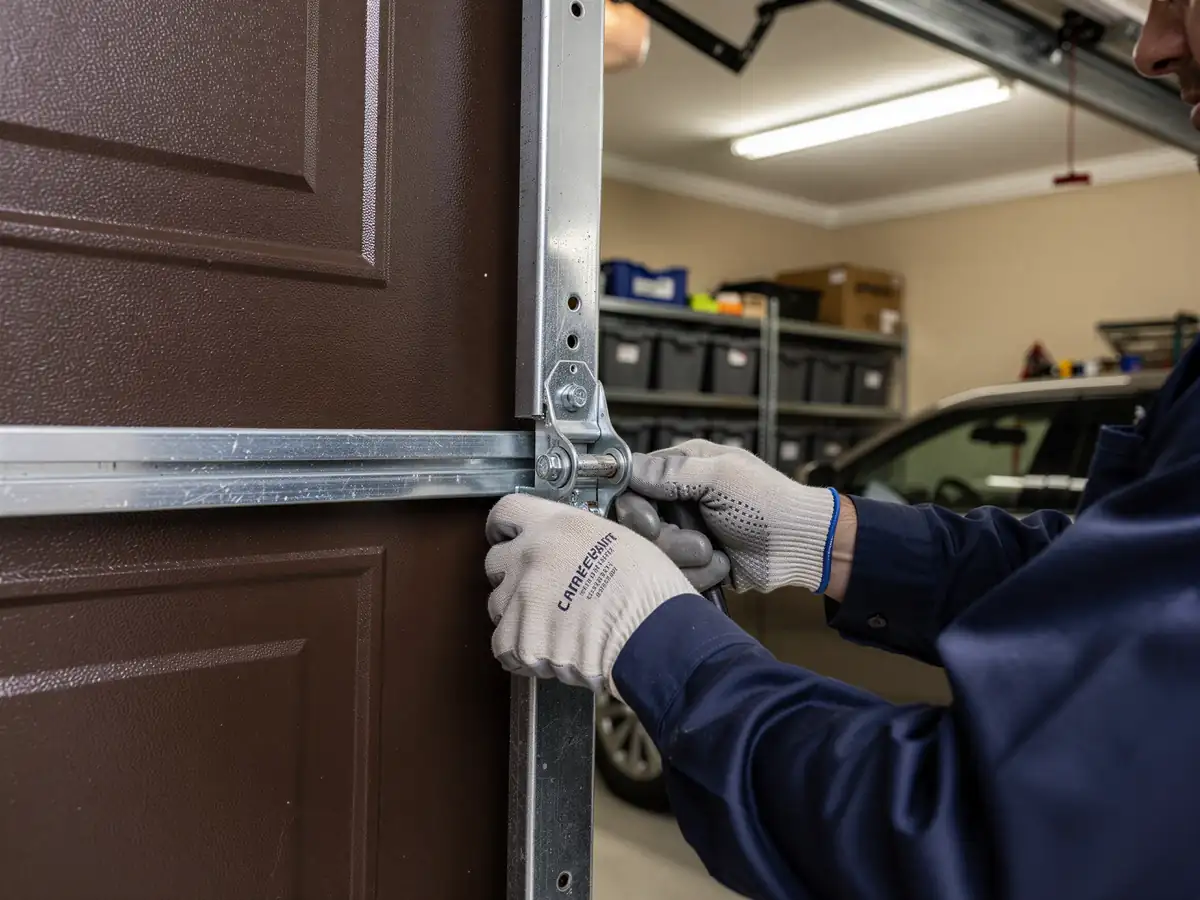
These are wear symptoms, not failure symptoms, and on a house in this build era they usually trace back to the same handful of parts: spring tension that's drifted off calibration, rollers that have worn their nylon or rubber coating down to the core, track bolts that have backed out a quarter-turn at a time over years of thermal cycling, or opener gears worn enough that the chain skips a tooth under load.
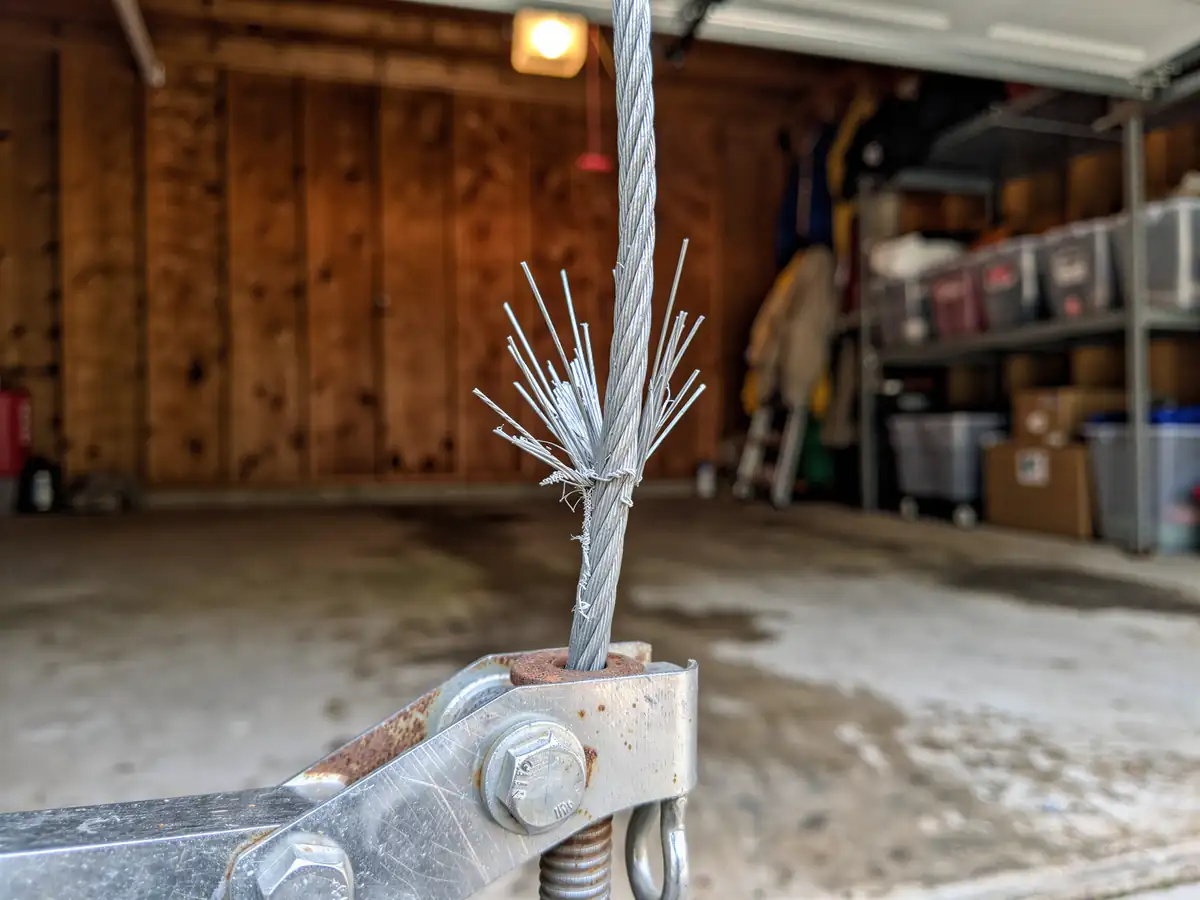
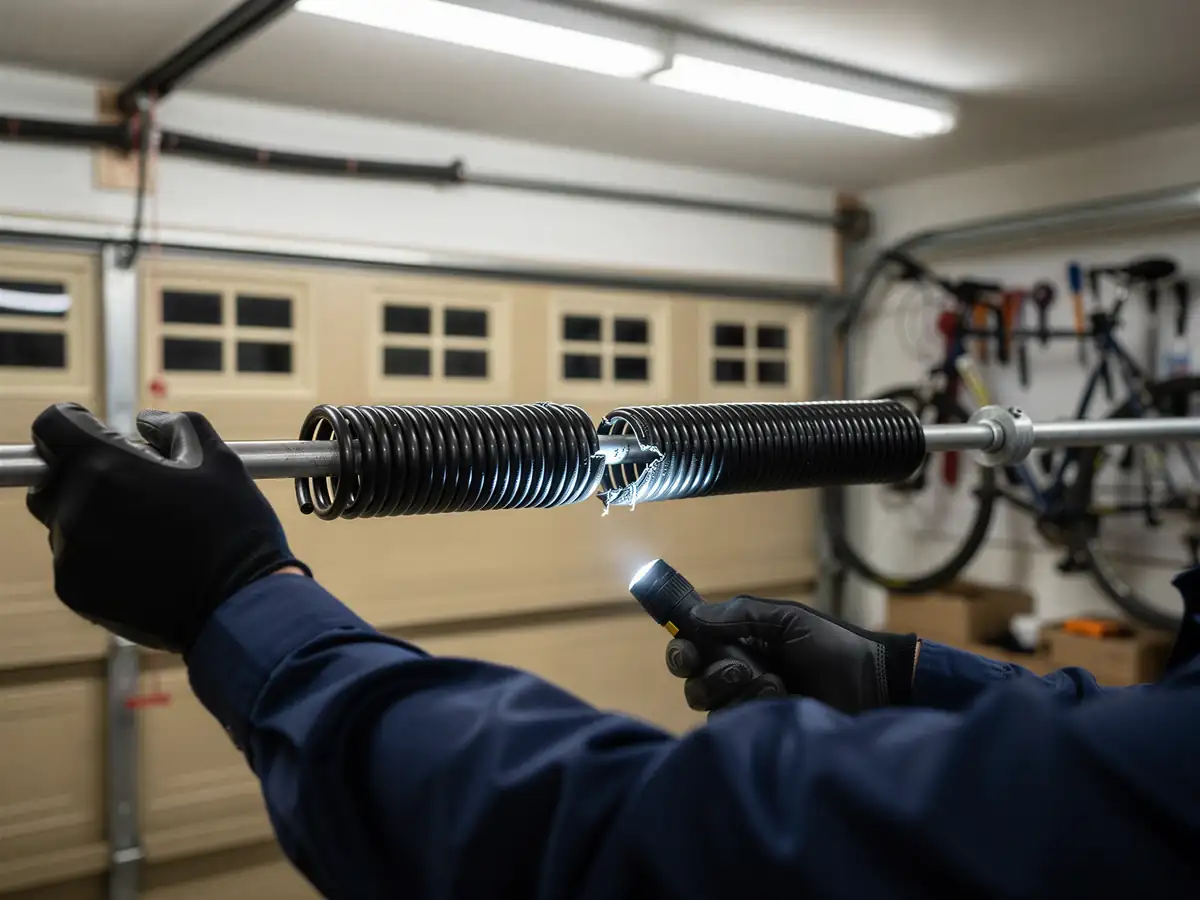
Caught at this stage, each of those is a adjustment or a part swap. Left alone, the spring that's drifted off tension eventually snaps under full load - usually on a cold morning when the steel is stiffest and the door is heaviest to lift. That's the difference maintenance is for: catching the slow version of the problem before it becomes the fast, expensive version.
The Cost of This Job
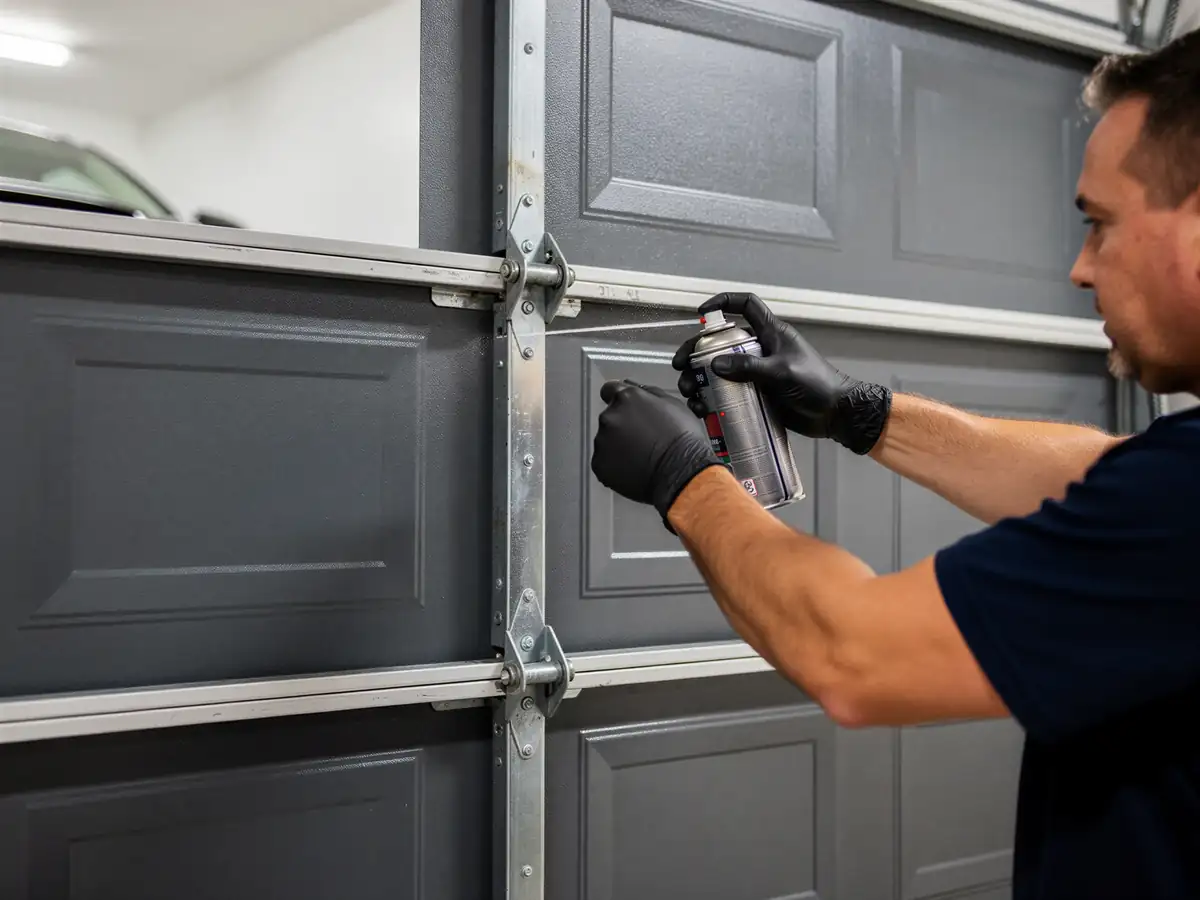
We don't have a flat number to quote here, and we're not going to invent one. What we can tell you is what drives the cost: whether the visit is adjustment-only (spring tension, track alignment, lubrication, hardware tightening) or whether it turns up a part that needs replacing - a roller, a cable, a sensor, a section of track.
Homes in this area, with a median household income around $87,150 across roughly 40,545 households and 28,308 owner-occupied houses, tend to maintain rather than replace until a door is clearly past its working life. That's usually the right call on a door from the 1987-2013 build window - the hardware is old enough to need attention but not old enough that parts are unobtainable.
The honest limitation: if your opener logic board is dead or your spring size is a discontinued gauge, maintenance won't fix that, and we'll tell you straight when a repair isn't worth the labor versus a replacement. We're not going to run a maintenance bill up on a door that's telling you it's done.
Why This Fails Locally
A maintenance program that works in a warm
Dry climate on newer construction doesn't map onto this area. The housing stock here - 1980s and 90s construction across the bulk of these 17 communities - means original hardware that's aging out at roughly the same rate across the whole territory, not a scattered handful of outlier houses. The cold-moderate climate band means that aging hardware is also cycling through seasonal contraction and expansion every year, which accelerates the exact wear points - track bolts, roller brackets, spring coils - that a generic maintenance checklist written for a different climate wouldn't flag as priorities.
- 17 communities
A maintenance visit built for this area checks spring tension against cold-weather load first
Because that's where the failures cluster. It checks track bolts for seasonal loosening, not just initial installation torque. And it treats a 1990s-era opener as a unit likely nearing the end of its gear life, not as a like-new installation.
That's the whole case for maintenance tuned to this area rather than a national checklist
The failure points here are predictable because the building stock and the climate cycle are consistent across the territory.