Broken spring or stuck door at your Rogers house tonight? We work on torsion and extension systems common in Rogers's 1987-2013 housing stock. Call now.
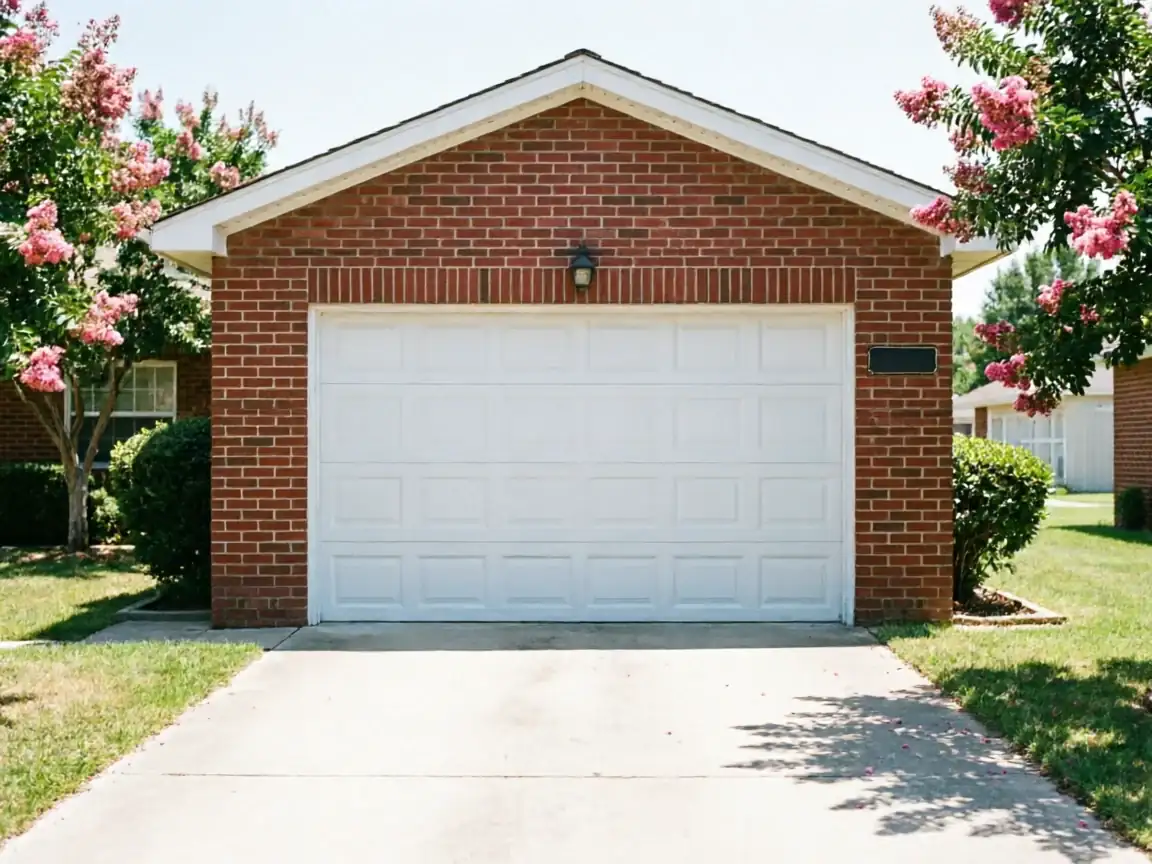
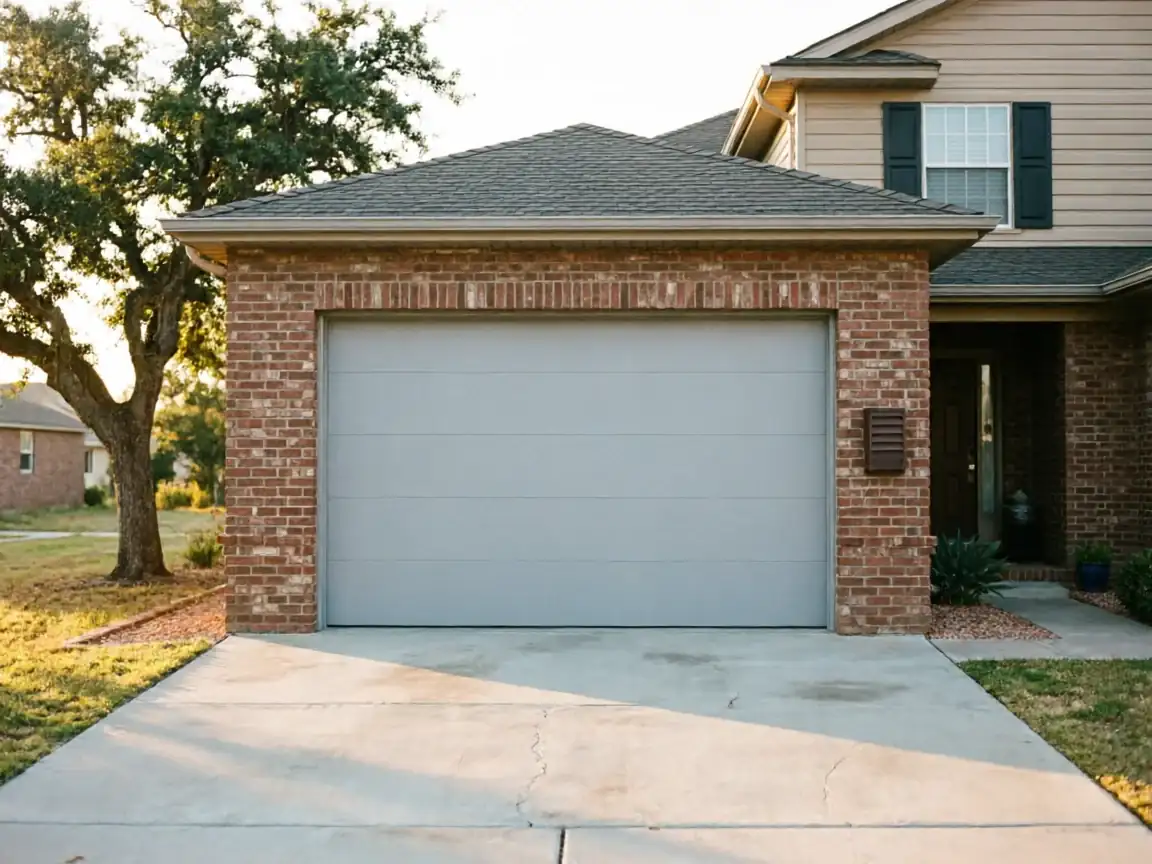
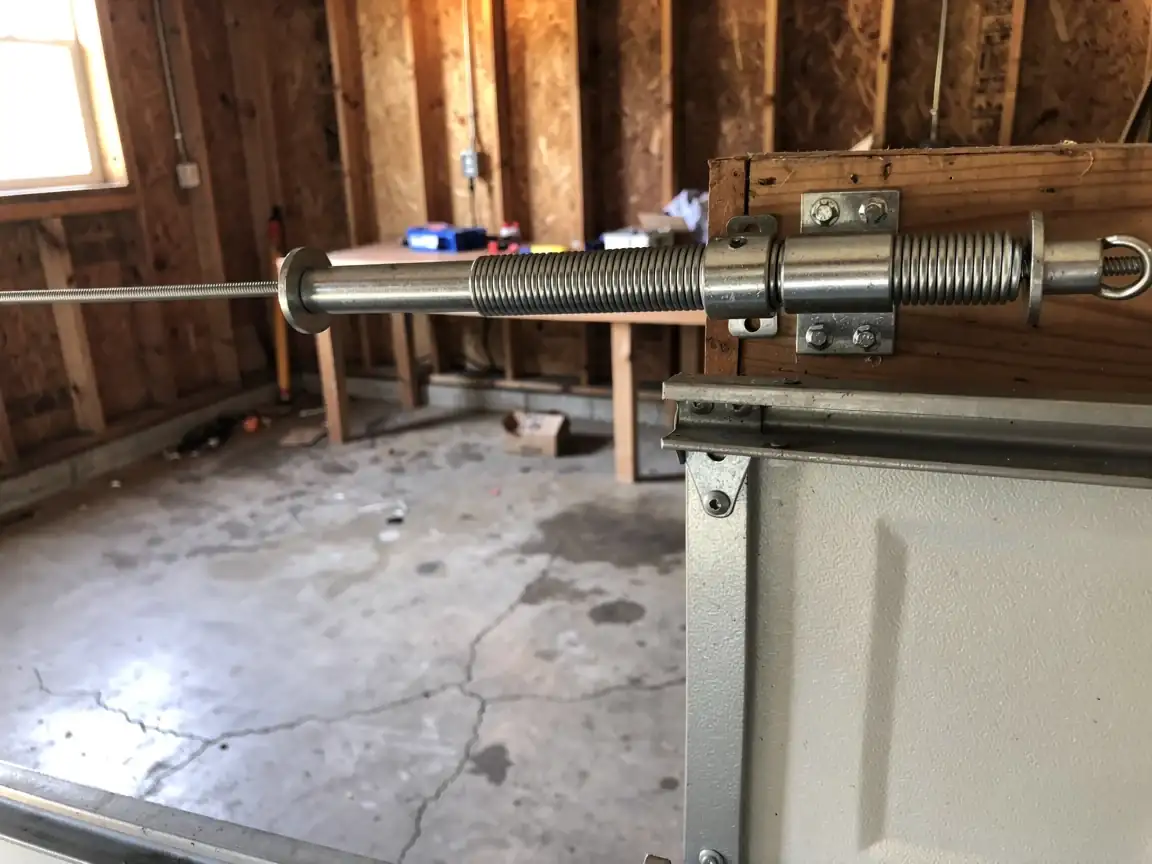
Most of the garage door stock in Rogers went in between 1987 and 2013, with the median build year landing around 1997. That means the bulk of the doors we get called on are torsion-spring systems on steel sectional panels, not the older side-mounted extension setups you'd find in a town with pre-1960s housing. The spring sizing and cycle life on those builder-grade torsion springs was calculated for a door that gets opened a handful of times a day over a 7-10 year window, and a lot of houses across the 17 named areas of this service footprint are now sitting right at or past that mark. A second complication: cold-moderate winters put real thermal stress on steel torsion springs, and that stress concentrates right where the coil wire is already thinnest from fatigue. You get the same door that worked fine in October failing on the first hard freeze. Add in that with 28,308 owner-occupied houses across the area, most garages were built with a single opener and no backup manual release that homeowners know how to use, and a broken spring or snapped cable turns into a trapped car fast, not just an inconvenience.
The Symptom
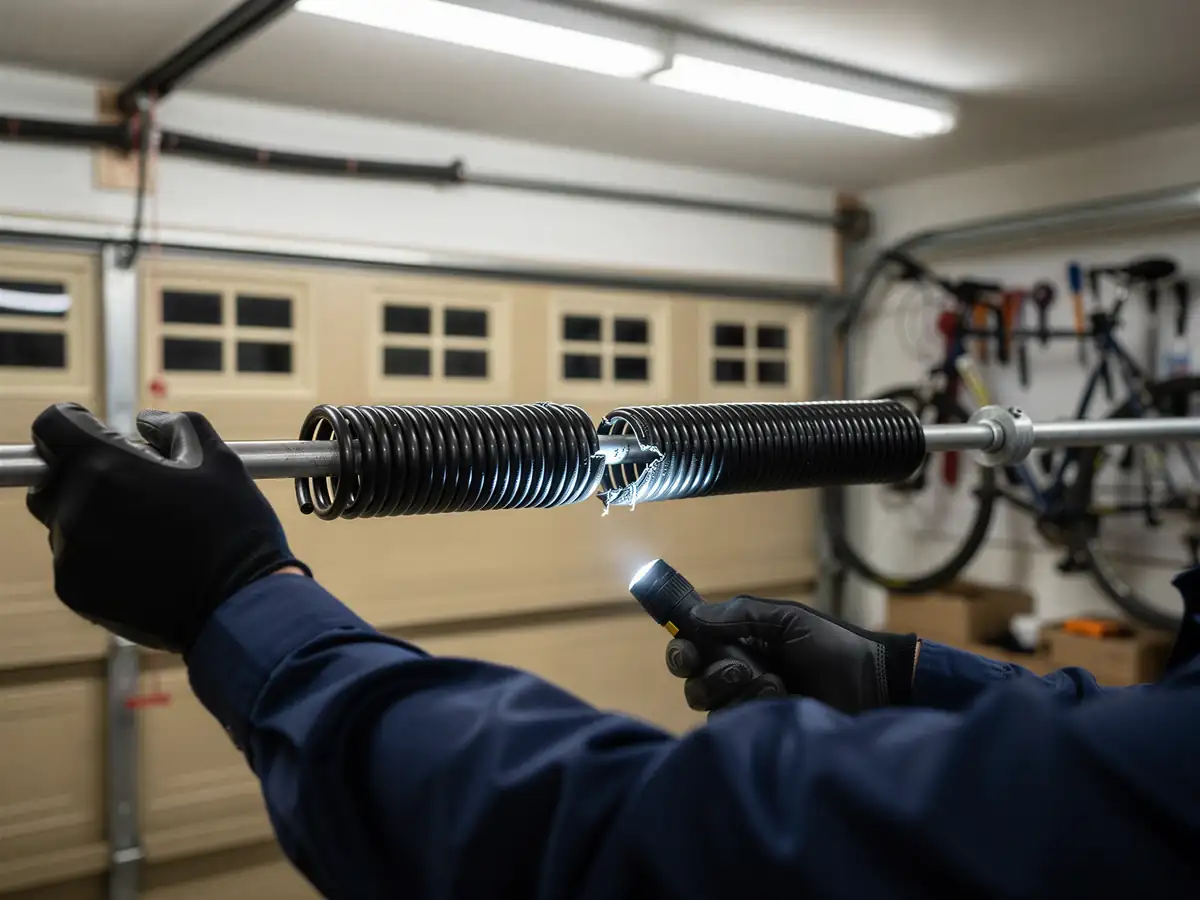
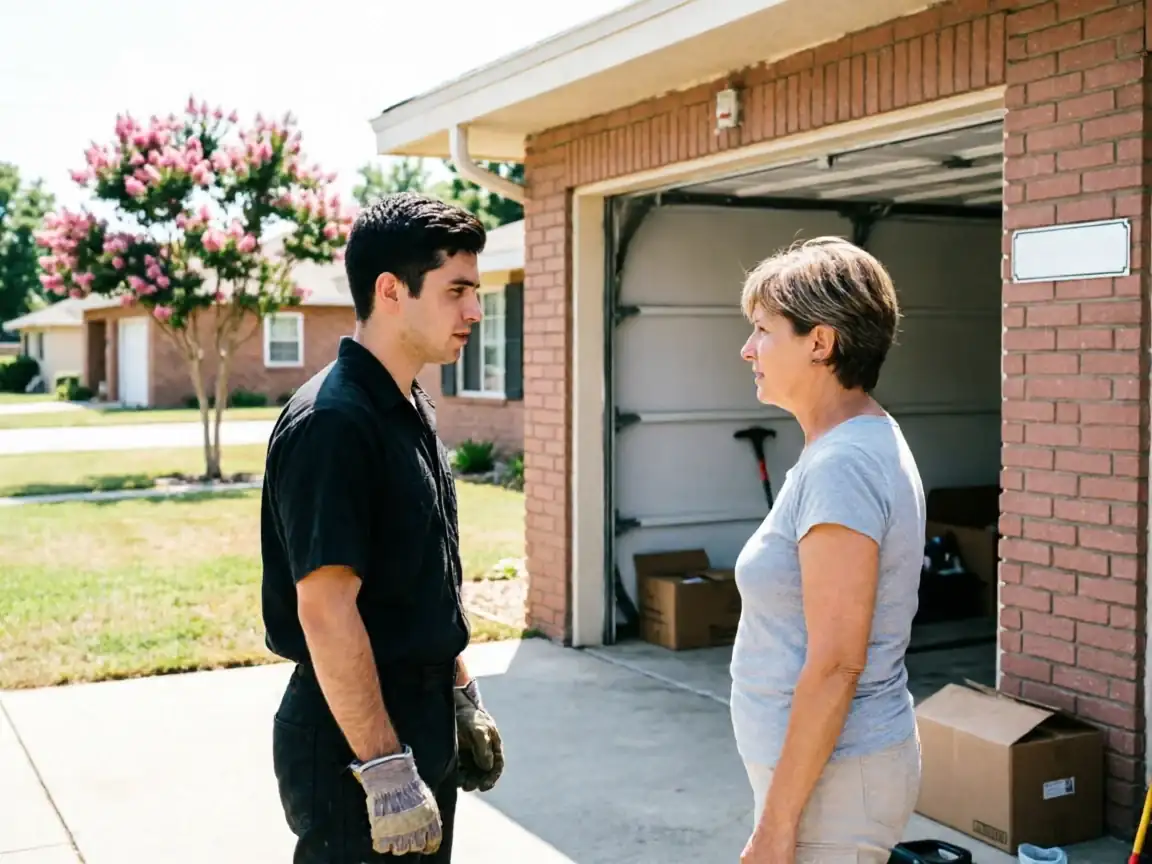
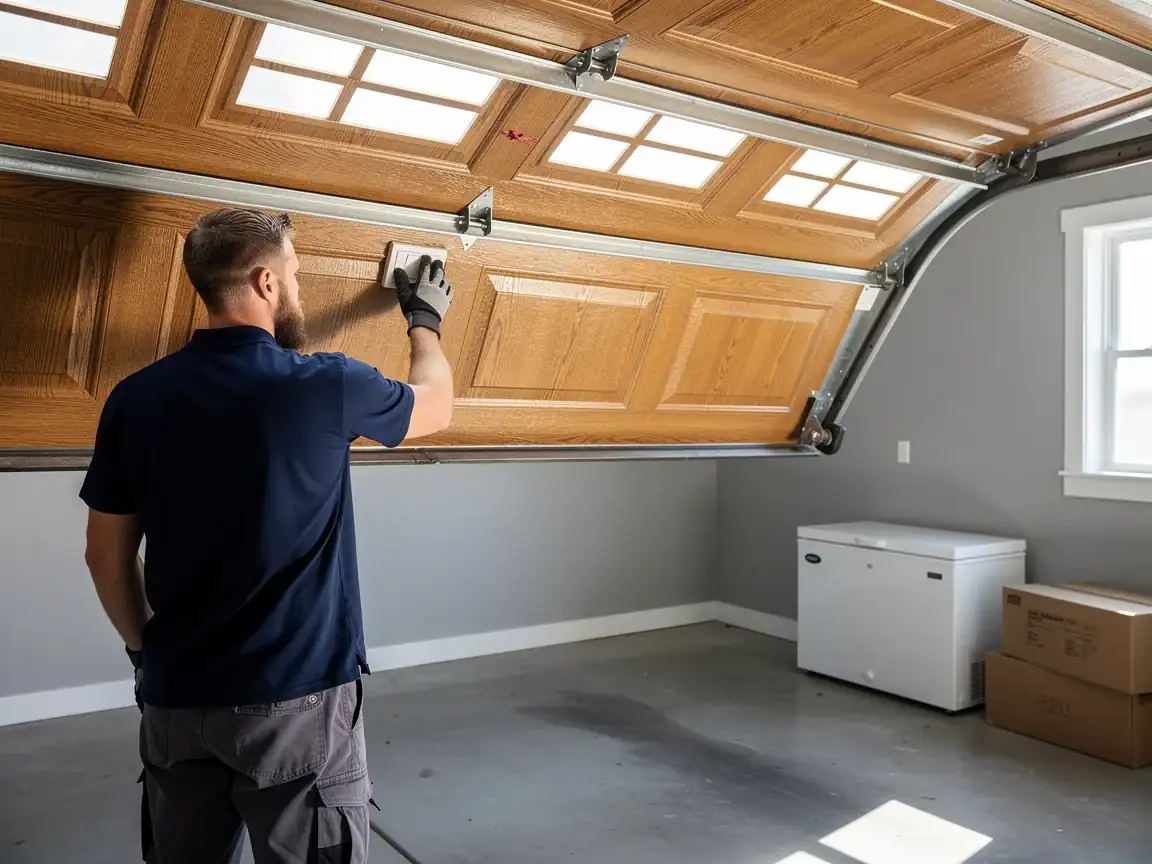
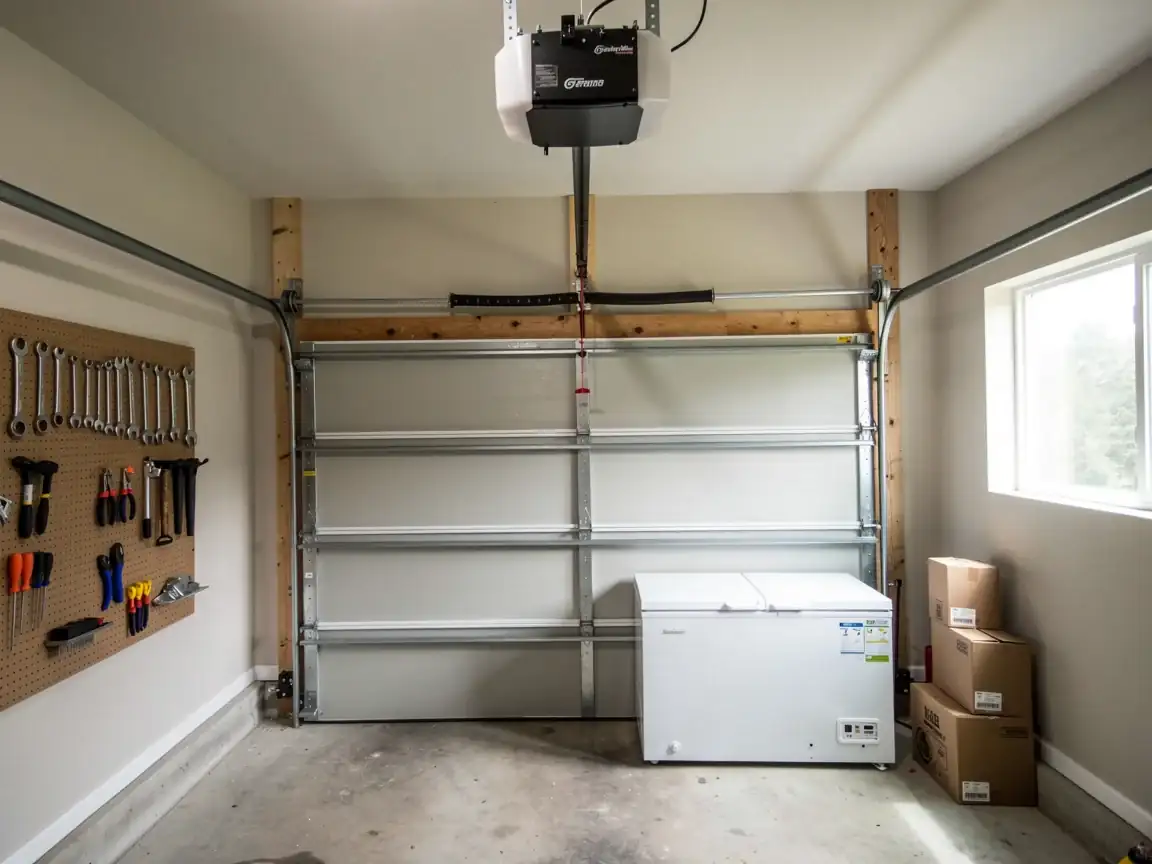
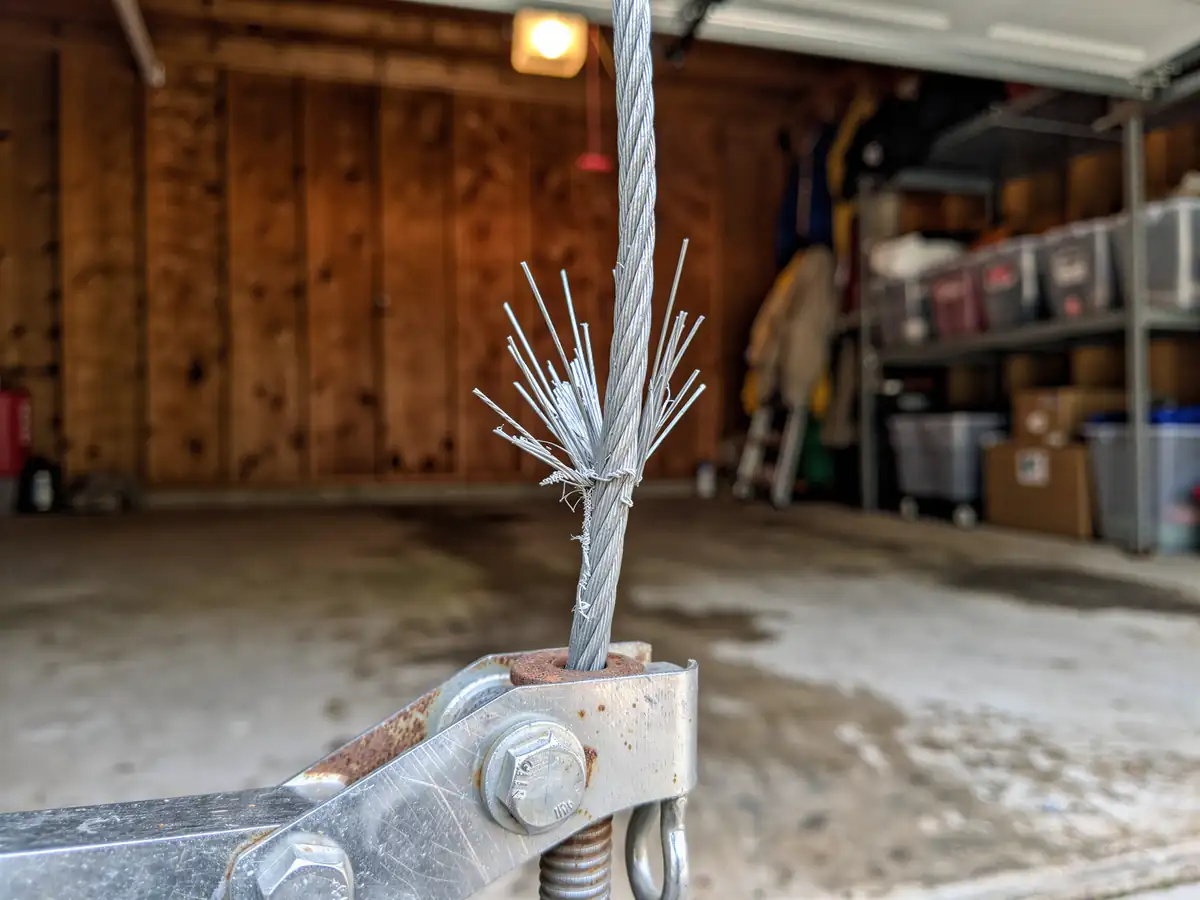
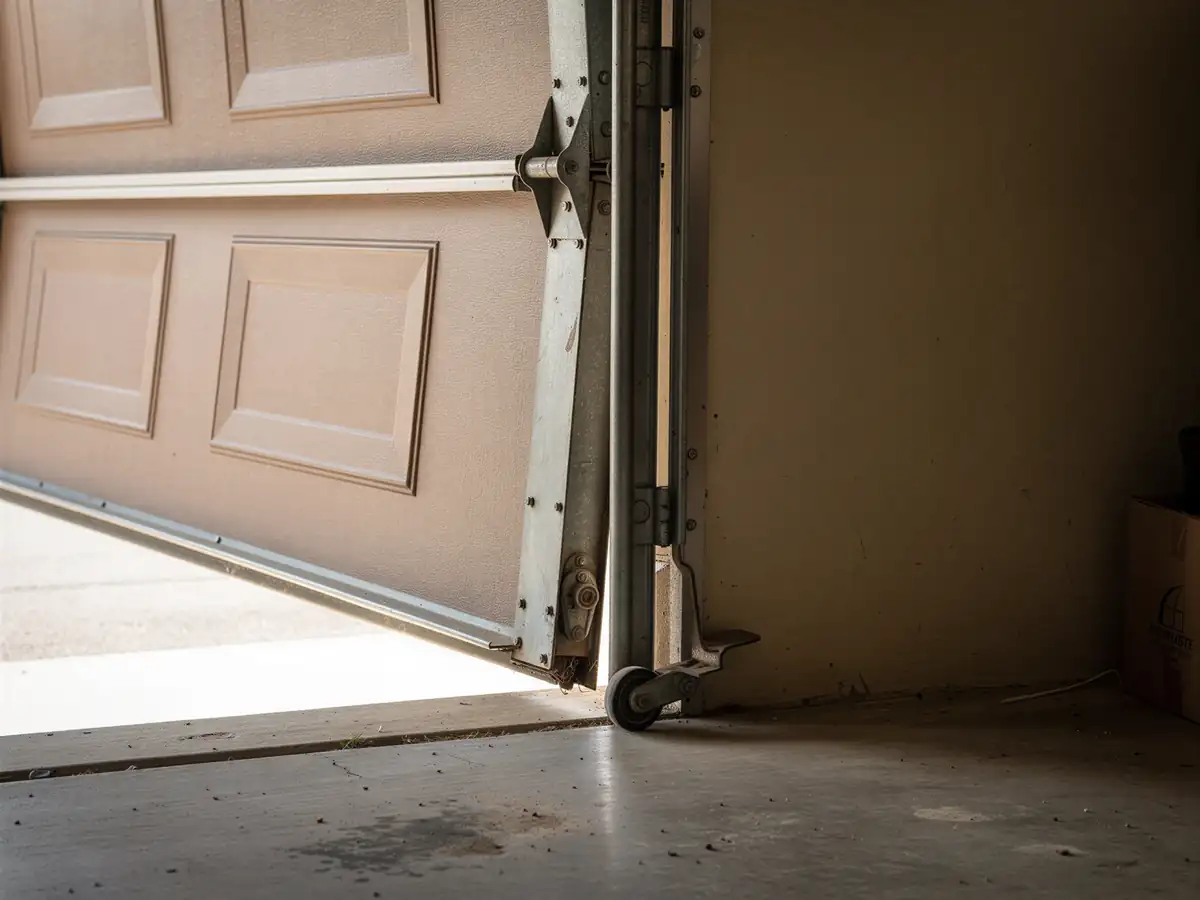
The call usually starts the same way: the door won't move, or it moved about six inches and stopped, or it came down with a bang instead of the slow glide it's supposed to have. If the opener motor hums but nothing happens, that's almost always a broken torsion spring - the opener isn't built to lift a 150-plus pound door on its own, the spring does that work, and your motor on sorrow alone just can't do it. If one side of the door looks lower than the other when it's stuck halfway, that's a cable off the drum, and if you force it from there you can bend the track. A door that reverses right after it touches the floor, or that slams down fast at the end of travel, is telling you the spring has lost tension gradually rather than snapped outright - which is actually the easier of the two to catch before it becomes a full lockout.
The Cost of This Job
We don't post a flat number for emergency work because what's wrong changes what the job costs - a single broken torsion spring on a standard door isn't the same job as a snapped cable that's also bent the track, and we're not going to quote one over the phone before we've looked at it. What we can tell you is what drives the cost up: double doors run two springs instead of one and both usually need replacing together even if only one broke, and older openers paired with newer springs sometimes need a logic board reset we'll flag before we touch anything. Given the median household income of $87,150 across the service area, most of what we see is a homeowner choosing a same-day repair over a multi-day opener replacement, and that's usually the right call unless the track itself is bent or the door is original to a house built well before 1987.
Why This Fails Locally
This isn't a generic garage door problem - it's a function of what got built here and when. With most homes dating 1987-2013, the area is full of torsion springs that are aging out of their rated cycle life at roughly the same time, which is why emergency calls cluster the way they do rather than trickling in evenly. Layer the cold-moderate climate band on top of that: steel contracts in a hard freeze, and a spring that was already fatigued from twelve-plus years of cycling is the one that lets go on the coldest morning of the week, not the mildest. Across 40,545 households in the service area, that's a predictable seasonal pattern, not bad luck. One honest limitation: if your door and track are original to a house built in the late 1980s and the opener has never been serviced, sometimes the repair cost gets close enough to a full replacement that we'll tell you straight that replacing is the better money, not the repair.
How it works
From “it’s stuck” to “it’s fixed”
01
Tell us what’s wrong
Describe the symptom - won’t open, loud bang, opener runs but the door won’t move.
02
On-site diagnosis
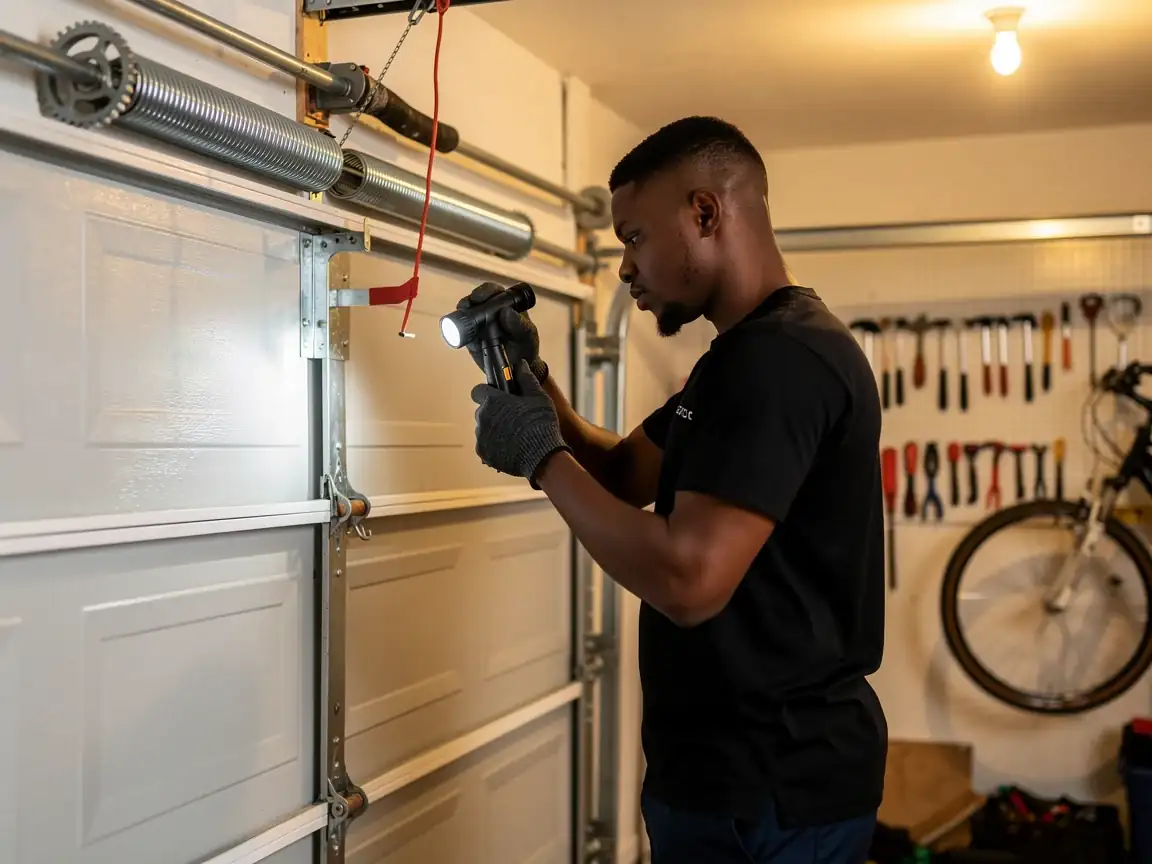
A technician tests the door under power and by hand and finds what actually failed.
03
Clear, up-front plan
You get the fix that’s needed and what drives the cost - before any work starts.
04
Repaired & tested
The repair is done, the door is set true and tested, and the work area left clean.
Not sure which repair your door needs in Rogers, AR? Describe what it’s doing - every job starts with a diagnosis.
Can you come out the same day if my spring breaks tonight?
We handle emergency calls for stuck or broken garage doors, including after-hours situations where a car is trapped inside. Call and we'll talk through what's happening with your door before we give you a timeline.
Why did my spring break in cold weather specifically?
Steel torsion springs lose a little flexibility in cold-moderate winters, and that stress lands hardest on a spring that's already fatigued from years of cycling. A spring near the end of its rated life is far more likely to snap on a cold morning than a mild one.
Is it ever not worth repairing?
Yes. If the track is bent along with a broken spring, or the door and opener are original to an older house and both are failing at once, the repair cost can get close to replacement cost. We'll tell you when that's the case instead of patching it twice.
Ready to get your garage door sorted?
Tell us what it’s doing and where you are in Rogers - we’ll take it from there.