The Problem
Most calls we get start the same way
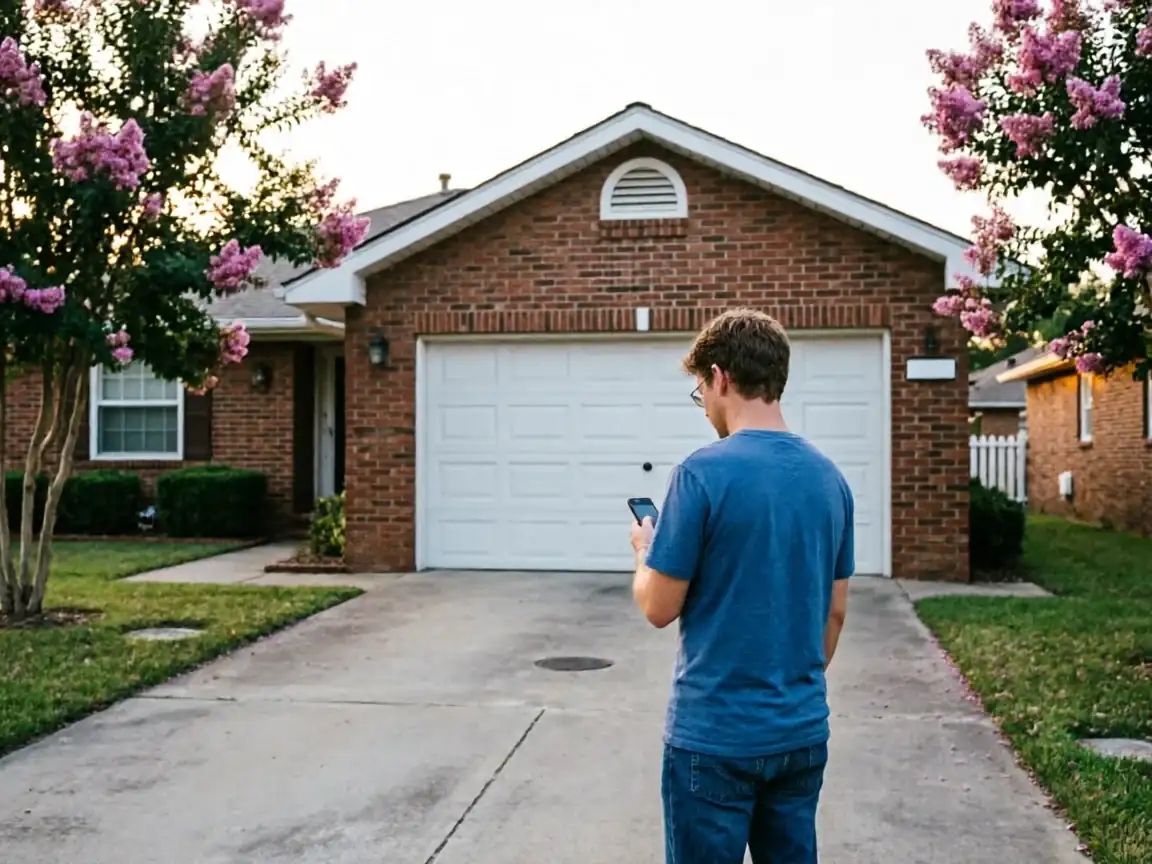
"It's making a noise it didn't used to make." That's not a complaint, it's a diagnosis waiting to happen, and in Rogers the diagnosis usually traces back to when the house was built. Housing across this service area went up mostly between 1987 and 2013, with the median landing around 1997 - which means a lot of doors in town are still running original hardware from that build window, not retrofits. A door that age has had two or three decades of the same rollers, the same bearing plates, the same spring. Noise is what metal and nylon do right before they fail, not a random annoyance.
The trouble is homeowners often wait, because the door still opens
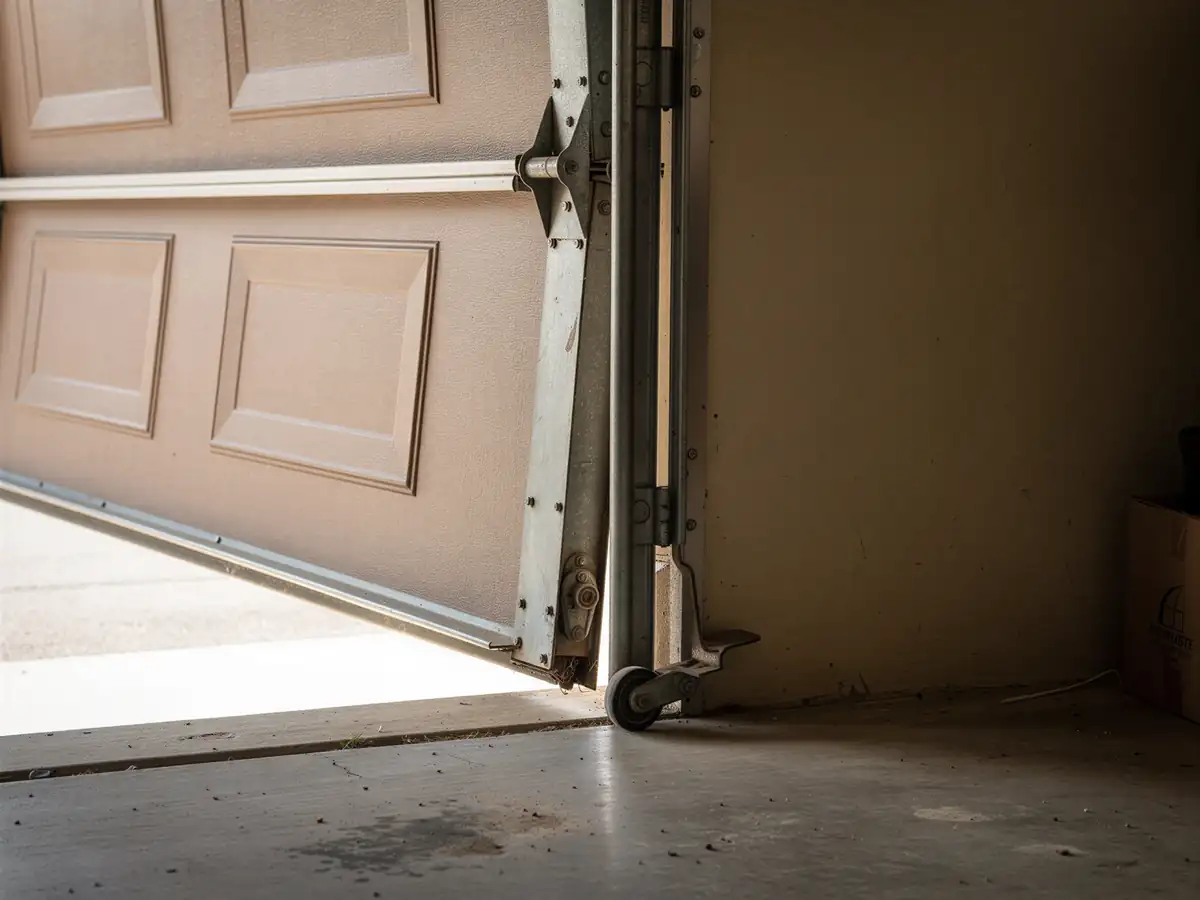
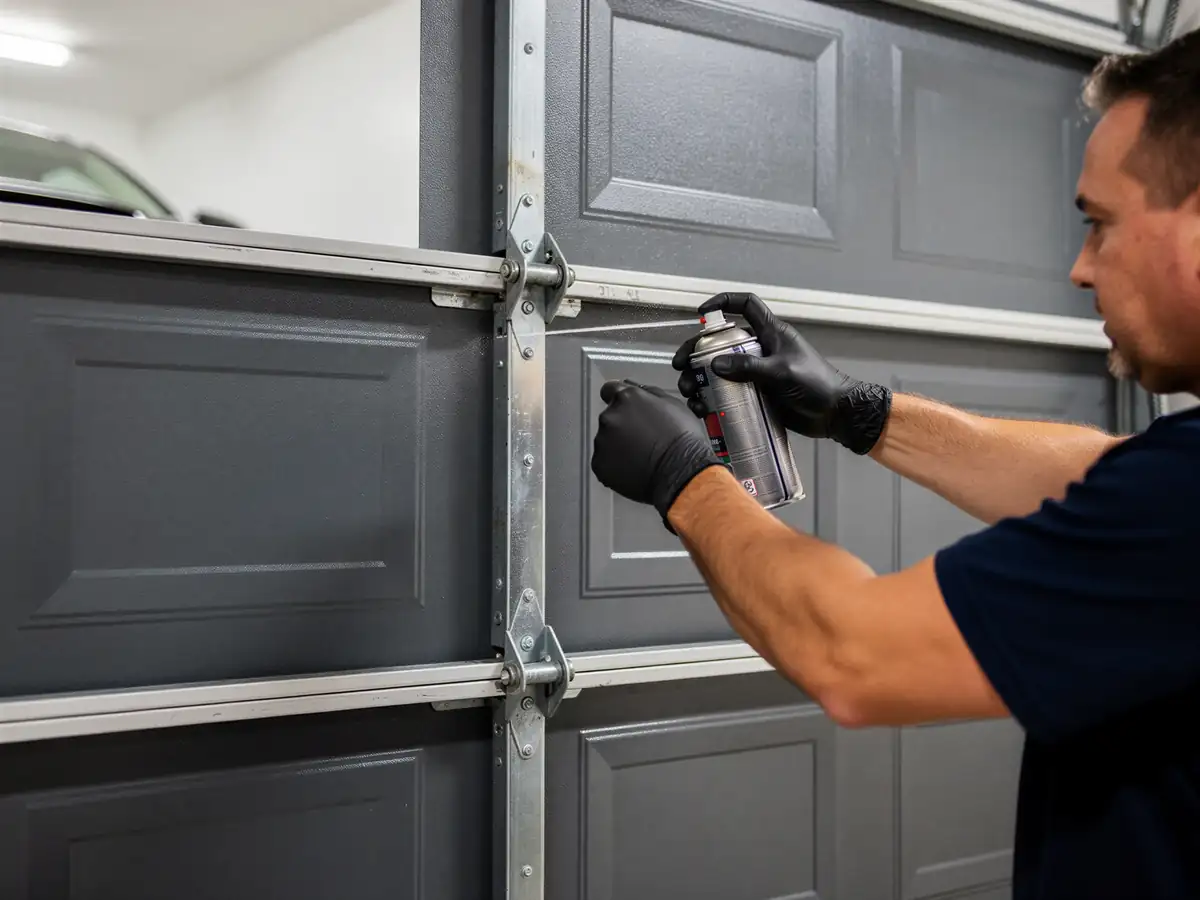
A squeal that's just a dry hinge costs you a can of silicone spray. A grinding rattle from a worn roller can turn into a jumped track inside a season if you let it ride. The noise itself is cheap information - it's the only early warning most garage doors give you, and on 1990s-era hardware, it's usually trying to tell you something specific.
How Local Conditions Play In
Rogers sits in a cold-moderate climate band, and that matters more for door noise than people expect. Nylon rollers and rubber weatherstripping both stiffen up in cold air, and a door that ran quiet all summer can start grinding on the first genuinely cold morning simply because the parts haven't warmed and expanded yet. That's different from a part that's actually failing, and it's worth knowing the difference before you spend money.
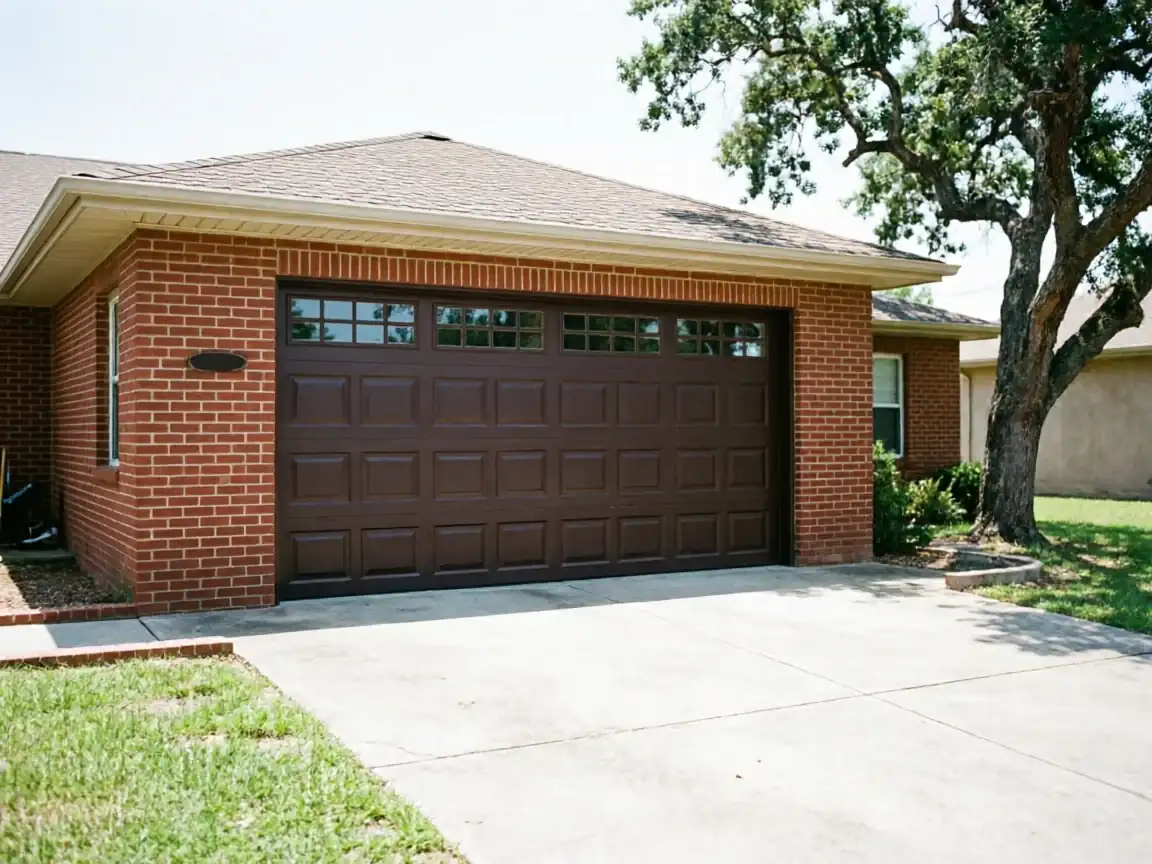
Across the 17 communities that ring Rogers - Lowell four miles out, Little Flock and Cave Springs at five, Prairie Creek the same distance - the housing stock runs the same 1980s-and-90s age bracket. That matters because it's not just your door aging, it's every door on your street built in the same decade, with the same grade of hardware from the same era. If your neighbor's door started groaning last winter, yours is on the same clock. A door built to 1990s spec in this area rarely has the sealed bearing plates that became standard after 2010, so a low hum right under the spring mount on an older Rogers door usually points to the bearing plate, not the cable.
Checking It Yourself
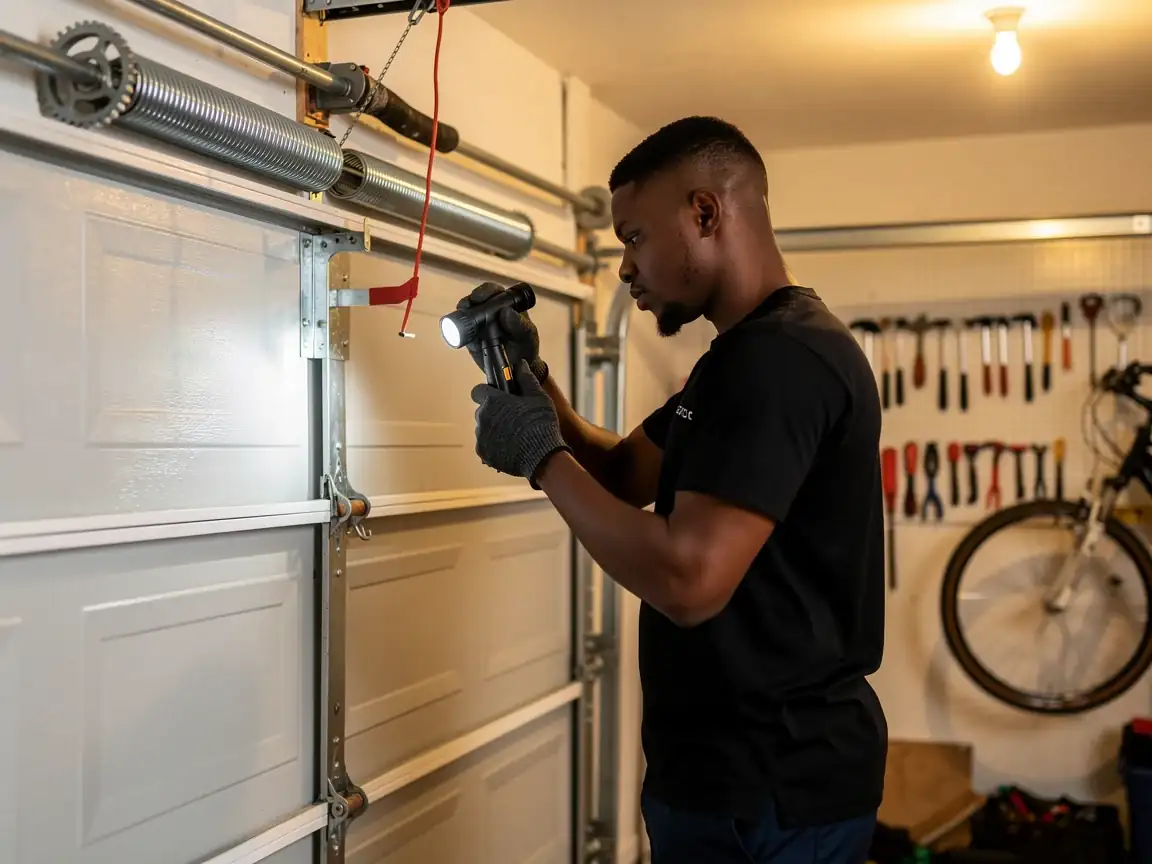
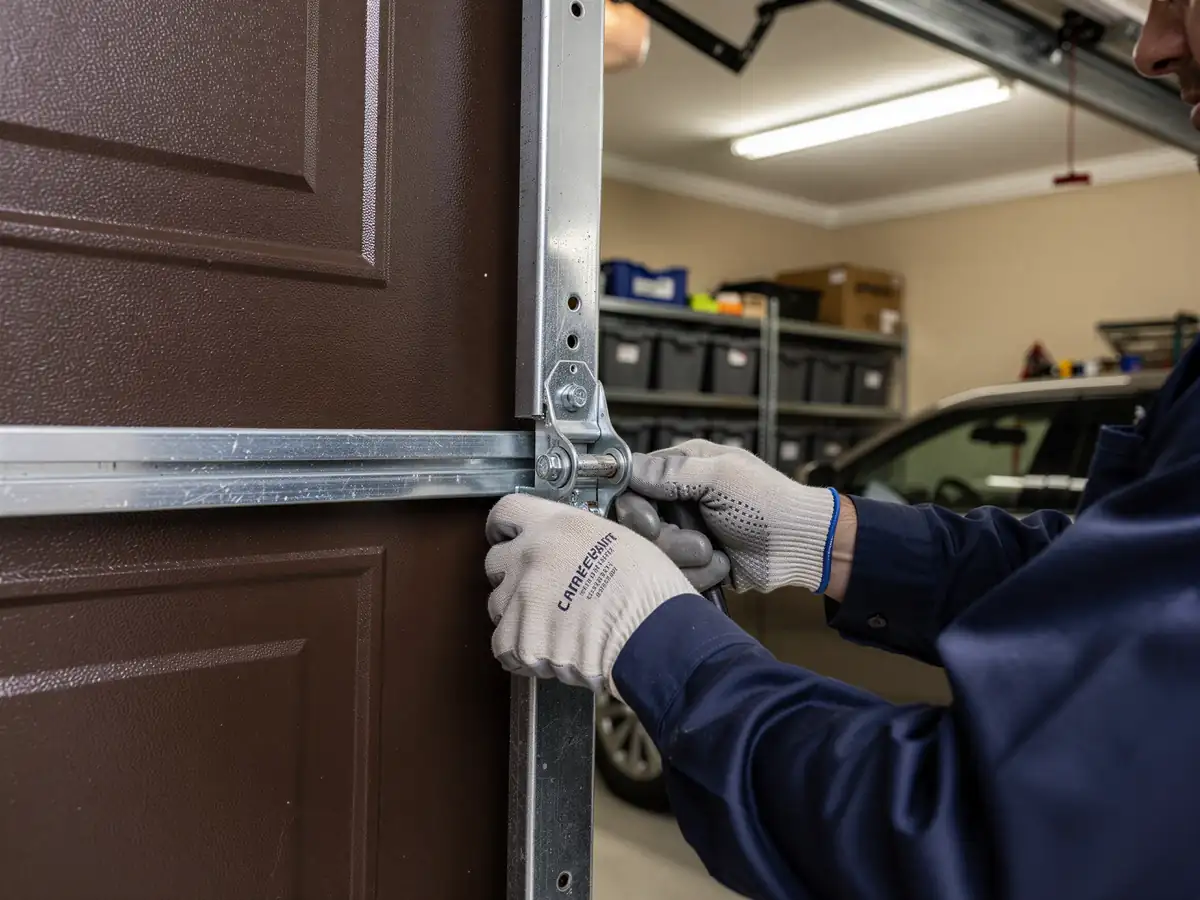
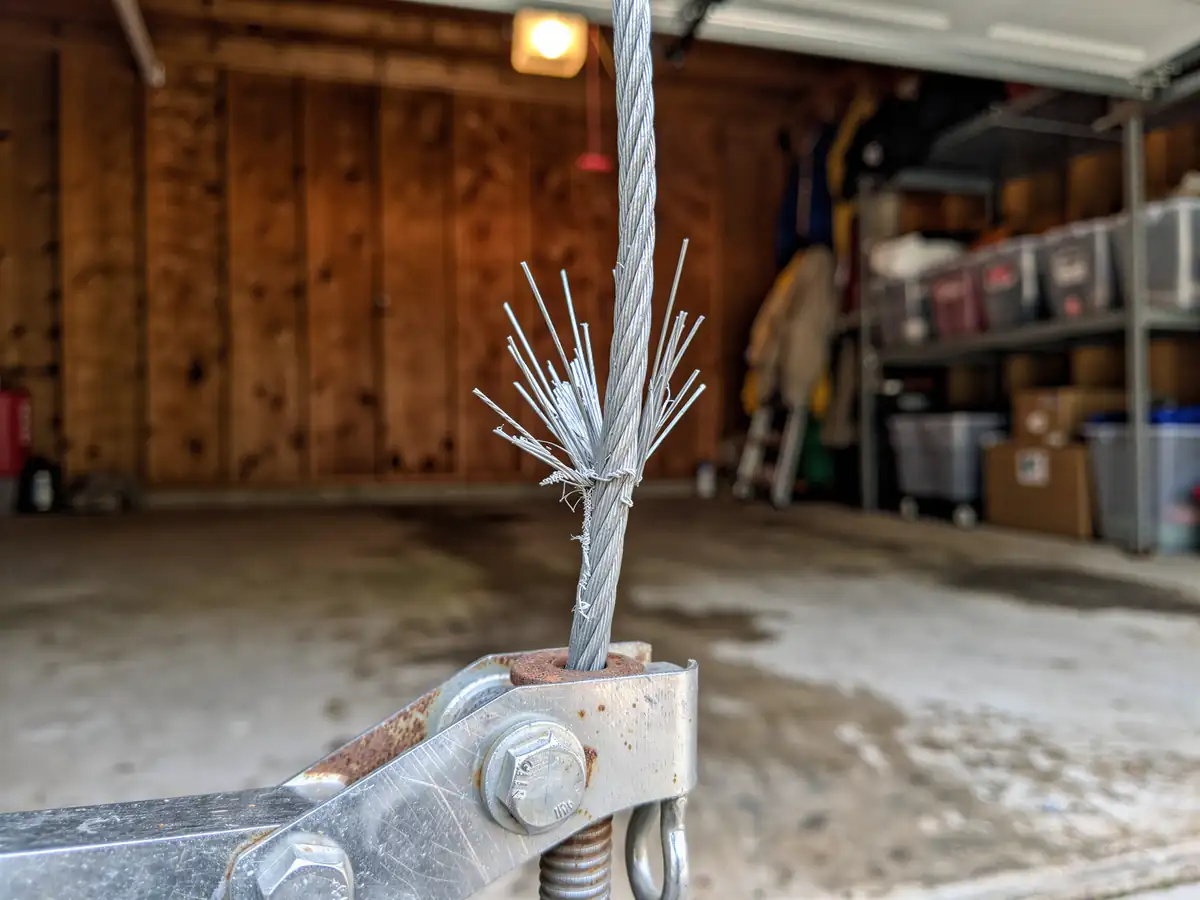
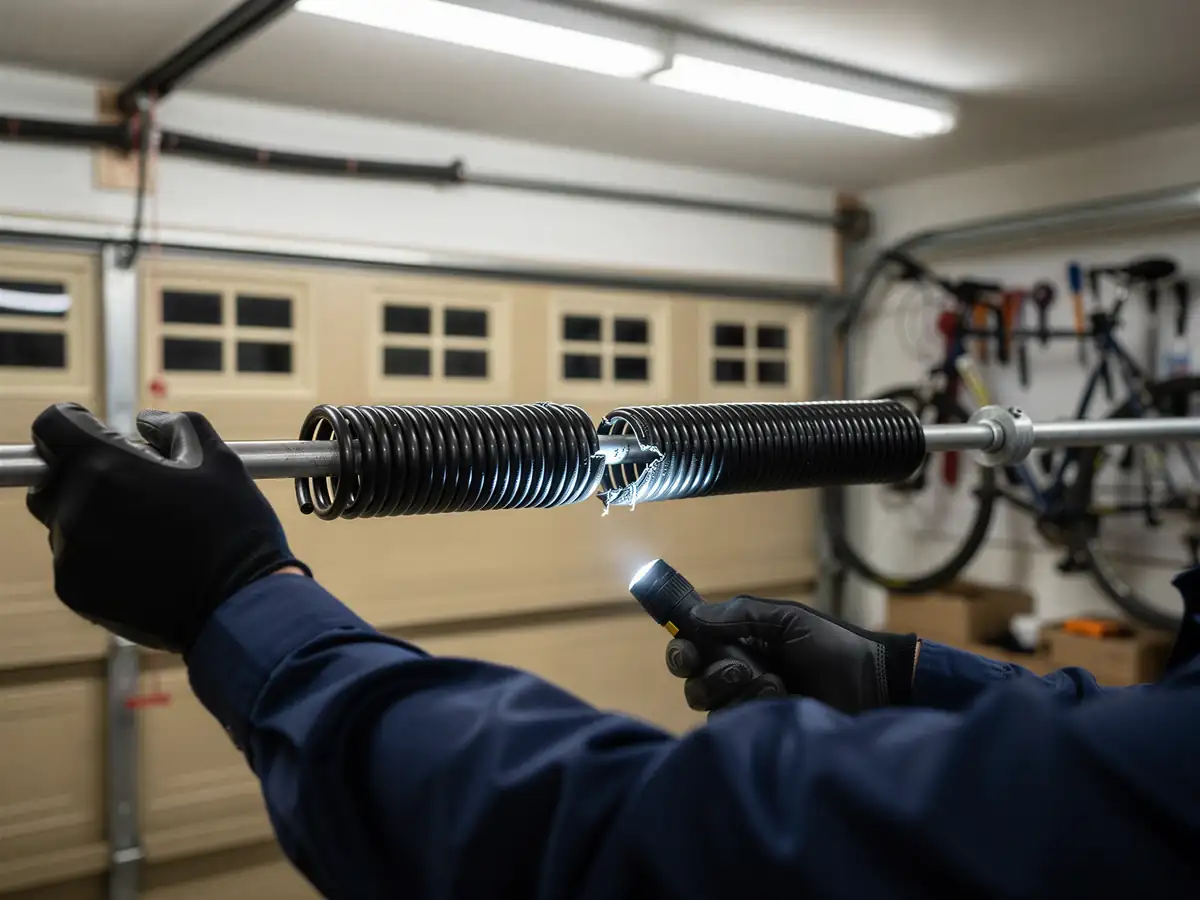
Before you call anyone, stand at the door while it runs and try to place the noise by section: at the top near the motor, mid-track where the rollers travel, or down low near the springs. A rhythmic clunk that matches the roller's rotation is almost always a roller going bad - cheap to replace, and it won't get better on its own. A sharp metallic pop, usually once, usually loud, is a different animal: that's a spring losing tension or a cable slipping on the drum, and it means stop using the door until someone looks at it, because that's the part that can let a panel drop.
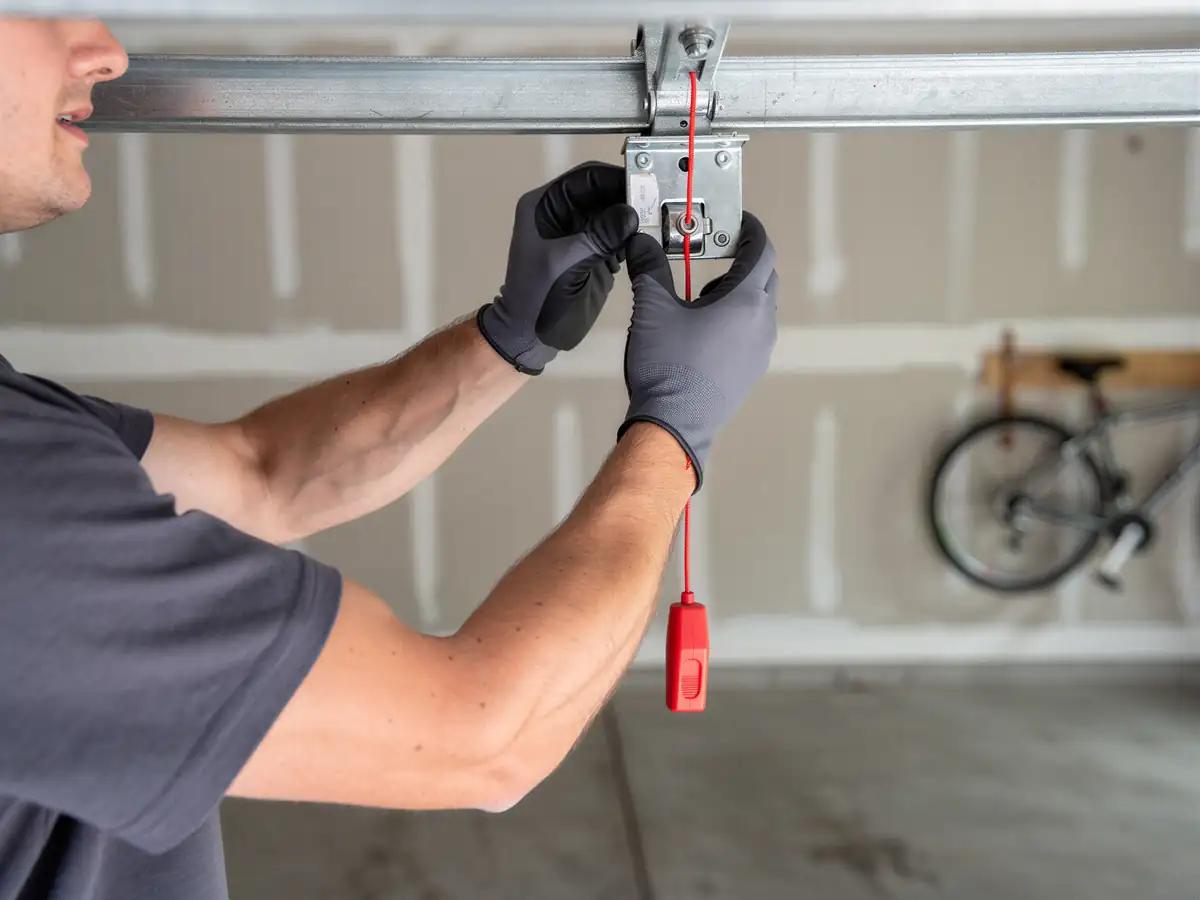
A steady grinding under the opener itself, especially if it's gotten slower to open over a few weeks, often means the drive gear inside the opener housing is worn down - common on openers original to houses built in that late-80s-through-2000s window. Worth checking: does the sound happen only on the way up, only on the way down, or both? That alone tells you whether you're dealing with springs (both directions), or the opener's drive train (usually one direction, with a slow sag at the same point every time).
The Cost of This Job
We're not going to quote you a number here
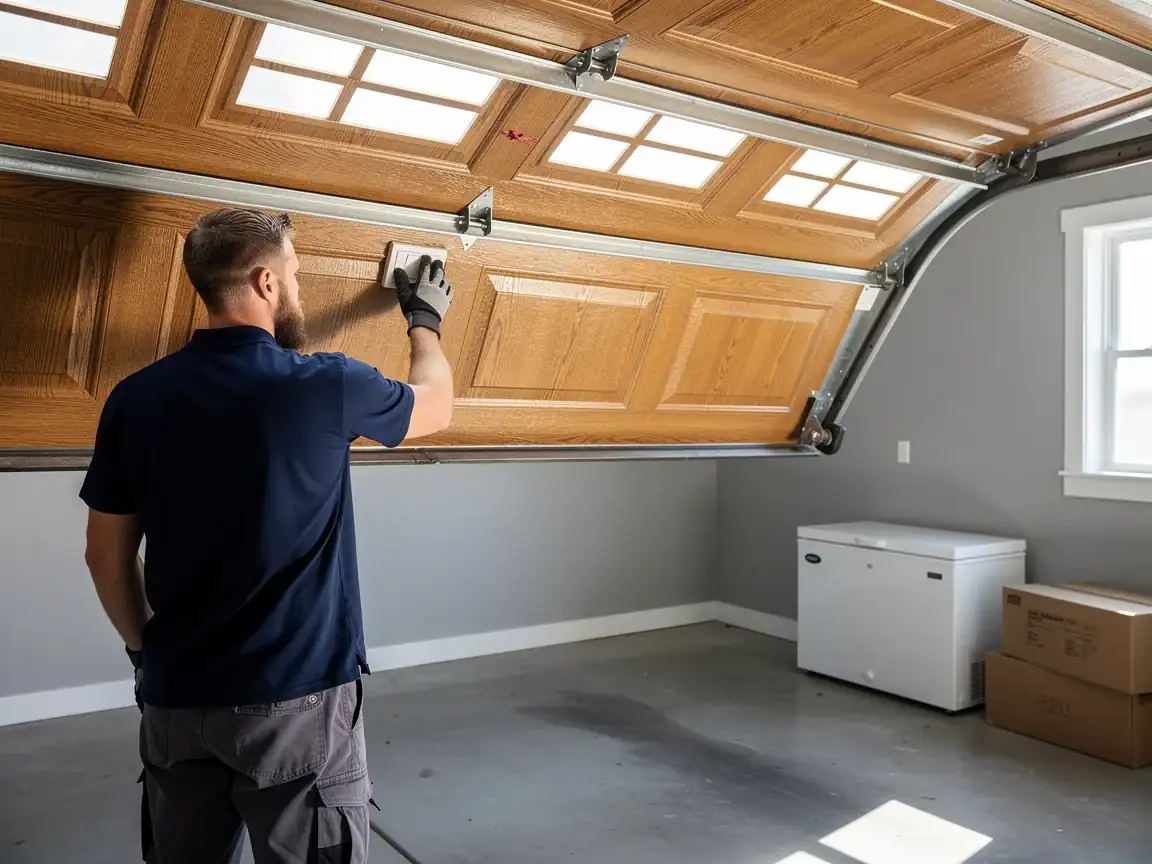
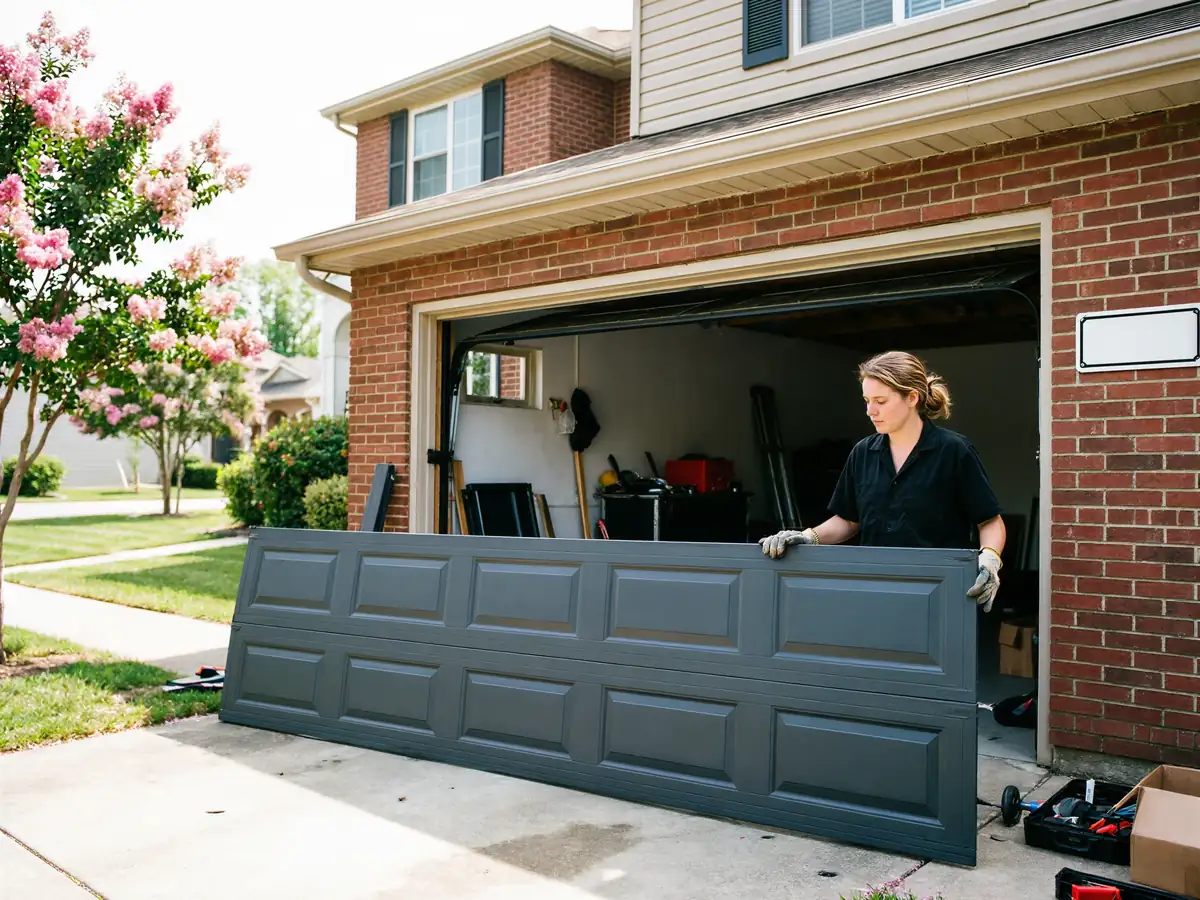
Because the honest answer is it depends on which noise you've got. A roller swap is a small job. A spring replacement on a double door is a bigger one, and if the noise turns out to be a worn drive gear inside an opener that's original to the house, you're choosing between a gear repair kit and a full opener swap - and on hardware pushing two to three decades old, replacement is often the better use of the money, since the rest of the unit is at the end of its life anyway.
What we won't do is tell you a door needs full replacement over a noise alone without looking at it first
Plenty of grinding and squealing on 1990s-era doors in this area gets fixed with a roller set and a lubrication pass, not a new door. The real cost question is whether the noise has been going on for one week or six months - the longer a bad roller or a loose cable runs, the more it wears on the parts around it, and the more the eventual bill grows.