The Complications
A broken cable almost never shows up alone
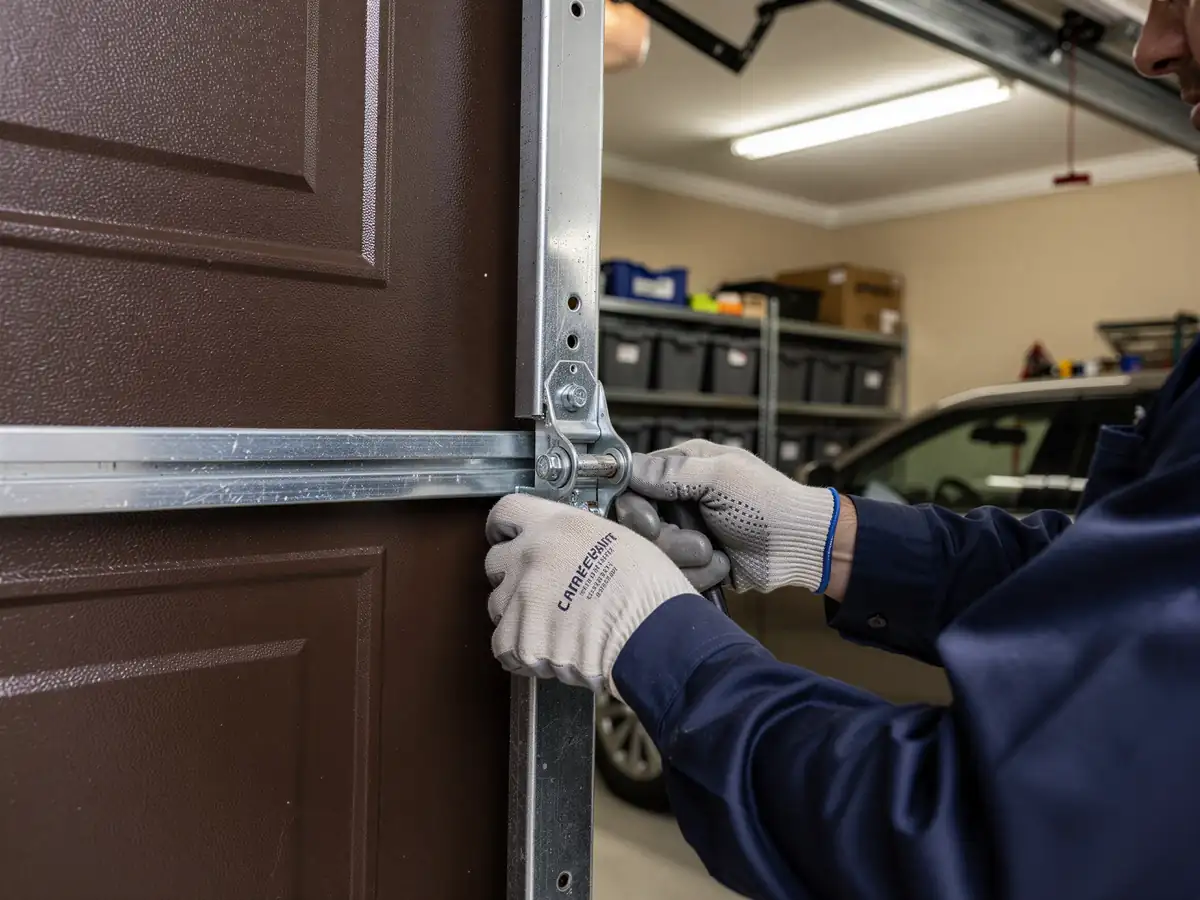
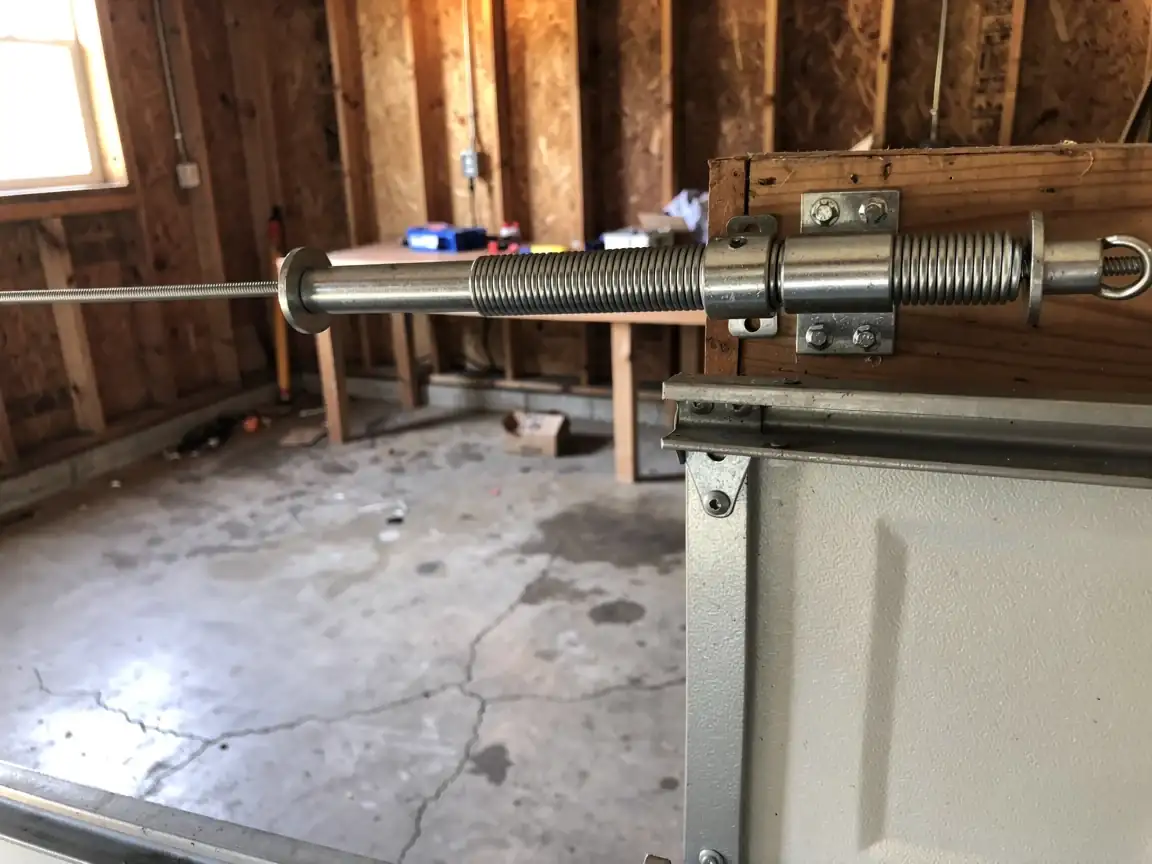
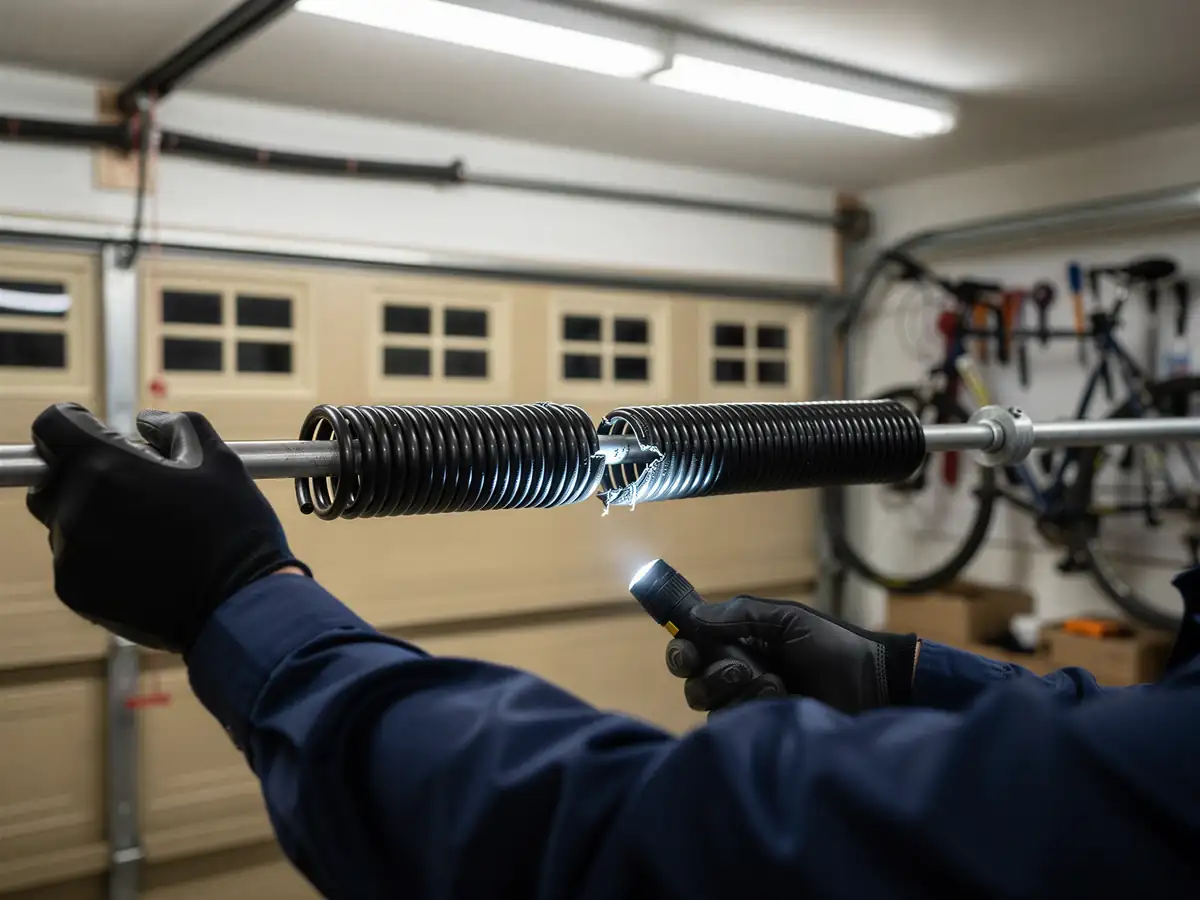
On the homes built across Rogers between 1987 and 2013 - which covers most of the stock in the 17 named areas that make up this market - the cable, drum, and torsion spring were all installed as a matched set on day one, and they wear as a set too. By the time a cable frays enough to snap, the drum it was wound on has usually picked up grooves or burrs from rubbing against a stretched or slipping cable, and the spring on that side has often lost tension at a different rate than the spring on the other side.
That mismatch is the real complication
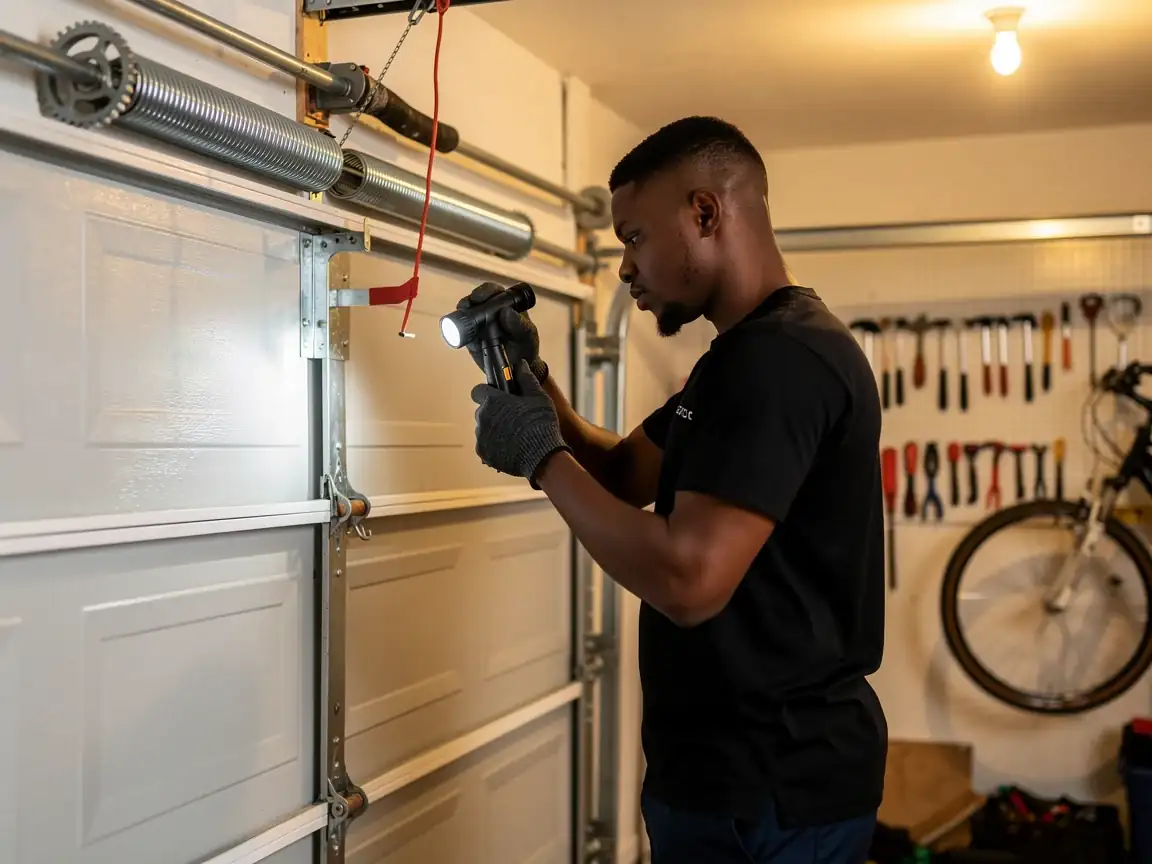
Swap a cable alone on a door with an uneven spring and the door will rack sideways the first time it's cycled, chewing up the track within a few openings. A cable job on original 1990s-era hardware is rarely just a cable - it's an inspection of the whole drum-and-spring system on both sides of the door, because builder-grade galvanized cable from that era wasn't sized generously to begin with.
One thing we won't do is replace a cable and call it done if the drums are scored or the opposite-side spring is clearly down in tension
That's a callback waiting to happen, and it costs the homeowner twice.
The Symptom
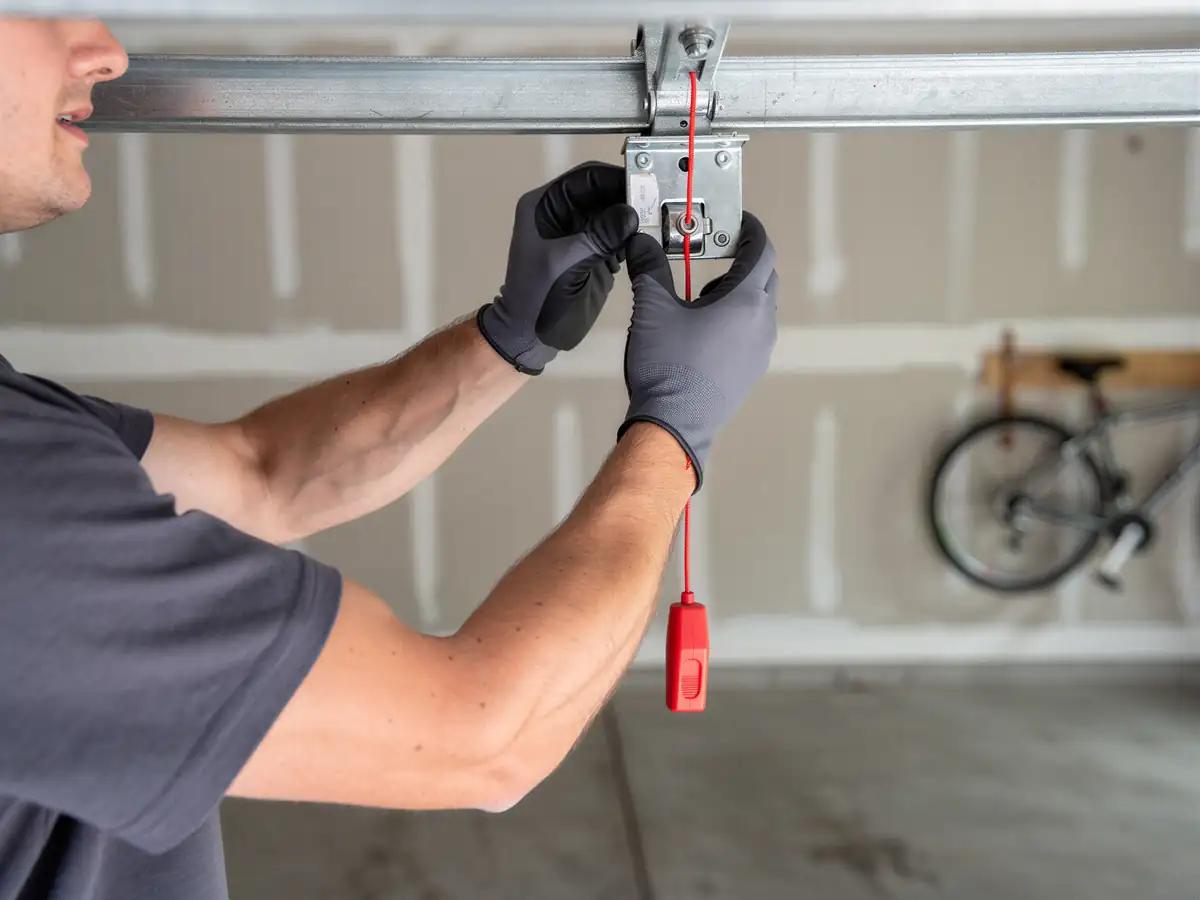
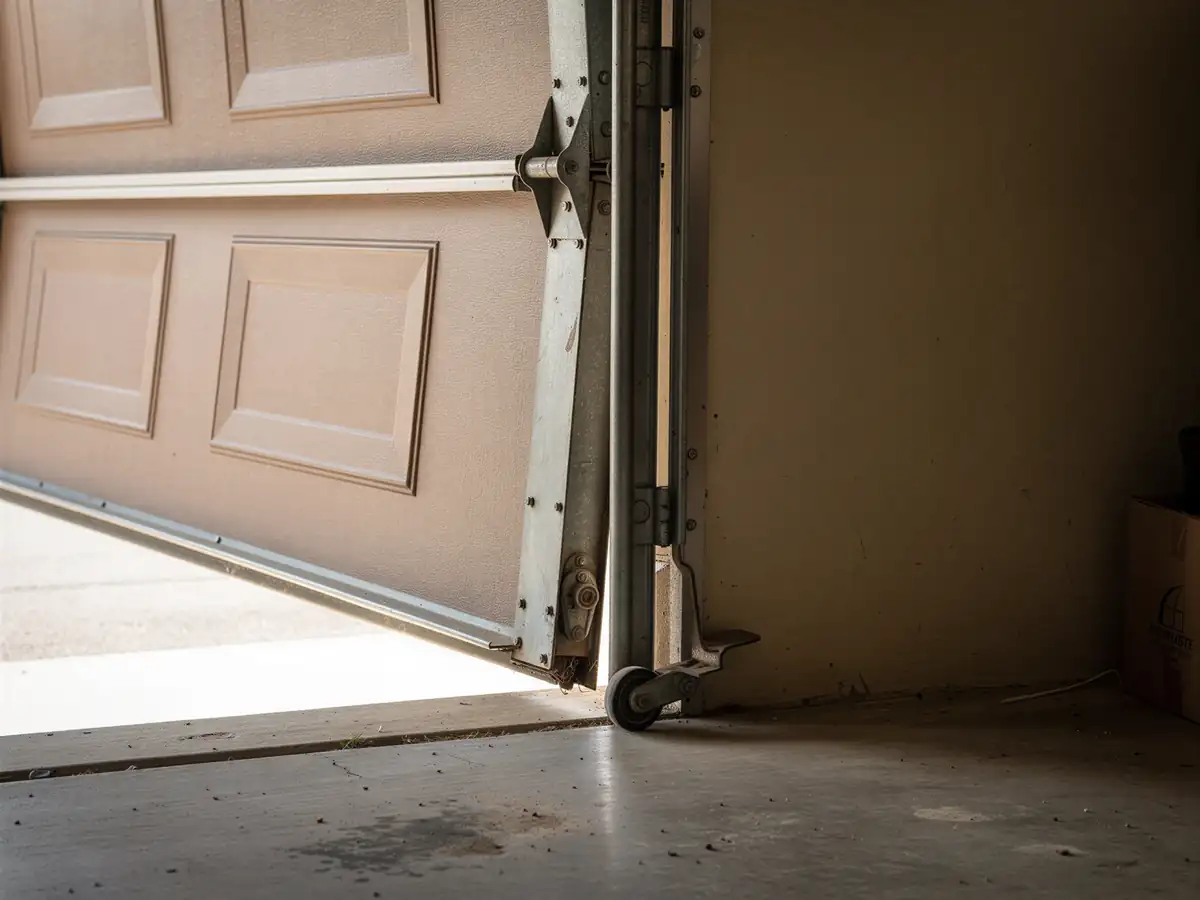
The door hangs crooked at one corner, lower on the side where the cable let go, and it won't sit flush against the weatherstrip anymore. If the cable snapped while the door was down, you'll usually find a loose coil of frayed wire bunched near the bottom bracket, sometimes still threaded through the pulley but not wound onto the drum.
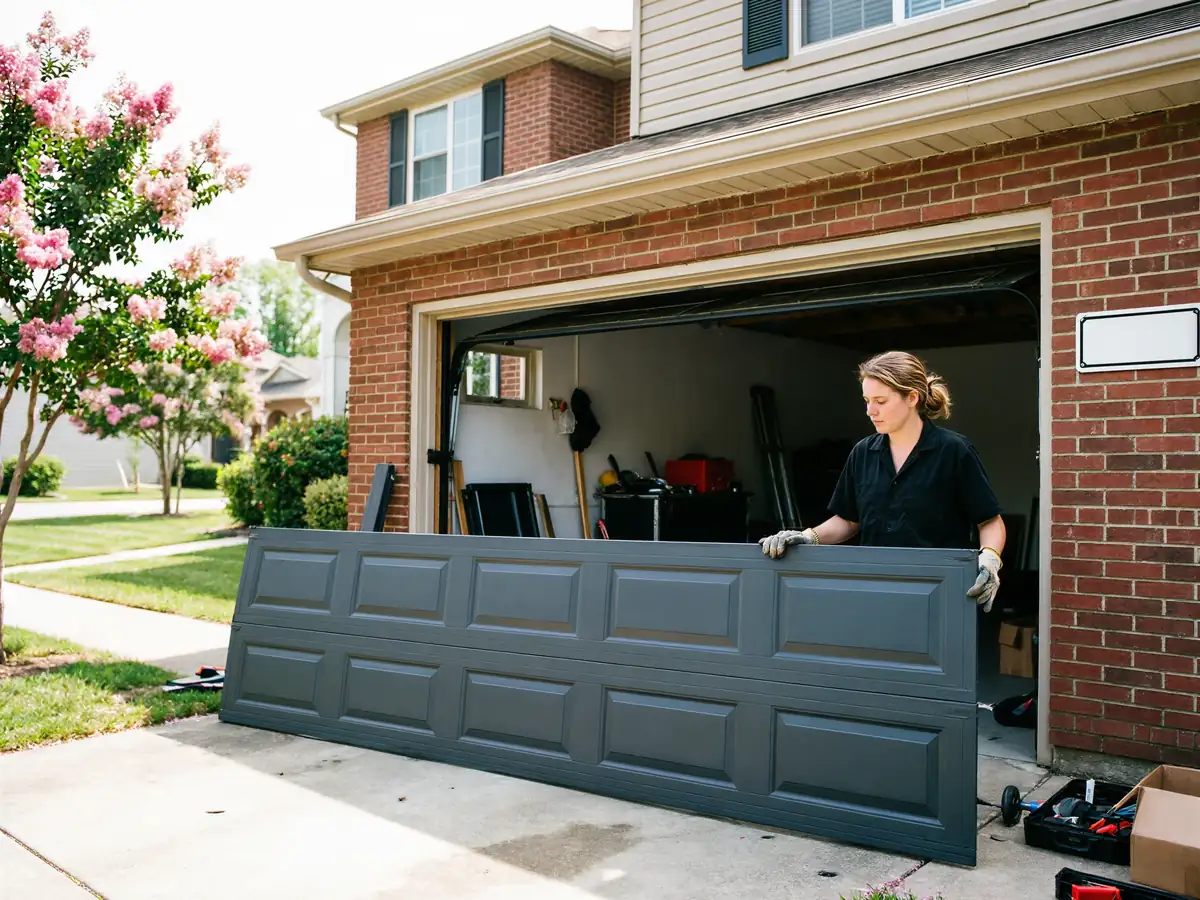
If it snapped while the door was open or mid-travel, the door can drop hard and fast - that's the one that scares people, and it's also the one most likely to bend a track or crack a bottom panel on impact. Either way, the opener will usually still run the motor, but the door won't move, or it'll move on one side only and jam.
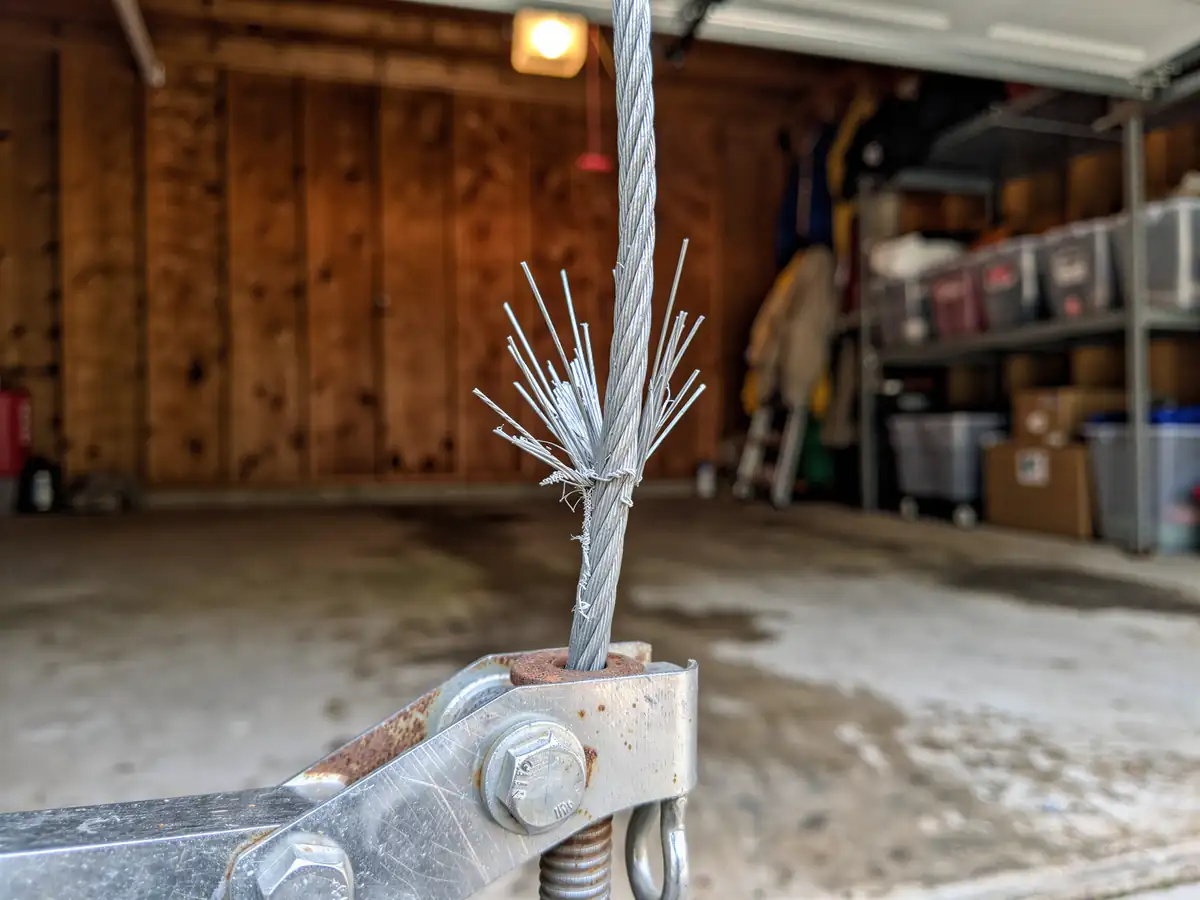
A frayed cable that hasn't fully let go yet looks different: you'll see individual wire strands sticking out near the drum end, and the door may shudder or jerk slightly on its way up. That's the version worth catching early, because it's a planned repair instead of an emergency one.
The Cost of This Job
We're not going to post a flat number here, because a cable job on a Rogers garage door isn't one job - it's three or four different jobs that all get called the same thing. A single frayed cable caught before it breaks, with good drums and even spring tension, is the cheapest version. A cable that snapped under load and let the door drop, possibly bending a track or denting a panel on the way down, is a different scope entirely. And a cable replacement that uncovers a scored drum or a spring that's lost most of its tension means those get priced in too.
What we can tell you is what drives the number up or down on this specific repair: whether both cables need replacing or just one, whether the drums are reusable, whether the opener's travel settings need to be reset afterward, and whether the door is a standard single or a heavier double-car door, which puts more load on the same-gauge cable.
Given the median household income across this service area sits around $87,150, most homeowners here are weighing a cable repair against whether it's worth tackling other wear items on the same door while the torsion system is already open. That's a fair question to ask on the phone before a truck comes out.
Why This Fails Locally
Rogers sits in a cold-moderate climate band
And that matters more for cables than most people expect. Steel cable doesn't like repeated temperature swings - it contracts in cold snaps and expands back, and over enough cycles that flexing is what starts the individual strands fraying at the drum, which is the highest-stress point on the whole run. A cable in a mild, stable climate can go longer without that fatigue.
Layer that onto the housing stock
Most of Rogers's garage doors, across the 17 areas this market covers, were built between 1987 and 2013, with a lot of that falling in the 1980s-90s range. Cable has a service life, and a huge share of the original installs in this market are now old enough that the factory cable is simply reaching the end of what it was built to do - at the same time, across thousands of similar houses, in the same weather.
That's why cable calls here cluster the way they do
It's not bad luck on any one house, it's a known-age installation base meeting a climate that stresses the metal every winter. A door in a newer subdivision with original hardware from the 2010s isn't there yet. A door from the late '80s or '90s almost always is.