What We Actually Check When We Come Out to Your Door
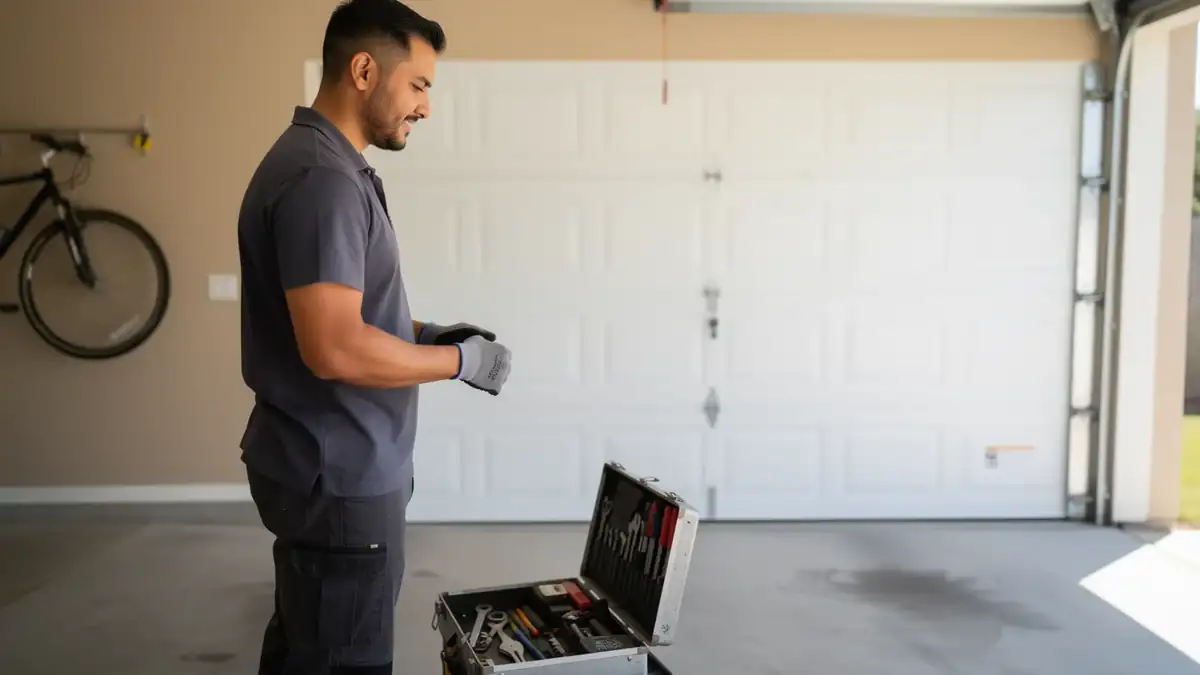
A service call in Rogers, AR checks the spring, cables, tracks, and opener on homes built mostly between 1987 and 2013 in our cold-winter climate here.
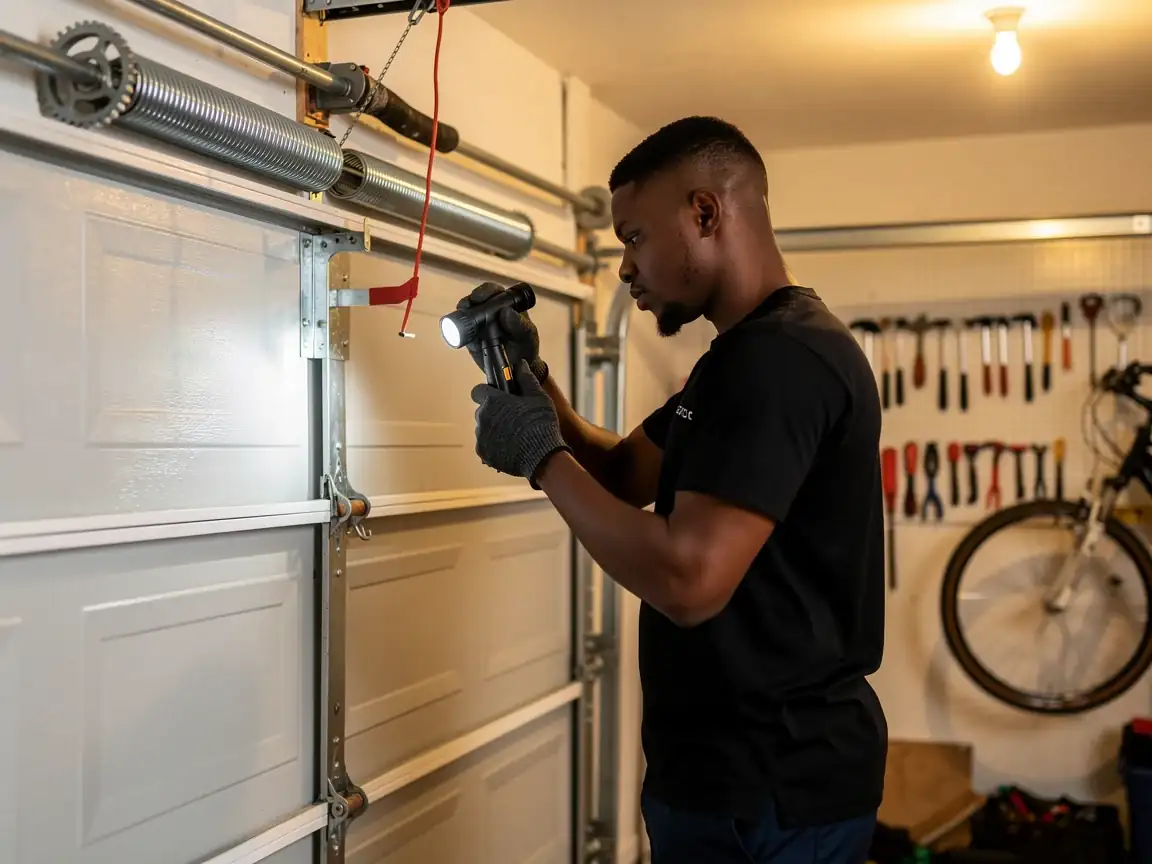
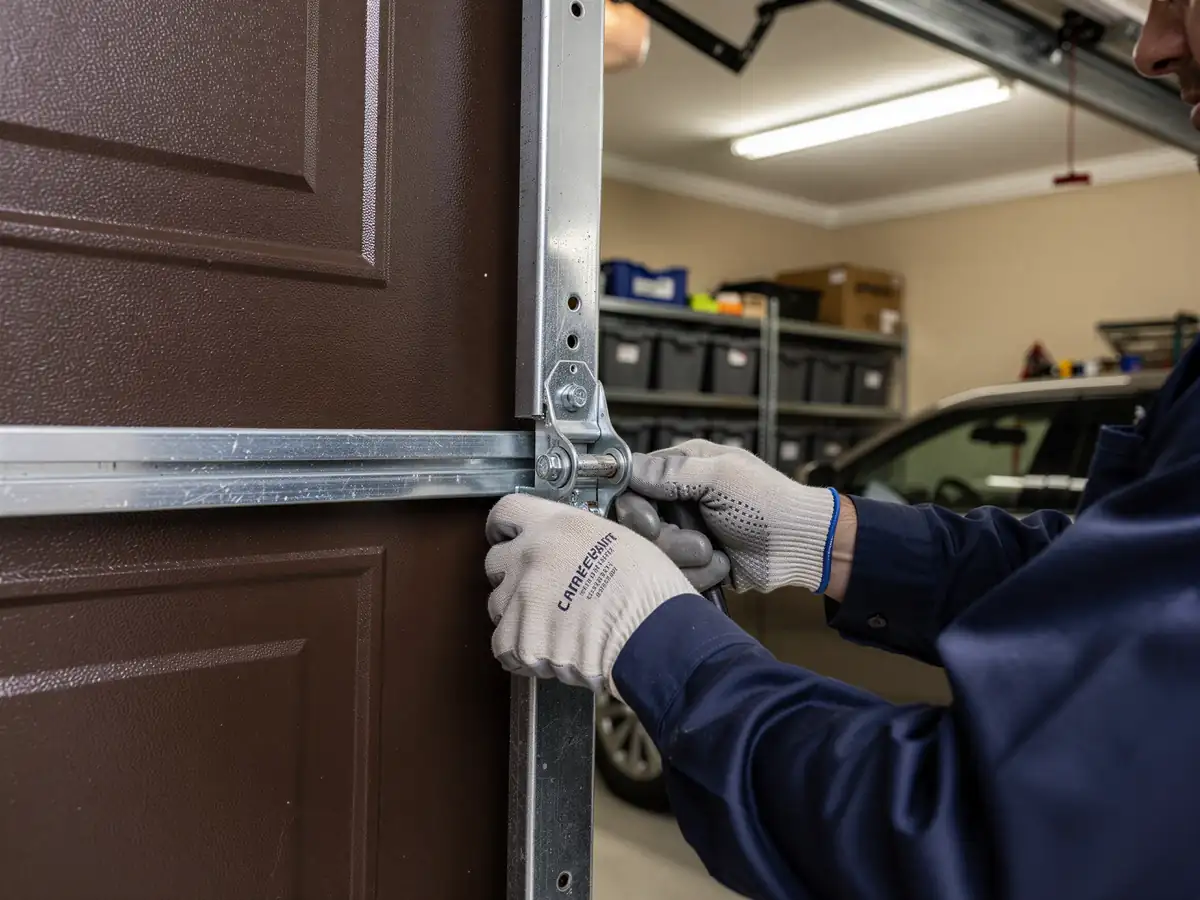
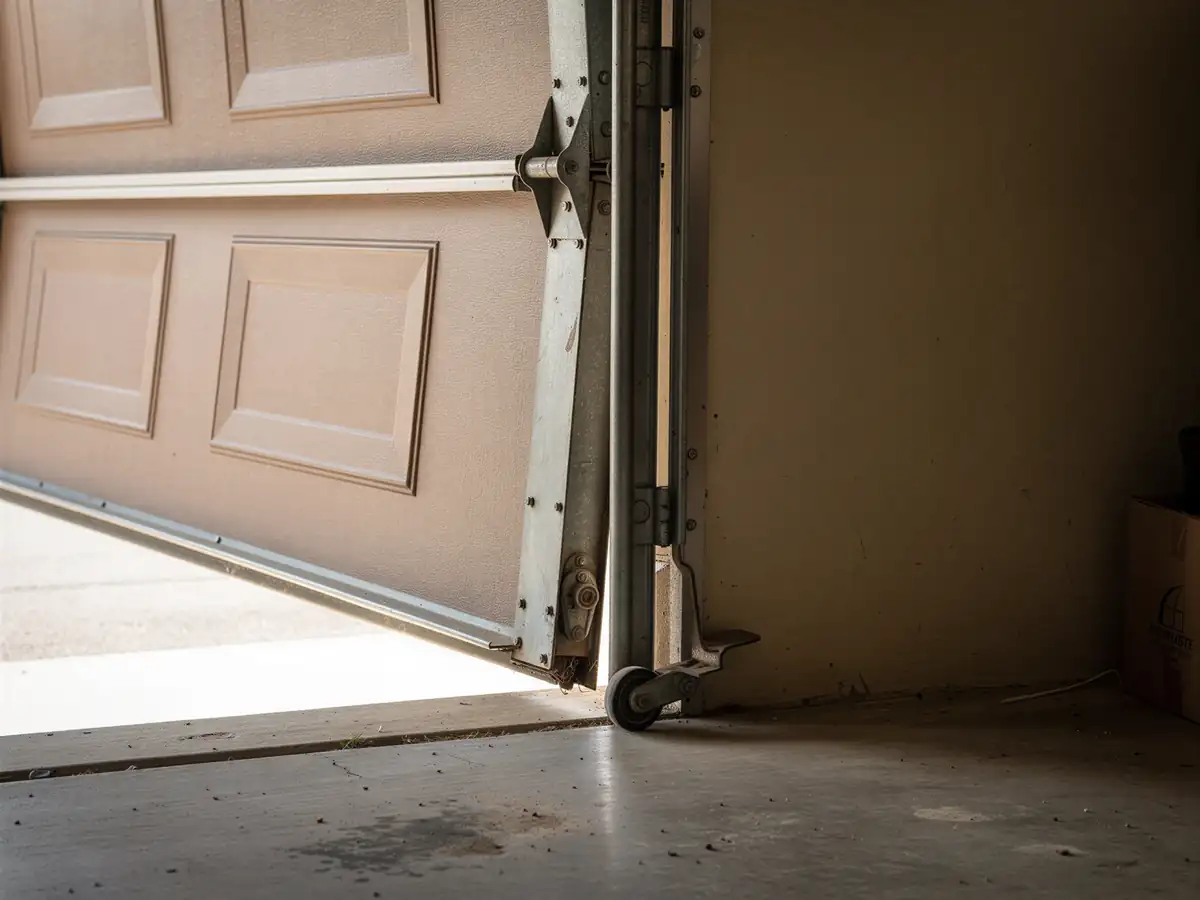
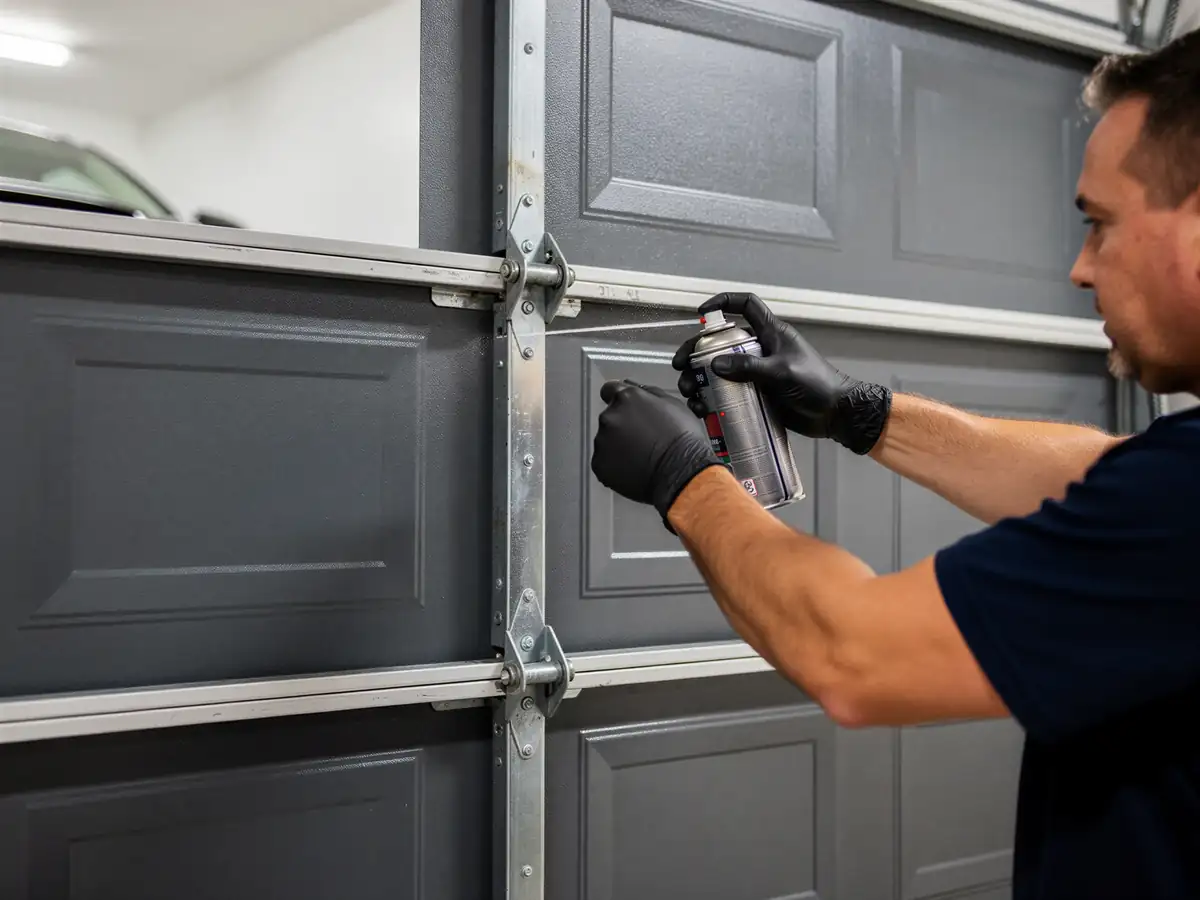
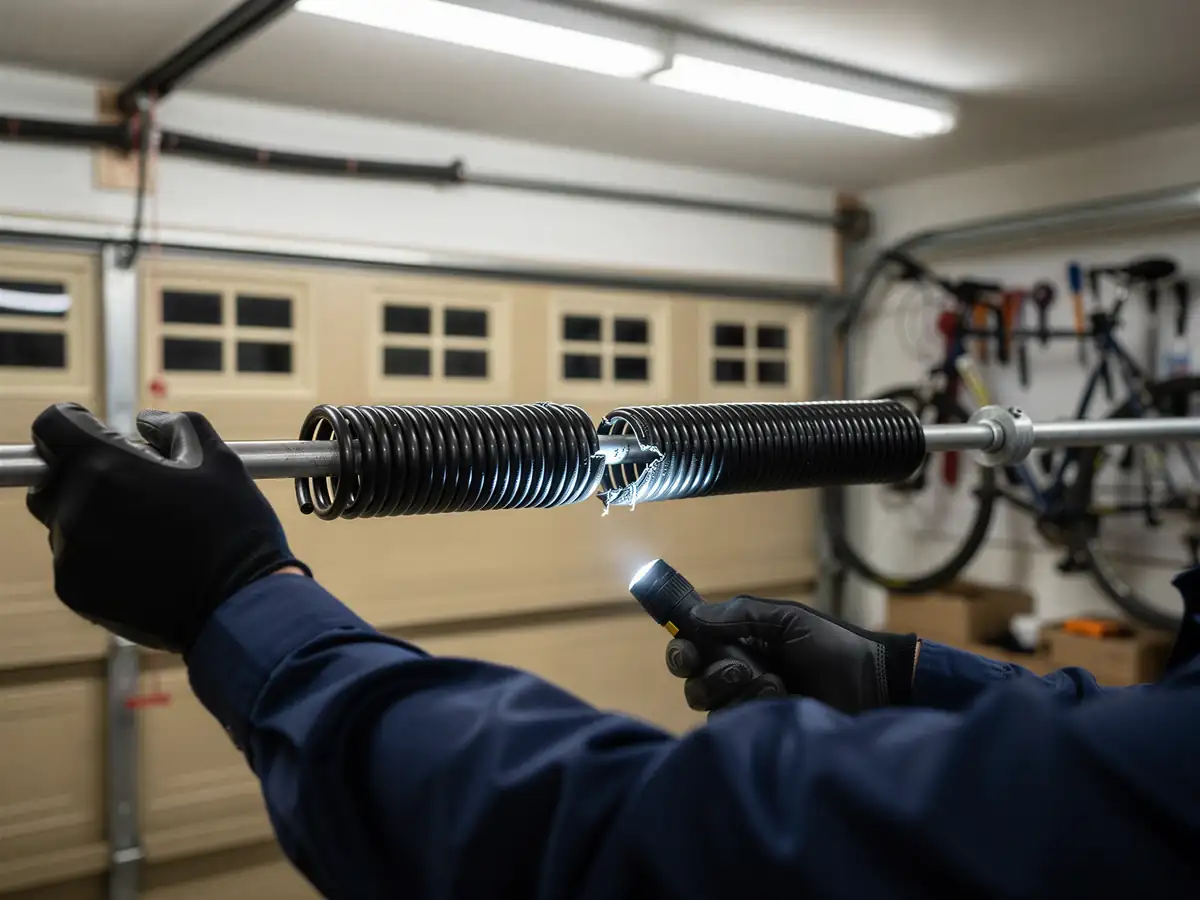
Most of the houses we work on in Rogers went up between 1987 and 2013, with the bulk of that clustering around 1997. That build window matters because it's when steel sectional doors with torsion springs on a center bracket became the standard replacement for the old extension-spring setups, and it's also when builders across the 17 communities we cover - Lowell, Little Flock, Cave Springs, Prairie Creek, and the rest out toward Gentry - started using lighter-gauge track and stamped rollers to cut cost. Thirty-plus years on, that hardware is aging out at close to the same time across a lot of houses at once. A service call almost never means just "the door won't open." It means we're looking at the spring (is it original or already a replacement), the cable drums, the track alignment, the roller condition, and the opener's drive gear, because on a house from this era those parts wear together. We won't tell you a part is shot if it isn't - half the calls we run end with a lubrication and a tension adjustment, not a parts swap. But on a door that's never been serviced since the house was built, something in that chain is usually close to done.
How Local Conditions Play In
Rogers sits in a cold, moderate climate band - real winter cold, not the kind that cracks concrete every year, but enough that steel contracts, grease stiffens, and weatherseal loses flexibility on a predictable schedule. On a service call here, we check the bottom seal and the opener's force settings as a matter of course, because a seal that's gone brittle in January will bind the door just enough to trip the opener's safety reversal, and homeowners usually assume that means the opener itself is failing when it's really a two-dollar part. Springs lose a small amount of tension in cold weather too - steel is less forgiving when it's cold - so a spring that was marginal in October can snap in January. That's not a Rogers-specific metal property, but it is why winter is when we get the call, and why a fall check-up before the cold sets in catches more than a mid-summer one does.
Checking It Yourself
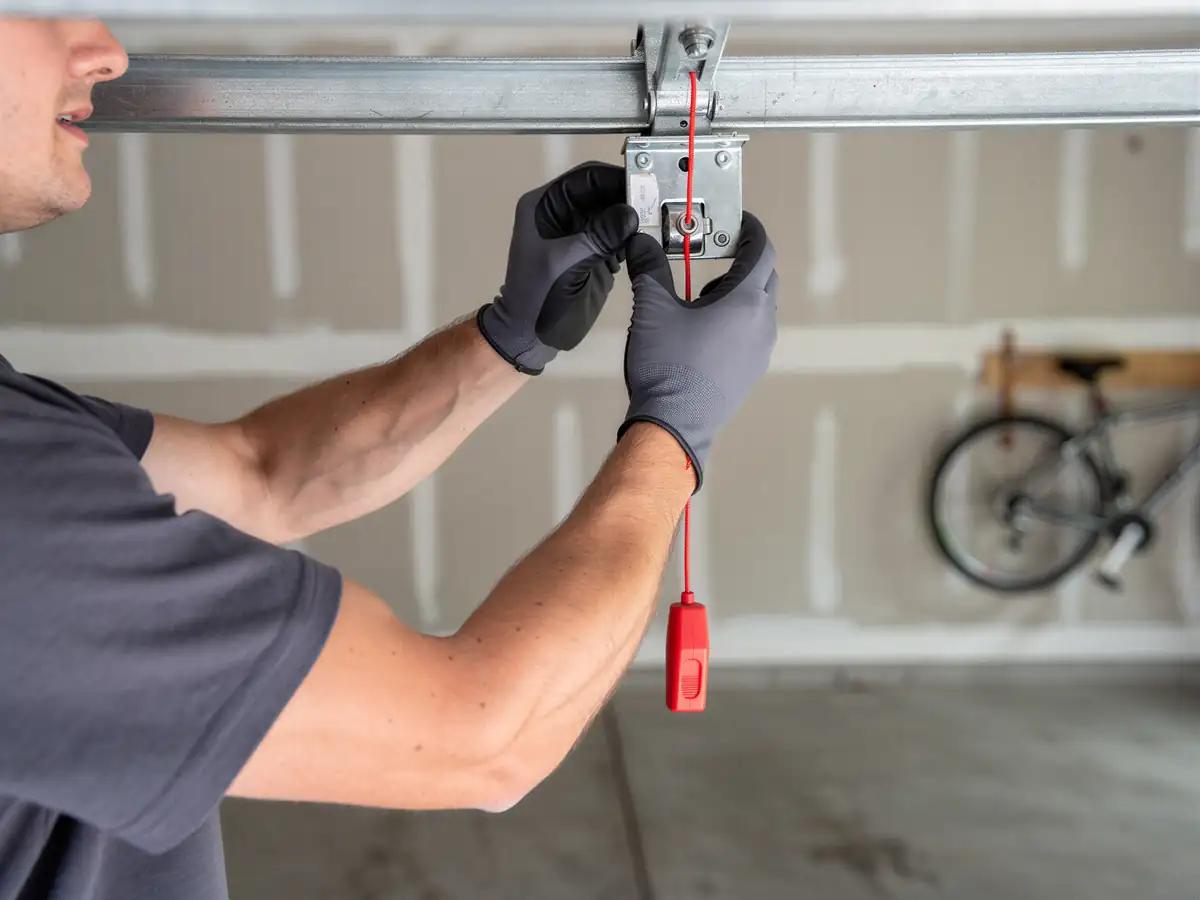
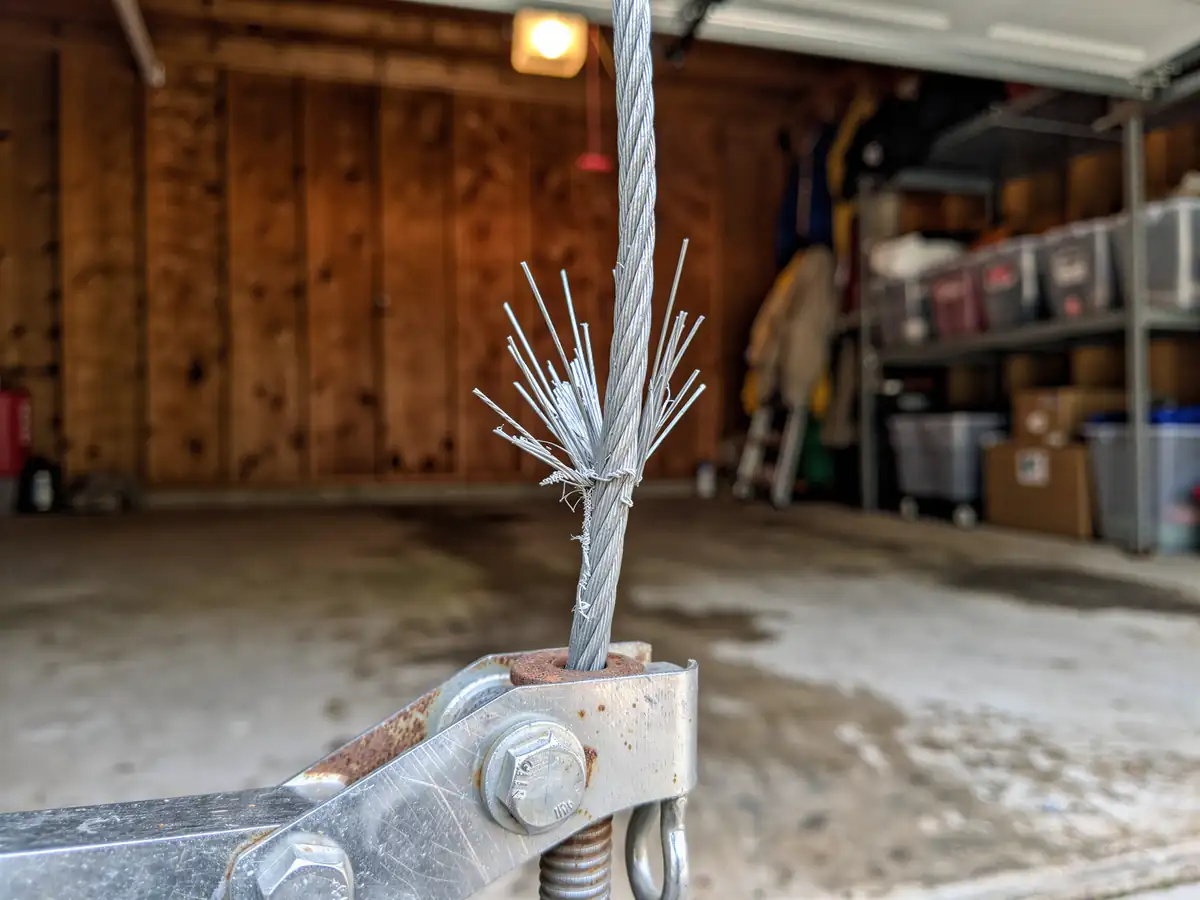
Before you call anyone, there's a few things worth looking at yourself. Pull the manual release and move the door by hand - if it's hard to lift or doesn't stay put halfway, the spring is losing tension and that's not a DIY fix. Look at the cables near the bottom brackets for fraying. Check the track for gaps where it bolts to the wall, especially on older houses in this area where the framing has settled a little over 25-plus years. Listen to the opener: grinding on the drive gear versus a clean hum tells you a lot before we even show up. Here's the honest limit: we don't recommend adjusting torsion spring tension yourself, ever. It's wound under enough force to break bones, and on a house built in the 1990s the spring and its winding cones are old enough that we can't guarantee how it'll behave under a wrench. That one part of the job, leave to us.
The Cost of This Job
We don't publish a flat price list because the job really does vary by what's wrong and how old the parts are - a lubrication and adjustment call is a different job than a spring replacement on a door that hasn't been touched since it was built. What we can tell you is how we think about it: across the service area, median household income runs around $87,150, and that's roughly the household we're pricing for when we tell someone that replacing a 25-plus-year-old spring and worn rollers together usually costs less in the long run than paying for two separate emergency calls on the same door. With close to 28,308 owner-occupied houses in this area built mostly in that same 1987-2013 window, we see the same aging hardware often enough to know when repair still makes sense and when it doesn't. If your door is from the original build and nothing's been replaced, expect the call to cover more than one part.
How it works
From “it’s stuck” to “it’s fixed”
01
Tell us what’s wrong
Describe the symptom - won’t open, loud bang, opener runs but the door won’t move.
02
On-site diagnosis
A technician tests the door under power and by hand and finds what actually failed.
03
Clear, up-front plan
You get the fix that’s needed and what drives the cost - before any work starts.
04
Repaired & tested
The repair is done, the door is set true and tested, and the work area left clean.
Not sure which repair your door needs in Rogers, AR? Describe what it’s doing - every job starts with a diagnosis.
How old does a garage door have to be before you'd recommend replacing it instead of repairing it?
It depends more on what's failing than the exact age, but on houses here built in the late 1980s through the 1990s, once the spring, rollers, and track are all original and worn together, replacing the door usually costs less over time than repairing it piece by piece. We'll tell you straight if that's where your door is.
Do you service areas outside Rogers itself?
Yes - we cover the surrounding communities including Lowell, Little Flock, Cave Springs, Prairie Creek, Avoca, Centerton, Elm Springs, Pea Ridge, Highfill, Tontitown, Bella Vista, Johnson, Garfield, Gravette, Decatur, Goshen, and Gentry.
Why does my door get harder to open in the winter?
Cold steel loses a bit of spring tension, and weatherseal that's gone stiff adds friction at the bottom of the door. Together that's often enough to trip the opener's safety reversal, which feels like the opener failing even though the real cause is upstream of it.
Can I just tighten the spring myself if the door feels heavy?
No - torsion springs hold a lot of force and adjusting them without the right bars and experience is a real injury risk. It's the one part of this job we don't talk anyone through over the phone.
Ready to get your garage door sorted?
Tell us what it’s doing and where you are in Rogers - we’ll take it from there.