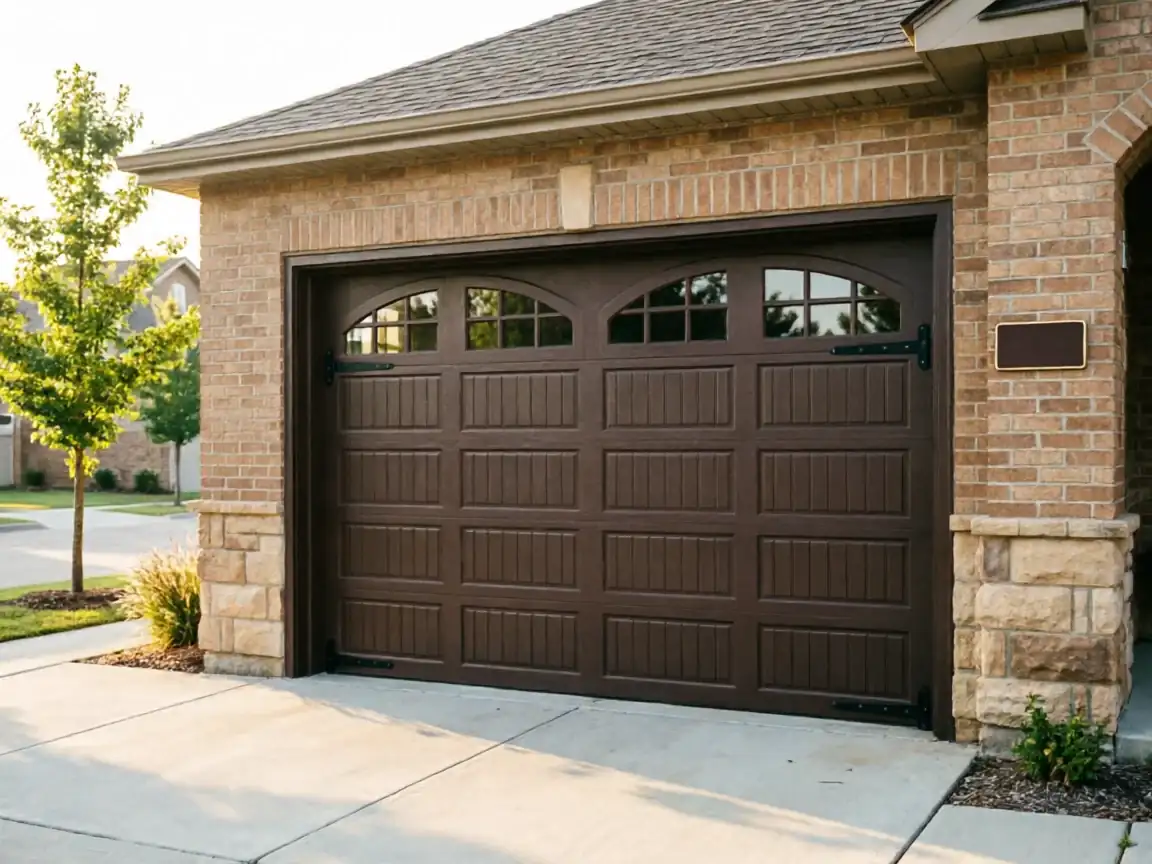
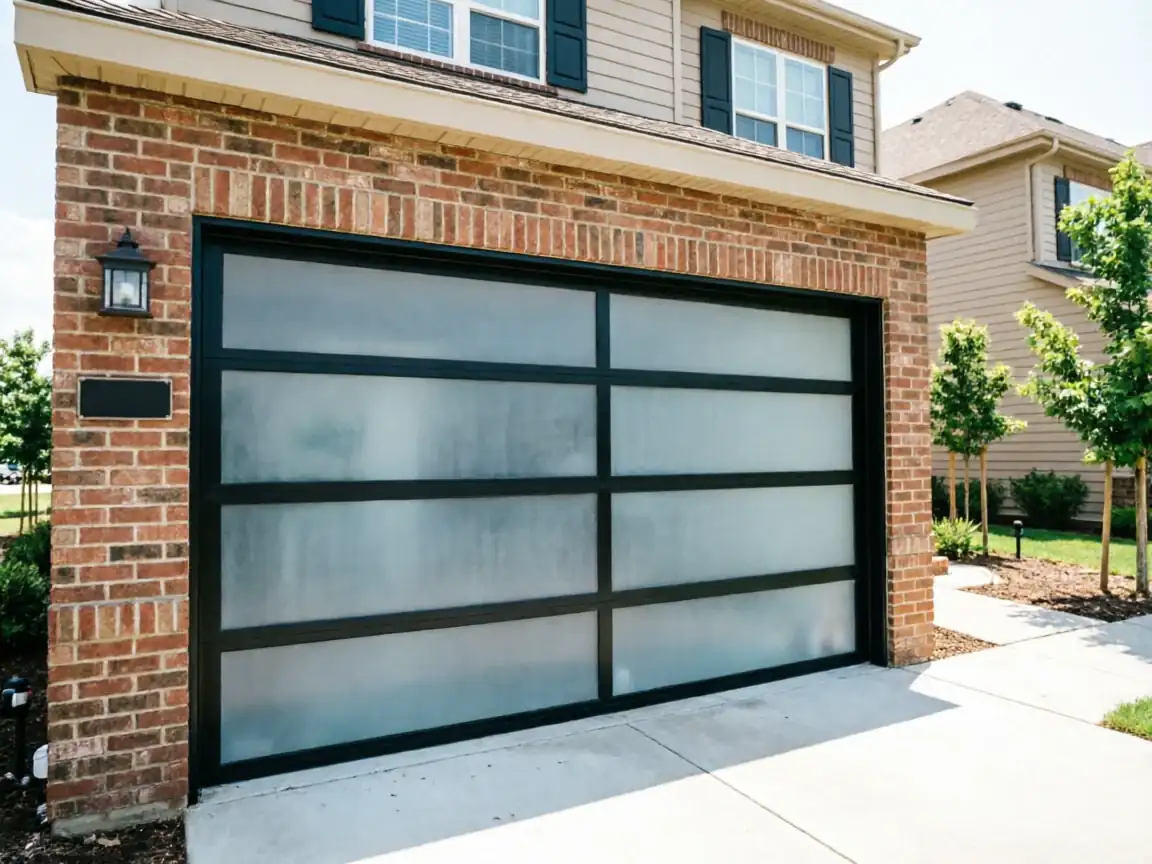
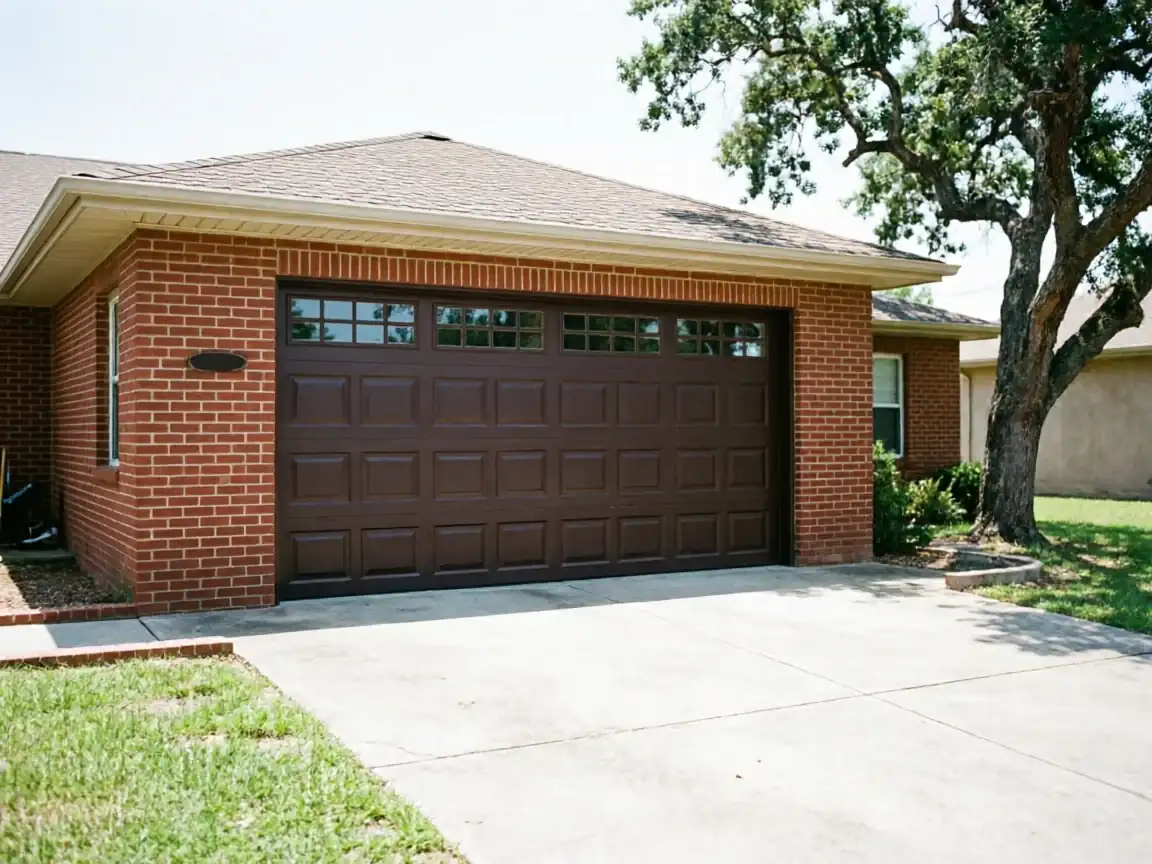
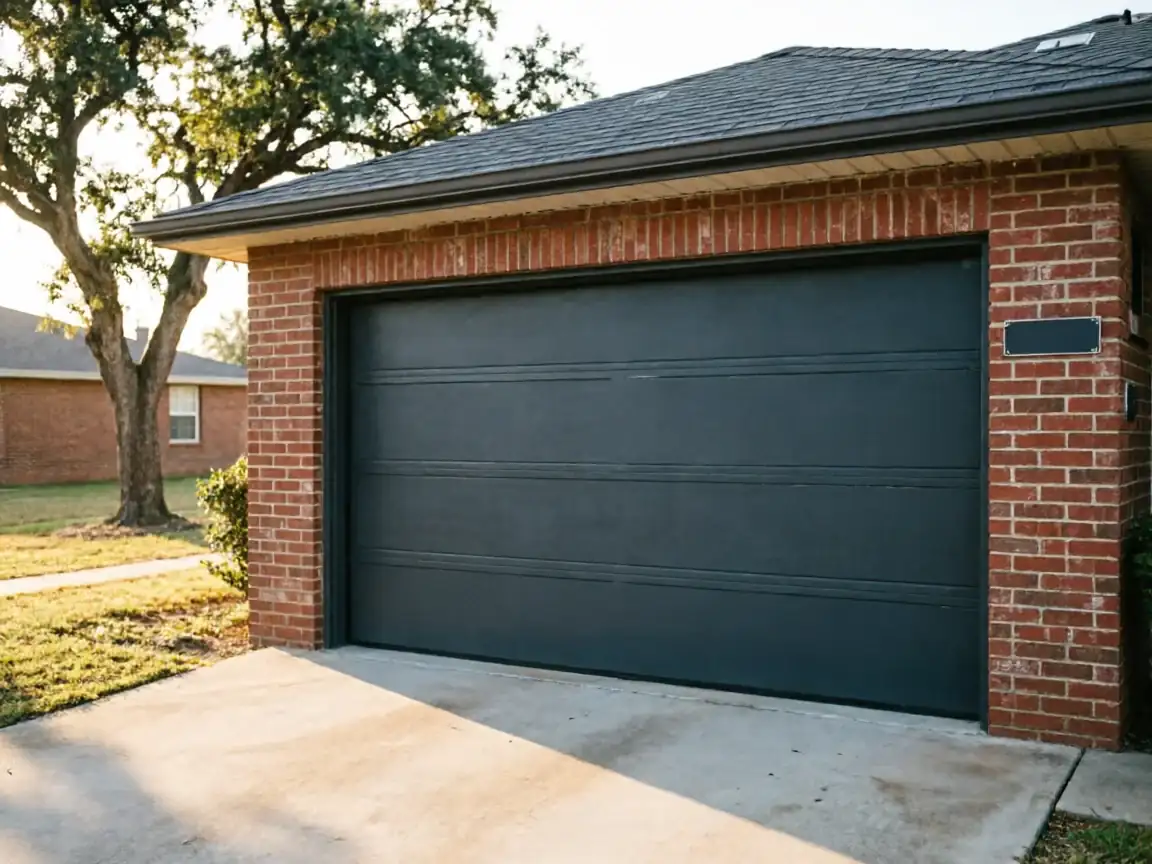
Garage door repair for Rogers, AR homes built 1987-2013. We know the openers and torsion springs that fail first in this area's housing stock and cold winters.
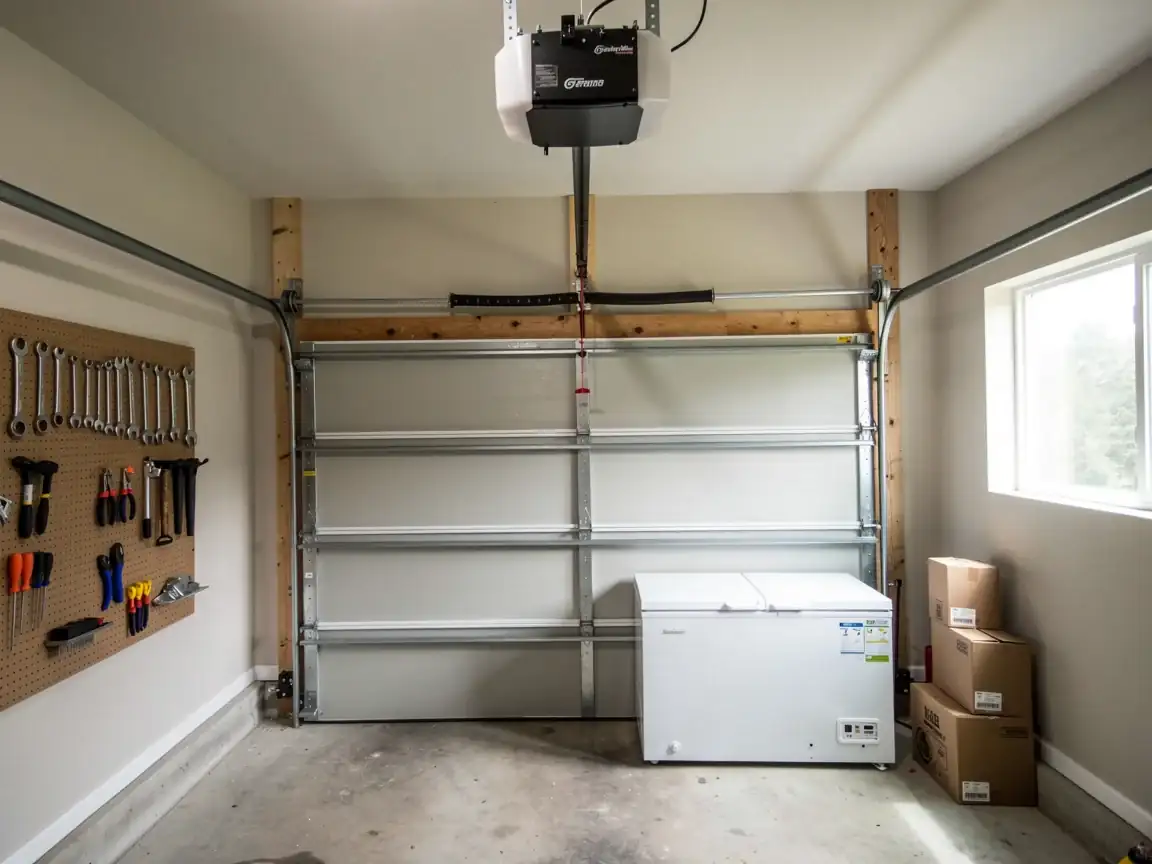
Most of the houses we get called to in Rogers went up somewhere between 1987 and 2013, with the median build year sitting around 1997. That's a specific window. It means the bulk of the garage doors in this area are on steel torsion systems rather than the older extension-spring setups you'd find in a much older town, and most openers are chain or belt drive units from the 1990s and 2000s rather than anything smart-home connected from the factory. The complication is that a lot of these systems are now 25-35 years old, which is past the realistic service life of springs, cables, and the first-generation openers that came with the house. Owners often don't know the age of their own door hardware because they bought the house secondhand, long after the original installer left the job. Across the 17 named areas that make up this part of Northwest Arkansas, the stock is fairly uniform - mostly 1980s and 90s construction - so the failure patterns repeat house to house in a way that's predictable if you've seen enough of them. That consistency helps us diagnose fast, but it also means a wave of these doors are hitting failure age around the same time.
The Symptom
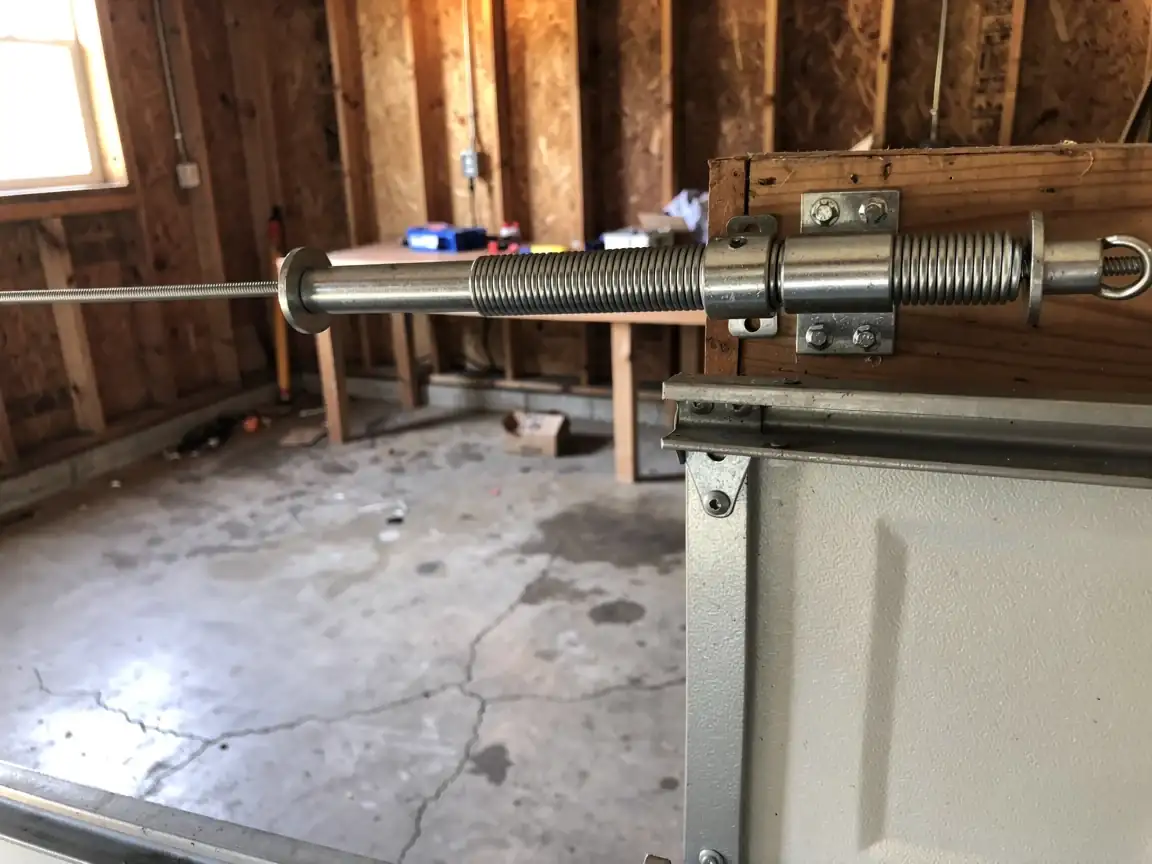
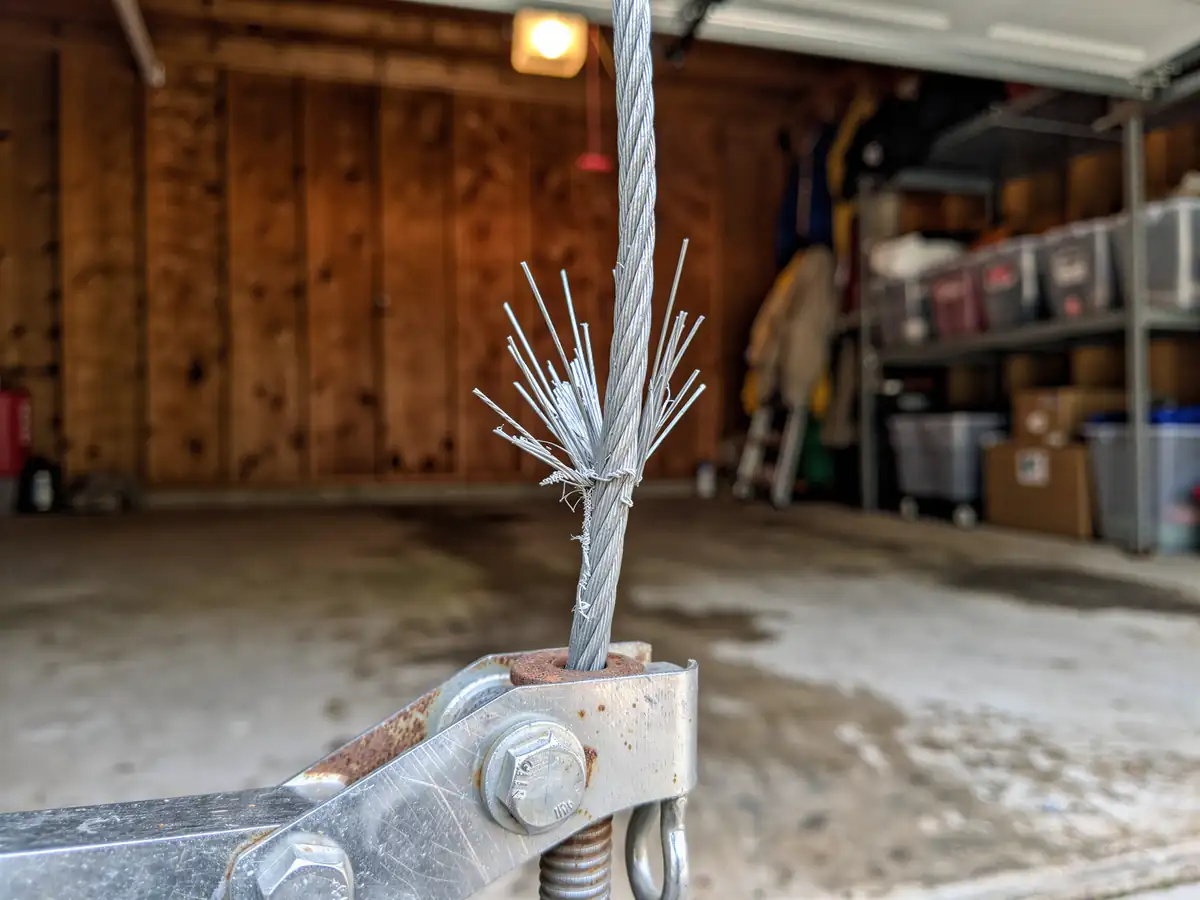
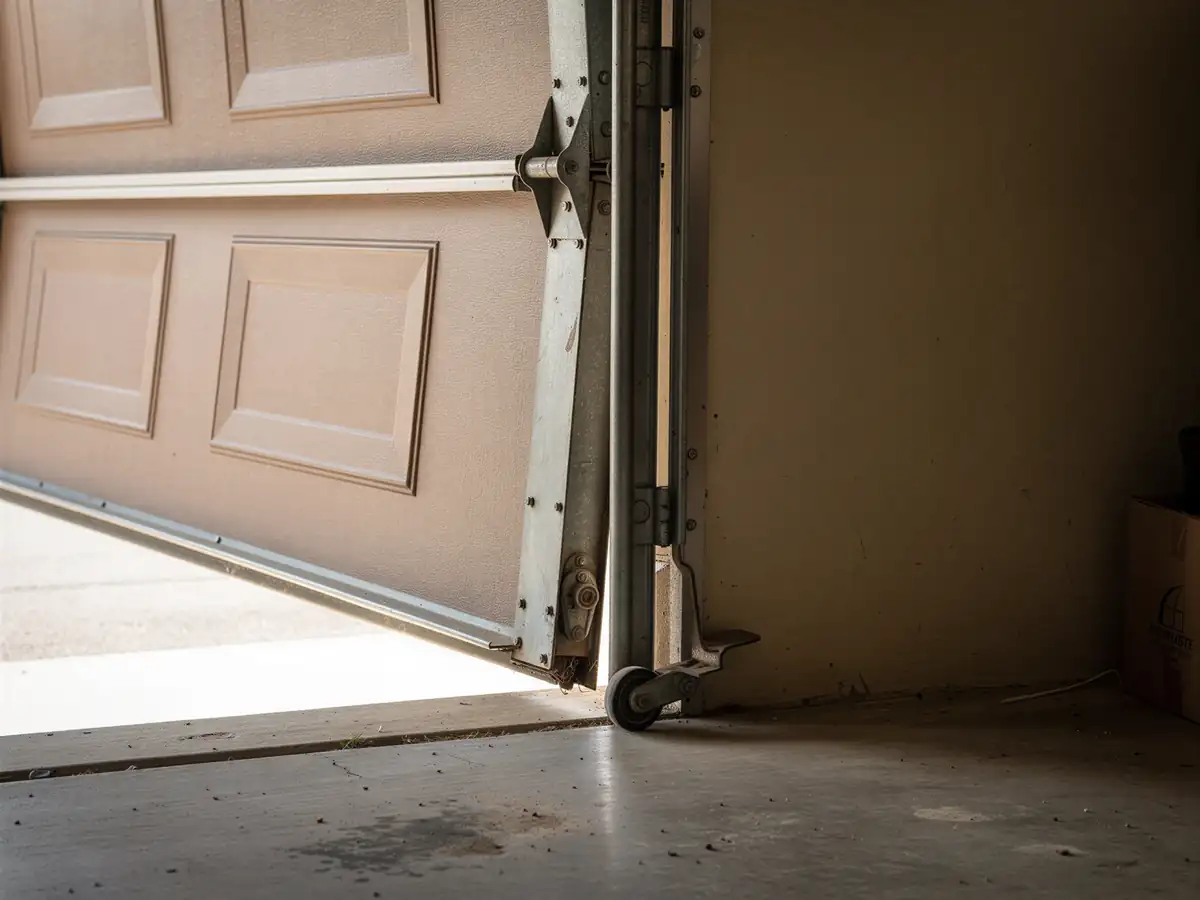
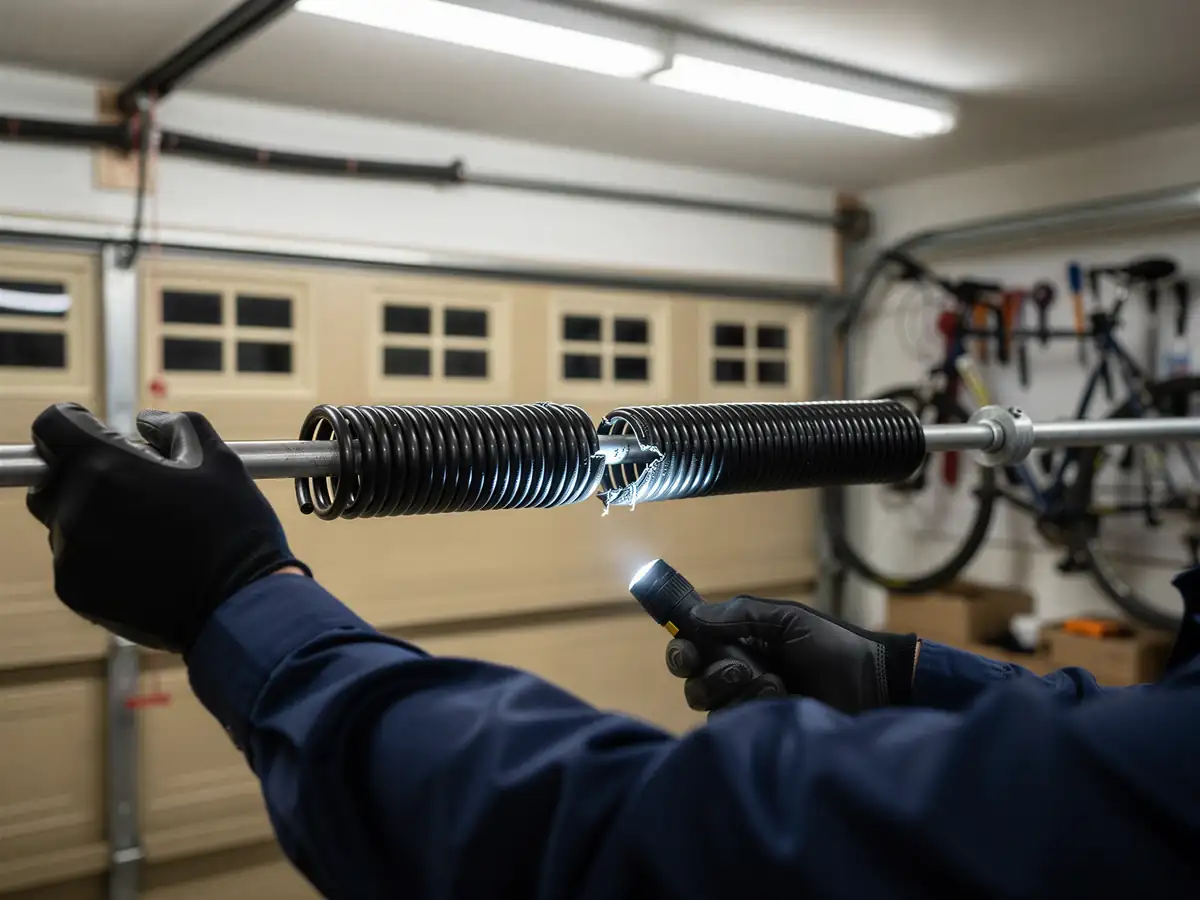
The call we get most from this housing stock is a door that won't open, or opens partway and reverses. On a torsion-spring system from the 1990s, that's almost always a spring that's reached the end of its cycle count and snapped, or is close enough to it that the opener is straining and tripping its own safety limits. You'll hear a loud bang from the garage - that's the spring letting go - and then the door won't budge by opener or by hand. A second common symptom is a door that shudders or jerks partway up, which on houses in this age range is often a cable starting to fray off a worn drum, not the opener itself. Owners frequently blame the opener first and replace it, only to find the real problem was mechanical. We don't fault anyone for that assumption, but it's worth checking the springs and cables before spending money on a new opener unit.
The Cost of This Job
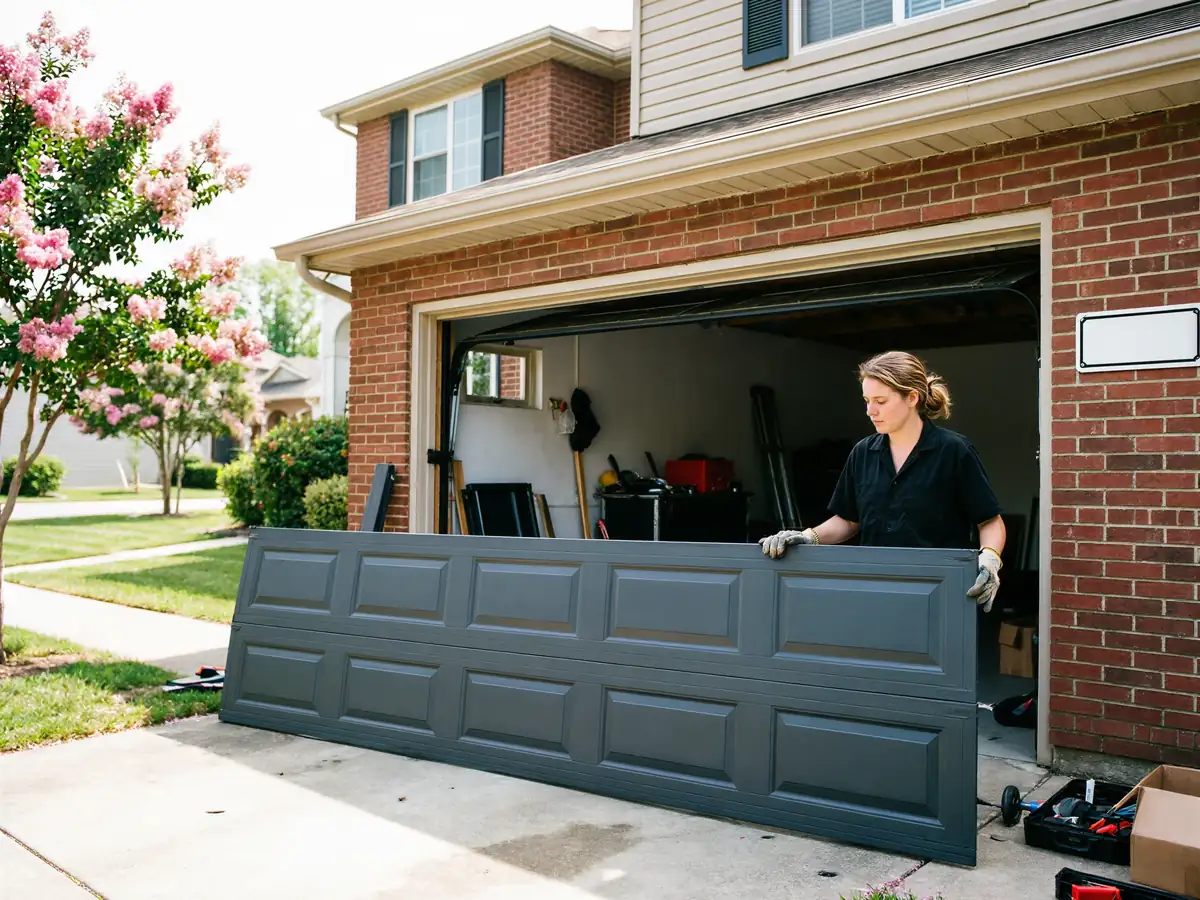
We don't publish flat prices here because spring size, door weight, and track condition vary even within the same subdivision, let alone across the wider service area. What we can tell you is how the decision usually breaks down. A straightforward torsion spring replacement on a standard double door is a different job, and a different cost, than a cable and drum repair paired with a spring job on a door that's been limping along for months on worn parts. The honest version: if a door from the 1990s-2000s build era needs a second major repair within a couple of years - spring, then opener, then track - replacement starts to make more financial sense than another round of patching old hardware. We'll tell you when we think that point has been reached instead of running up a repair bill on a door that's on its way out anyway.
Why This Fails Locally
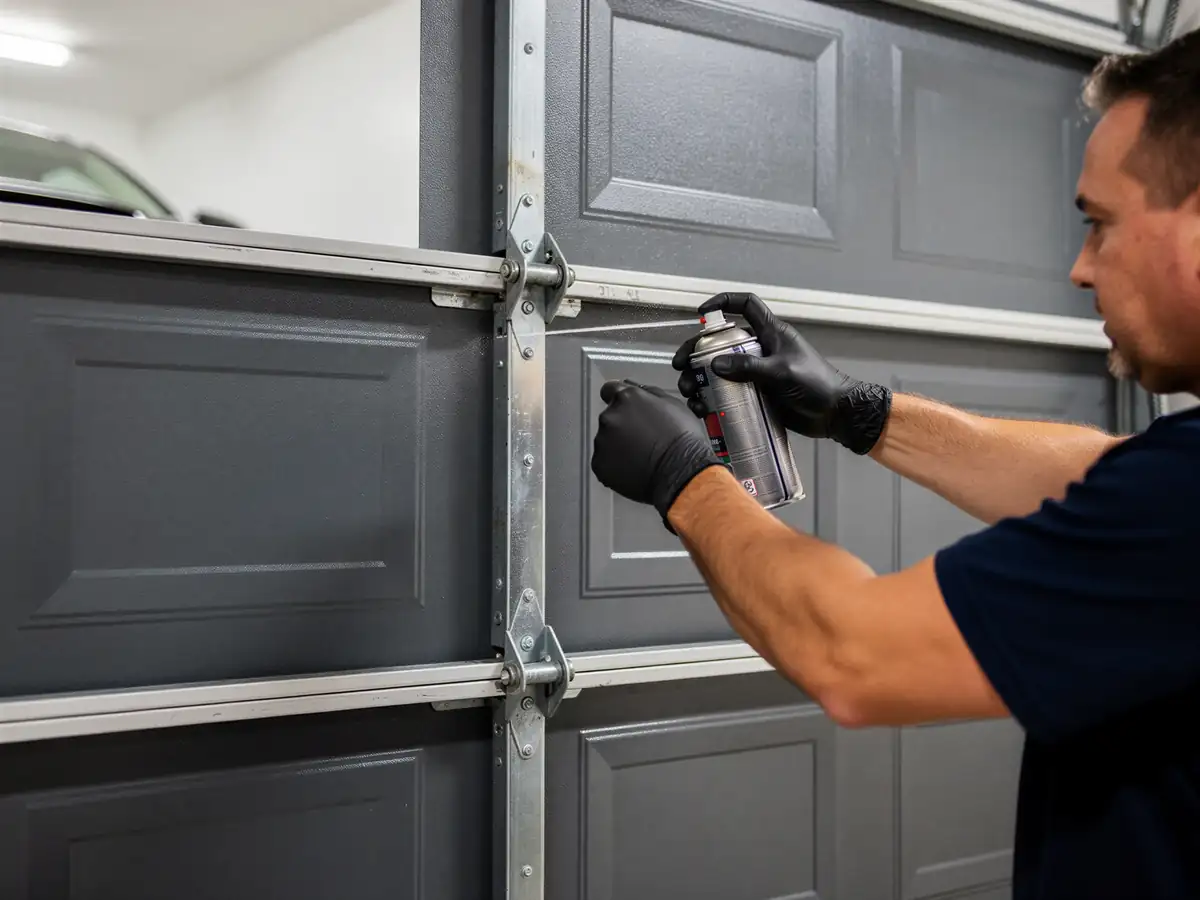
Northwest Arkansas sits in a moderate cold climate band, and that matters more to garage doors than people expect. Temperature swings between summer heat and winter cold cause steel torsion springs and track hardware to expand and contract season after season, which speeds up metal fatigue compared to a door that never sees a hard freeze. Combine that with a housing stock concentrated in the 1987-2013 window - meaning tens of thousands of doors are now aging through the same stress cycles at roughly the same time - and you get a steady, predictable pattern of spring and cable failures rather than scattered random ones. A door built in 1995 and a door built in 2005 are both well past the point where original springs are reliable, and both are subject to the same seasonal temperature swing. That's why a repair approach built for a newer climate-controlled coastal market, or for a much older pre-1980s housing stock, doesn't map onto what actually breaks here.
How it works
From “it’s stuck” to “it’s fixed”
01
Tell us what’s wrong
Describe the symptom - won’t open, loud bang, opener runs but the door won’t move.
02
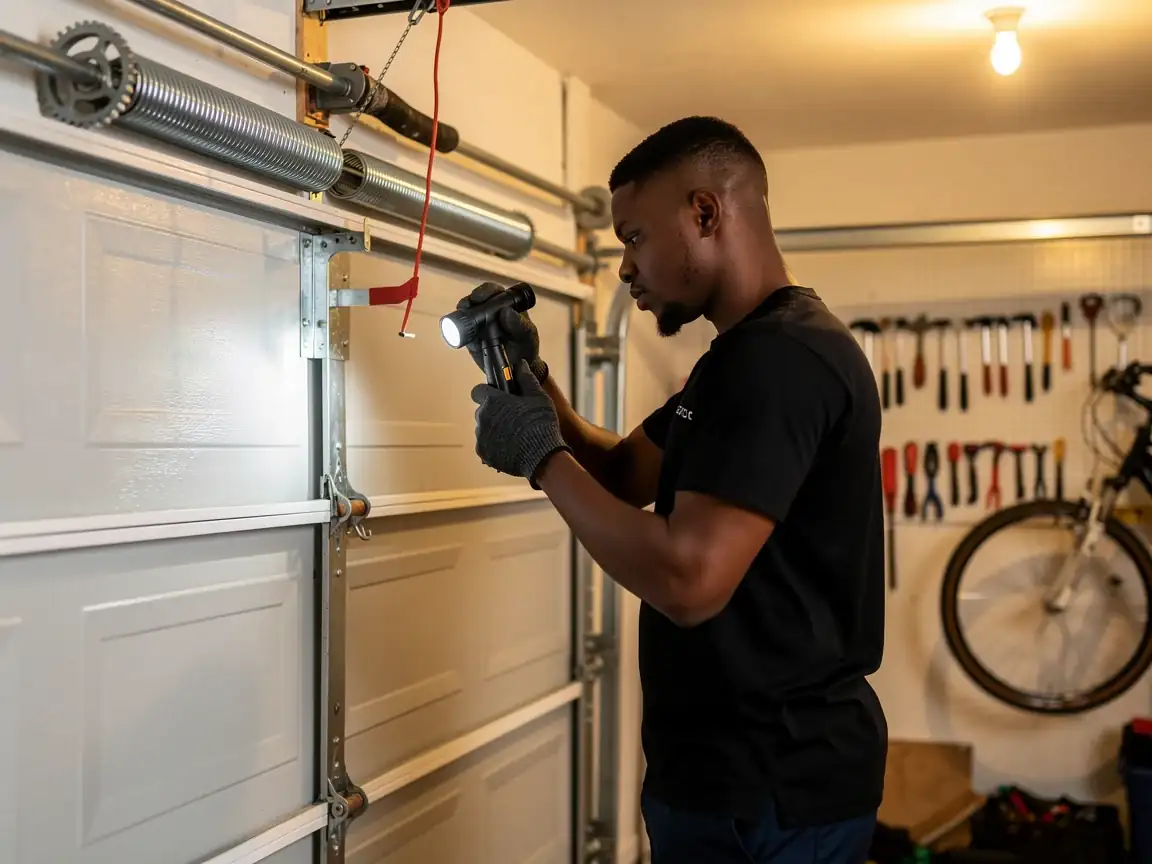
On-site diagnosis
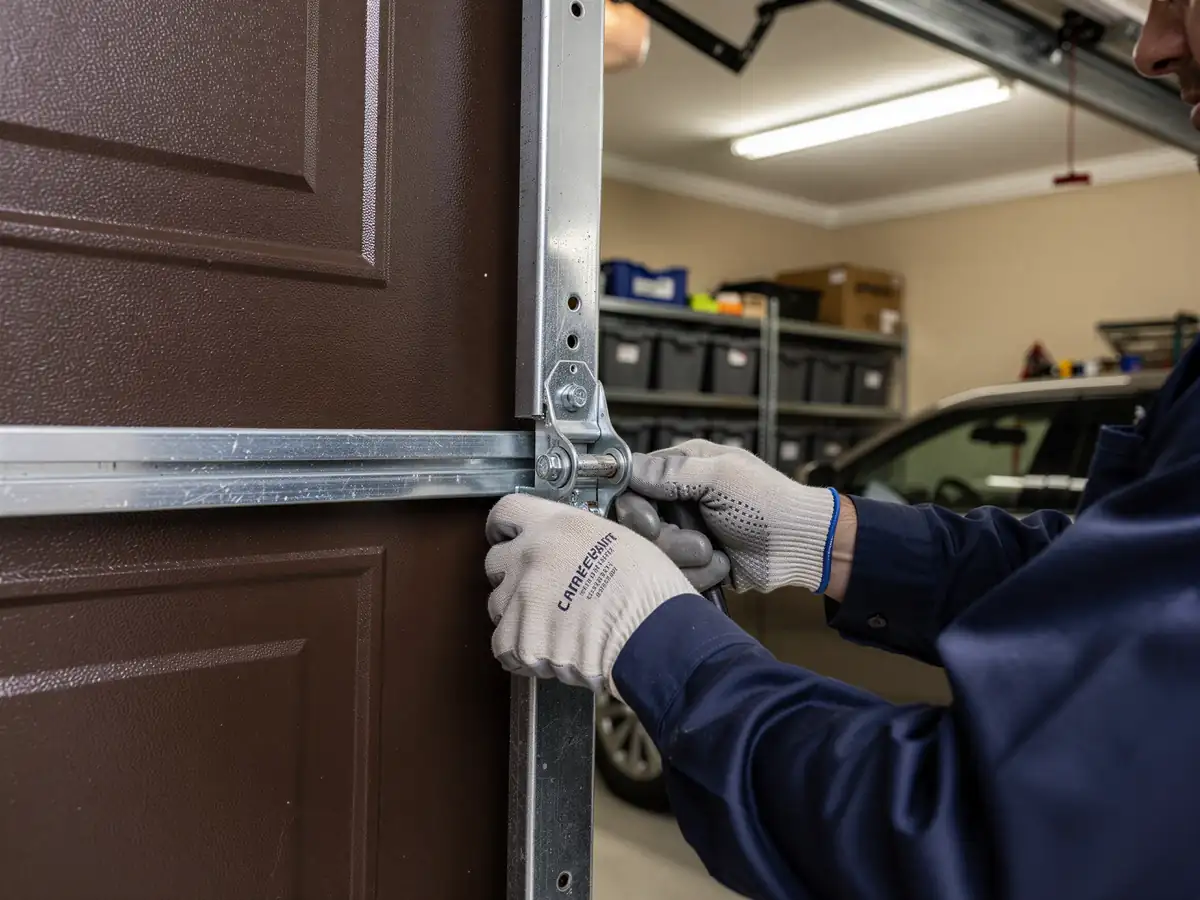
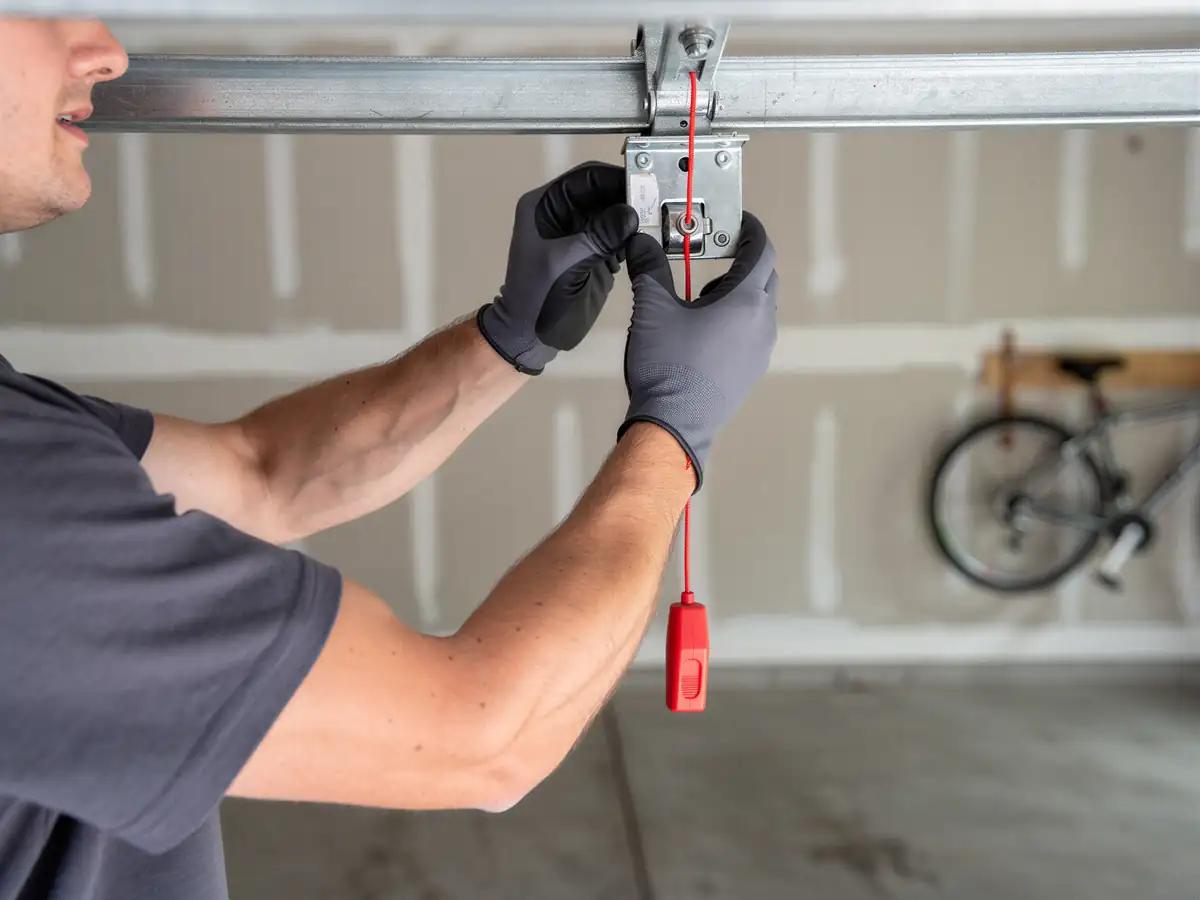
A technician tests the door under power and by hand and finds what actually failed.
03
Clear, up-front plan
You get the fix that’s needed and what drives the cost - before any work starts.
04
Repaired & tested
The repair is done, the door is set true and tested, and the work area left clean.
Not sure which repair your door needs in Rogers, AR? Describe what it’s doing - every job starts with a diagnosis.
How old does a garage door spring usually get before it fails in Rogers?
Most of the torsion springs we replace are on doors from the 1987-2013 build era common in this area, so they're typically 20 to 35 years old. Combined with the seasonal cold here, that age range is where failure becomes common rather than rare.
Is it my opener or my springs if the door won't lift?
On houses from this area's typical build era, a door that won't lift is more often a spring or cable problem than an opener problem. The opener senses the extra resistance and stops itself as a safety measure, which can look like opener failure when it isn't.
Do you serve areas outside Rogers?
We work across the surrounding area including Lowell, Little Flock, Cave Springs, Prairie Creek, and nearby communities within about a 15-20 minute drive of Rogers.
Ready to get your garage door sorted?
Tell us what it’s doing and where you are in Rogers - we’ll take it from there.