The Symptom
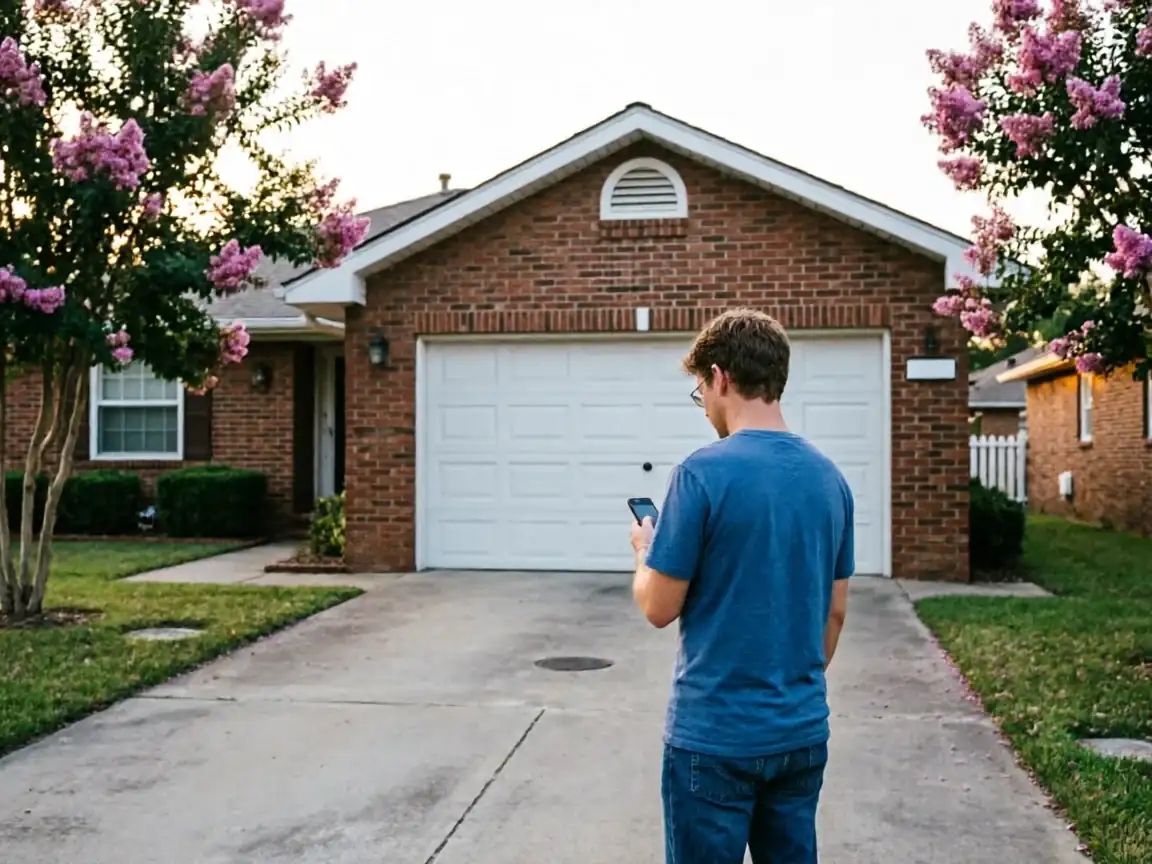
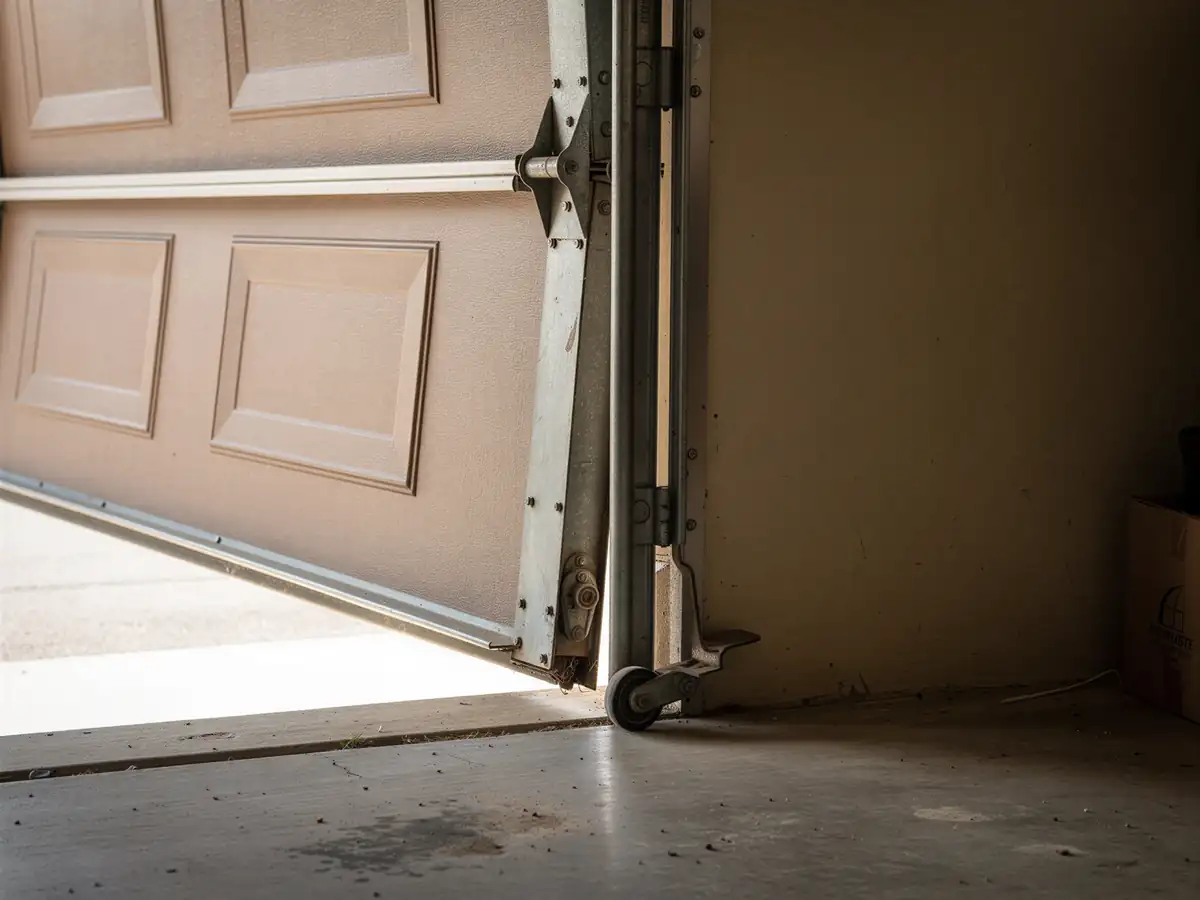
The call we get most from Centerton is a door that won't budge
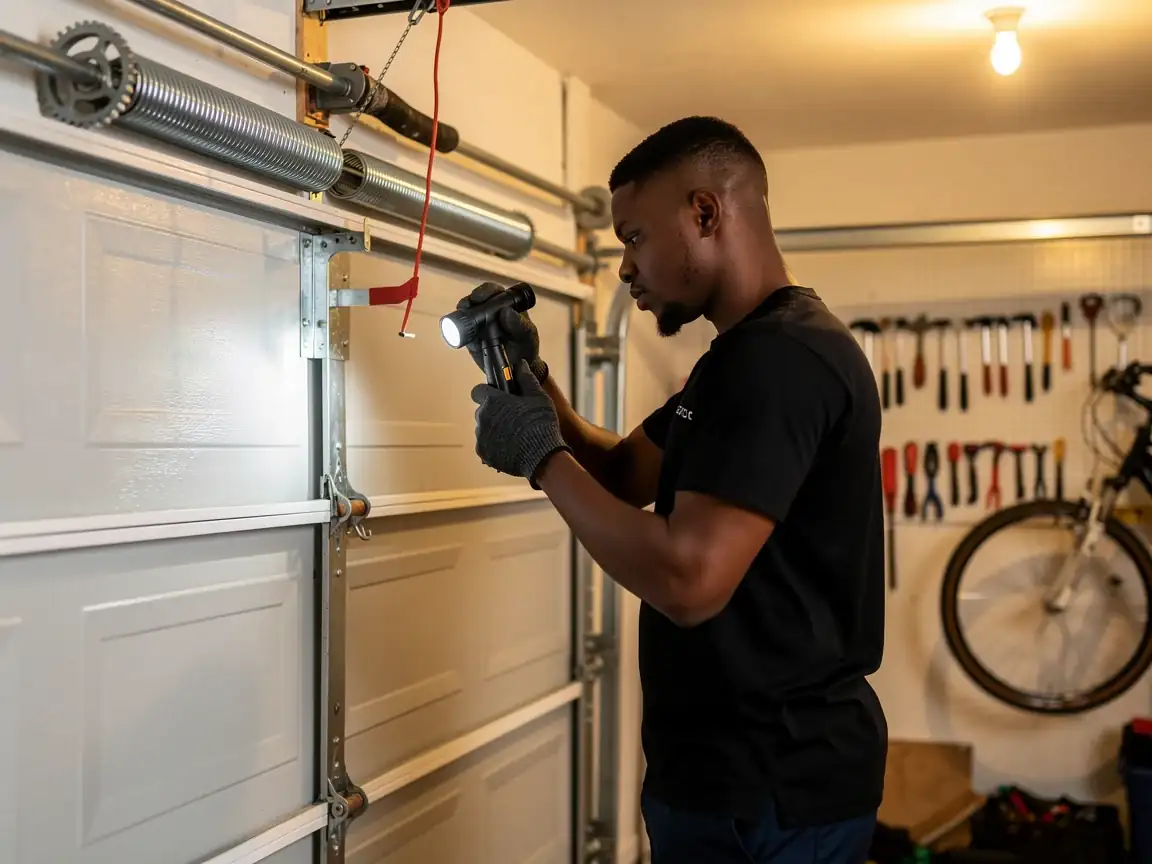
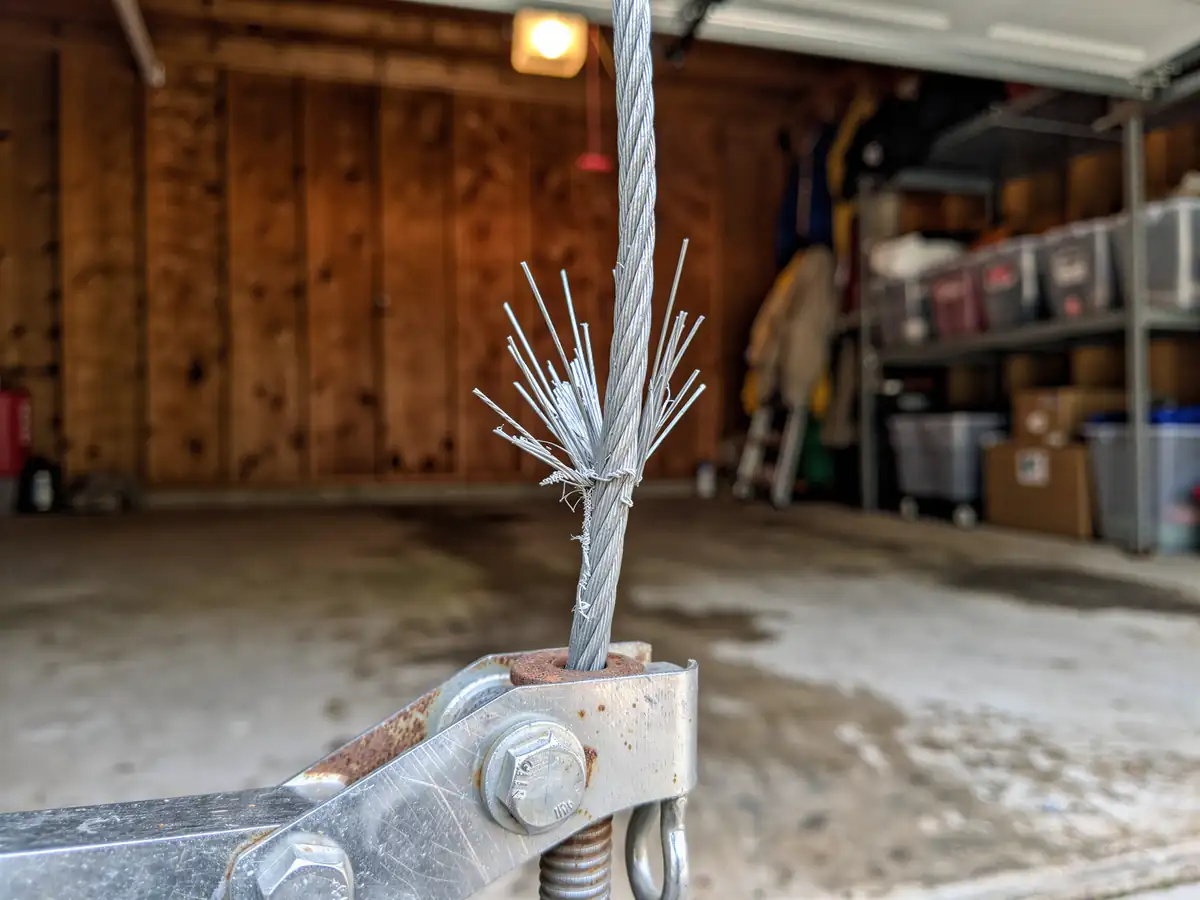
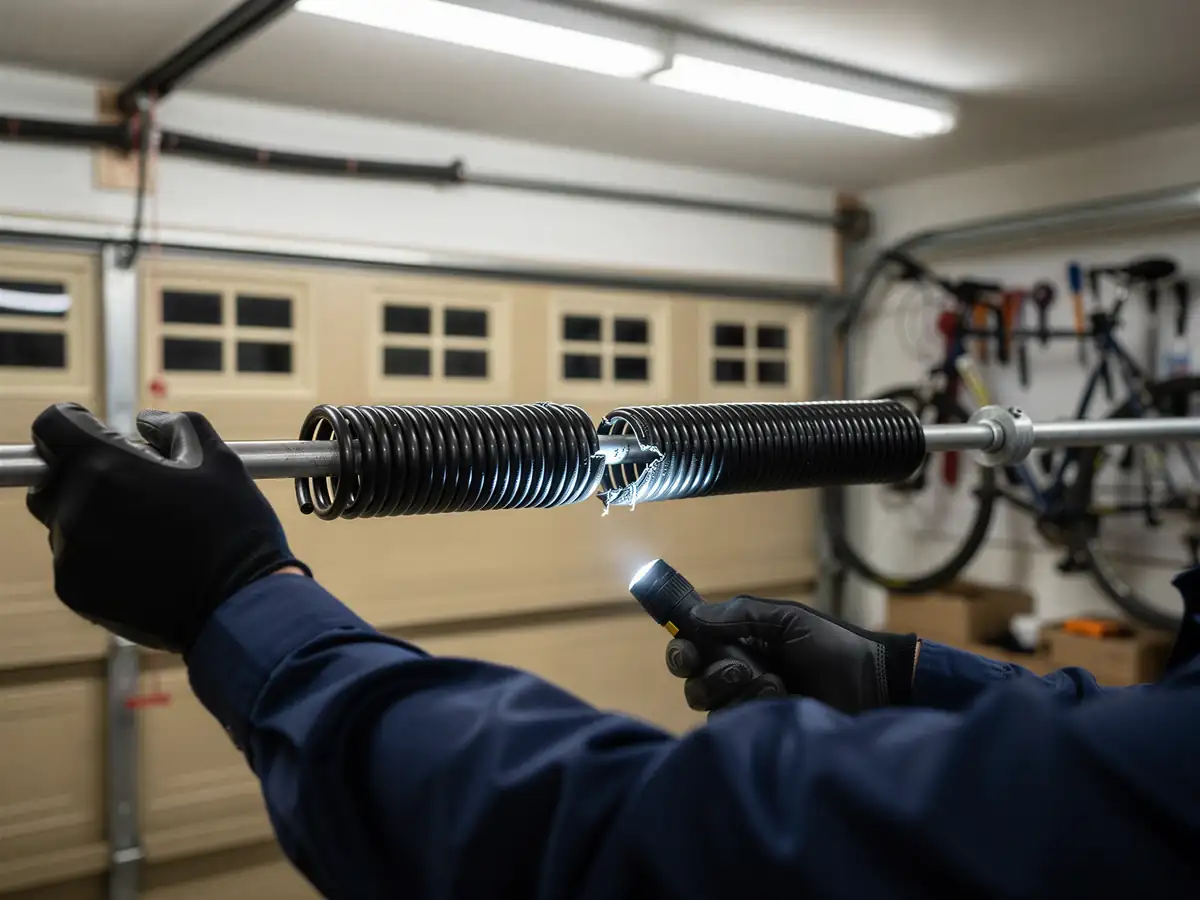
Or one that lurches and bangs on the way up. Nine times out of ten it's a torsion spring that's snapped clean through, and the giveaway is a loud bang from the garage followed by a door that feels twice as heavy on the manual release.
This matters more here than it would in an older part of the region
Because Centerton's housing stock is young. The typical house in this area was built around 2008, which means the spring doing the work right now is very likely the original builder-installed spring - sized to a cycle count, not to last forever, and often spec'd to the minimum the door weight required rather than with extra margin. That's standard for new-construction tract building, and it means these springs tend to fail in a tighter, more predictable window than the mismatched hardware you find on a 1970s house.
The other common complaint is an opener that grinds
Then stops, then works again after you fiddle with the wall button. On 2000s-era construction that's usually the plastic drive gear inside a builder-grade chain or belt unit wearing down - a cheap part to replace, but not one you can see without opening the housing.
The Cost of This Job
We don't post a flat number here because spring weight and cable condition vary door to door, even within the same subdivision. What we can tell you is what drives the price up or down: whether it's one spring or a matched pair, whether the cables and rollers get replaced at the same time (they should, if they're original to a 2008 install and have never been swapped), and whether the opener's gear kit is a stand-alone fix or a sign the whole unit is near the end of its run.
Centerton sits in a part of the region with a median household income above $112,000, and we size the job to what's actually broken, not to what the market will bear. A single spring replacement on a standard double door is a different job, and a different price, than a torsion conversion or a full opener swap.
Stocked Parts
We carry common torsion spring sizes, standard-lift cables, nylon and steel rollers, and the drive gears and sprockets for the major chain and belt opener brands builders used through the 2000s and 2010s. Those are the parts that fail on the housing stock Centerton actually has, so the truck is loaded for it.
What we don't stock is anything proprietary to a smart-opener control board or a discontinued panel style from a builder that's since gone under. If your door needs one of those, we'll tell you on the spot rather than make you wait on-site while we guess.
The Complications
Cold-moderate winters in this region mean steel springs go through real temperature swings every season
And metal fatigues faster with that cycling than it would somewhere with a flatter climate. A spring rated for a certain number of cycles at a steady temperature doesn't always make it that far once it's been through a string of freeze-thaw mornings - which is part of why a 2008-built door can already be on its second or third spring.
The other complication is garages converted or finished after the original build
If a homeowner added insulation or a different wall covering since 2008, the opener's force settings sometimes never got readjusted, and that shows up as a door that reverses for no clear reason. We check that as part of any repair, since skipping it means the same complaint calls us back.
Doing It Yourself
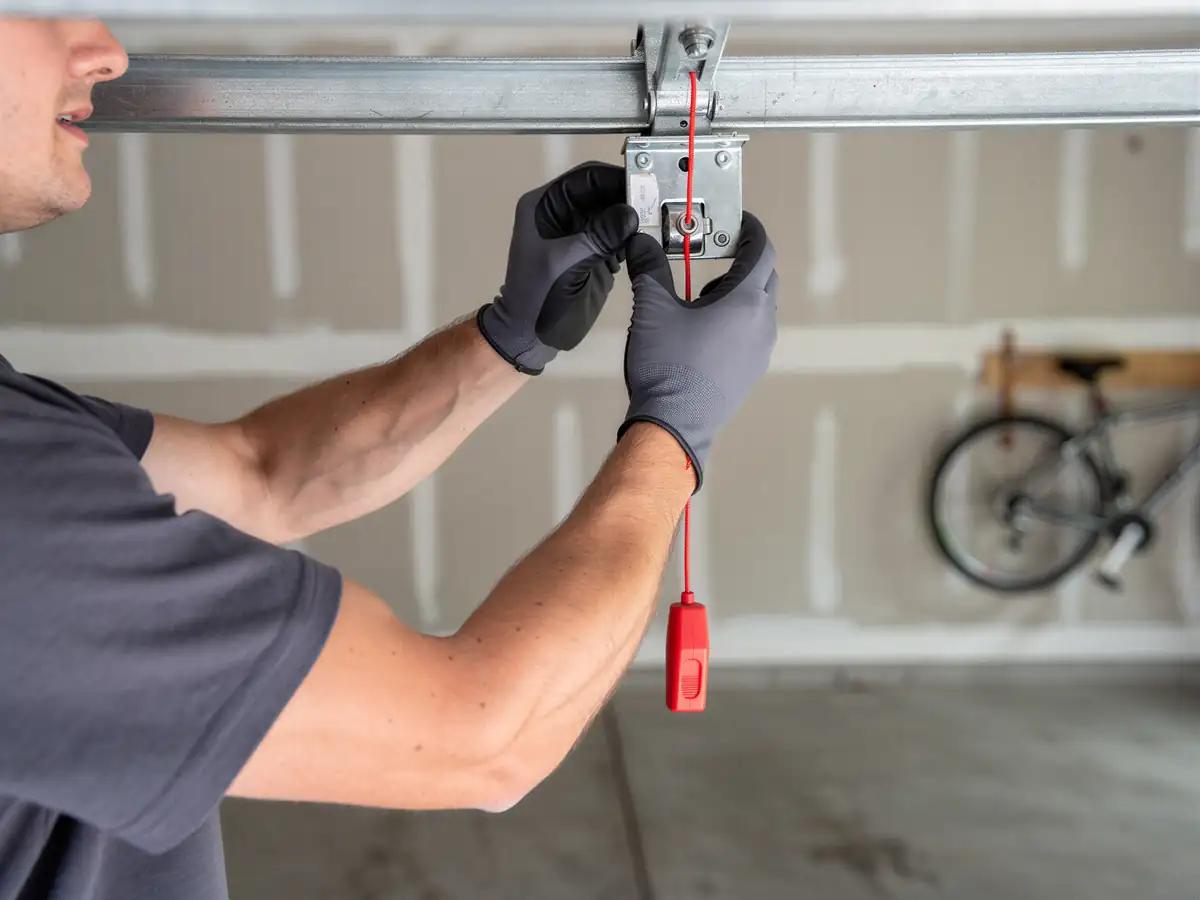
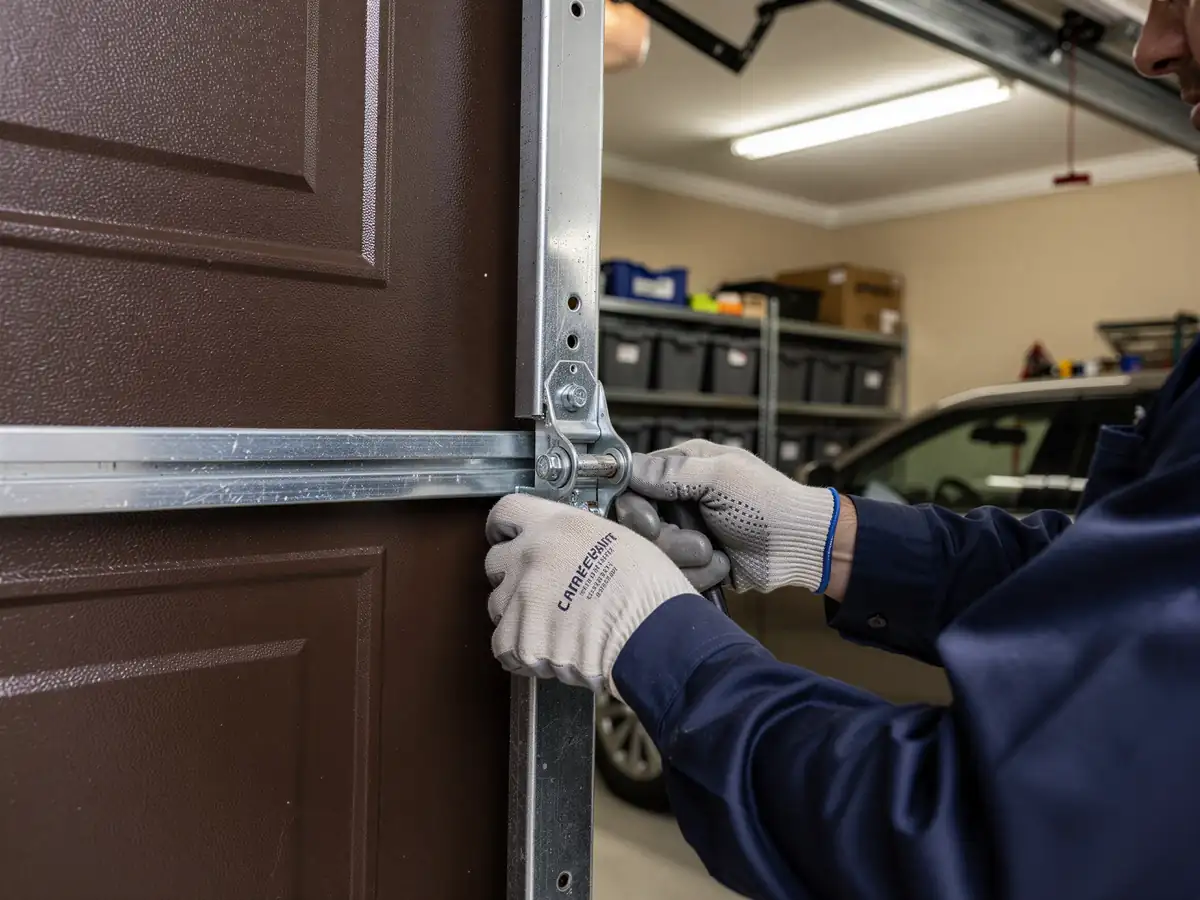
Replacing rollers or tightening a loose track bracket is reasonable DIY territory if you're comfortable on a ladder and the door is currently working. Torsion springs are not. They're wound under enough tension to break a wrist or worse if the winding bars slip, and that risk doesn't go down just because the door is newer or the spring looks small.
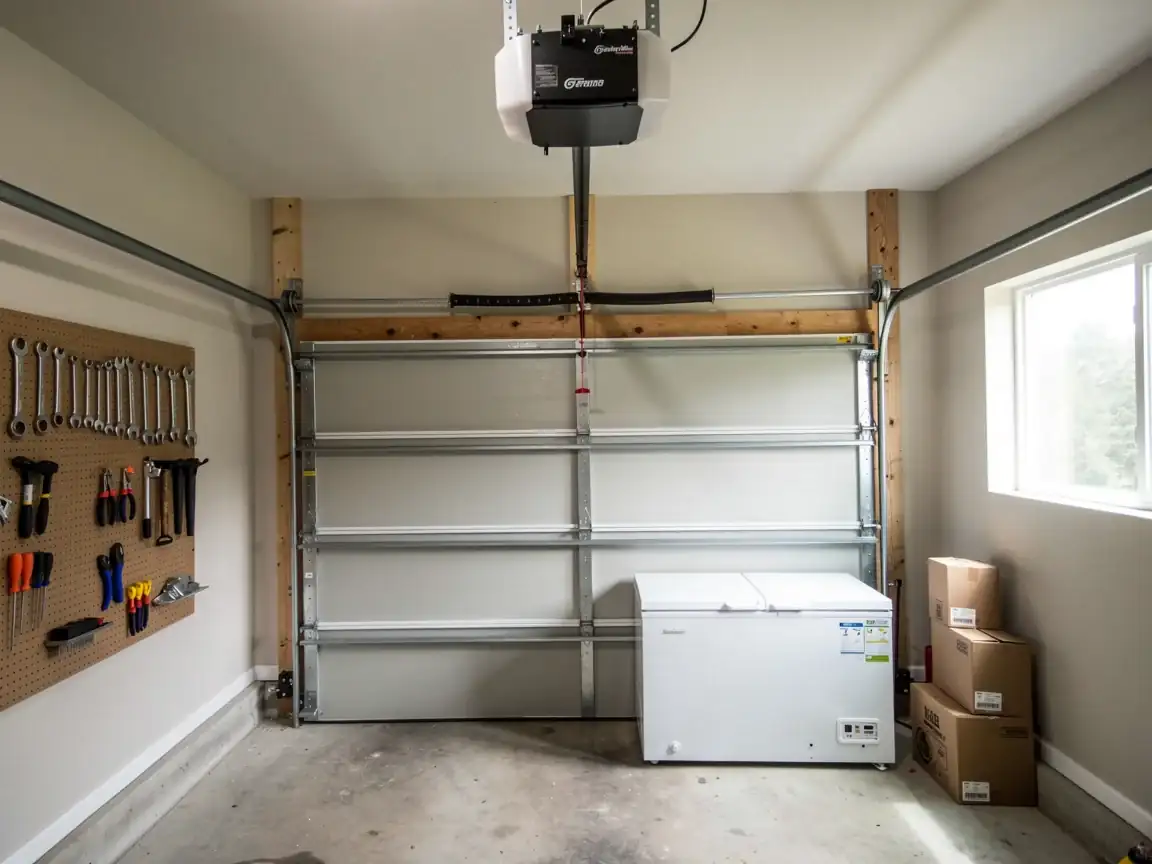
If your opener is grinding, it's fine to pop the housing cover and look for obvious plastic shards - that tells you what you're dealing with before you call anyone. But swapping the gear kit itself means working inside a live electrical unit, and we'd rather you not learn that lesson the hard way.
What the Fix Involves
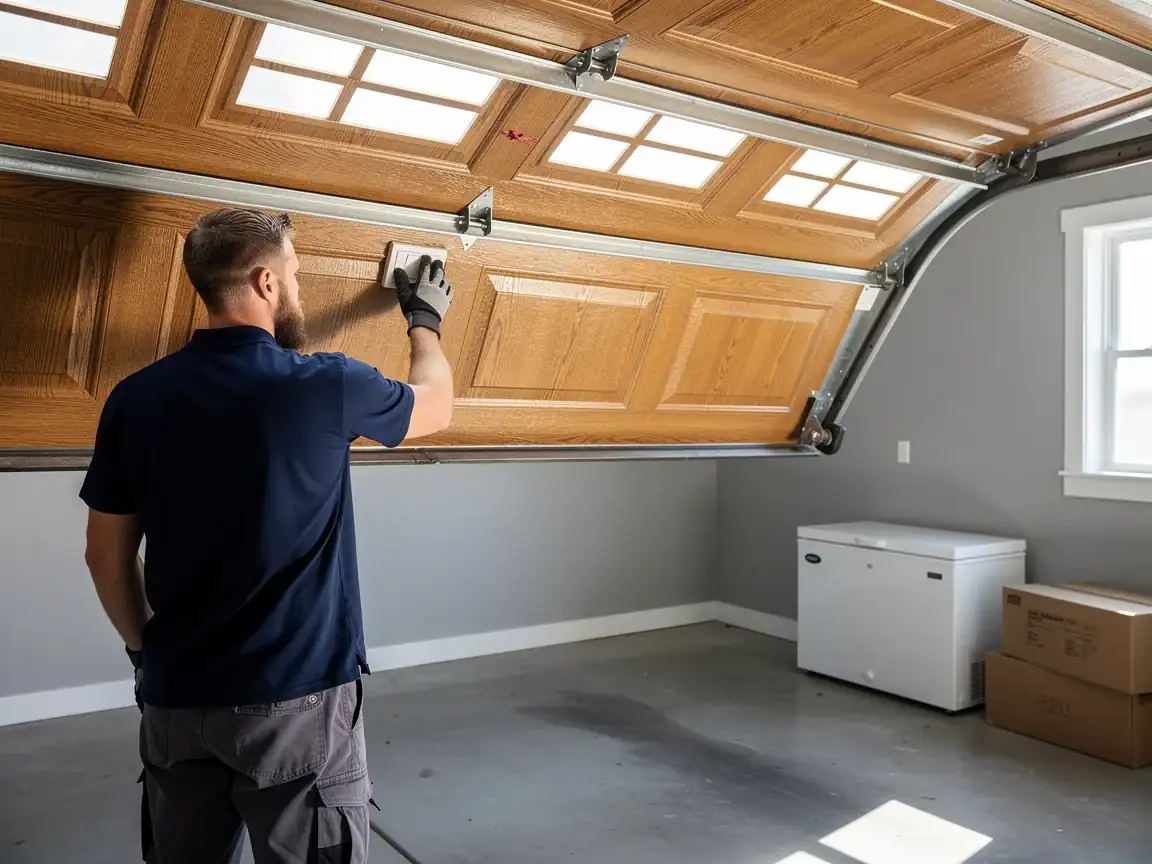
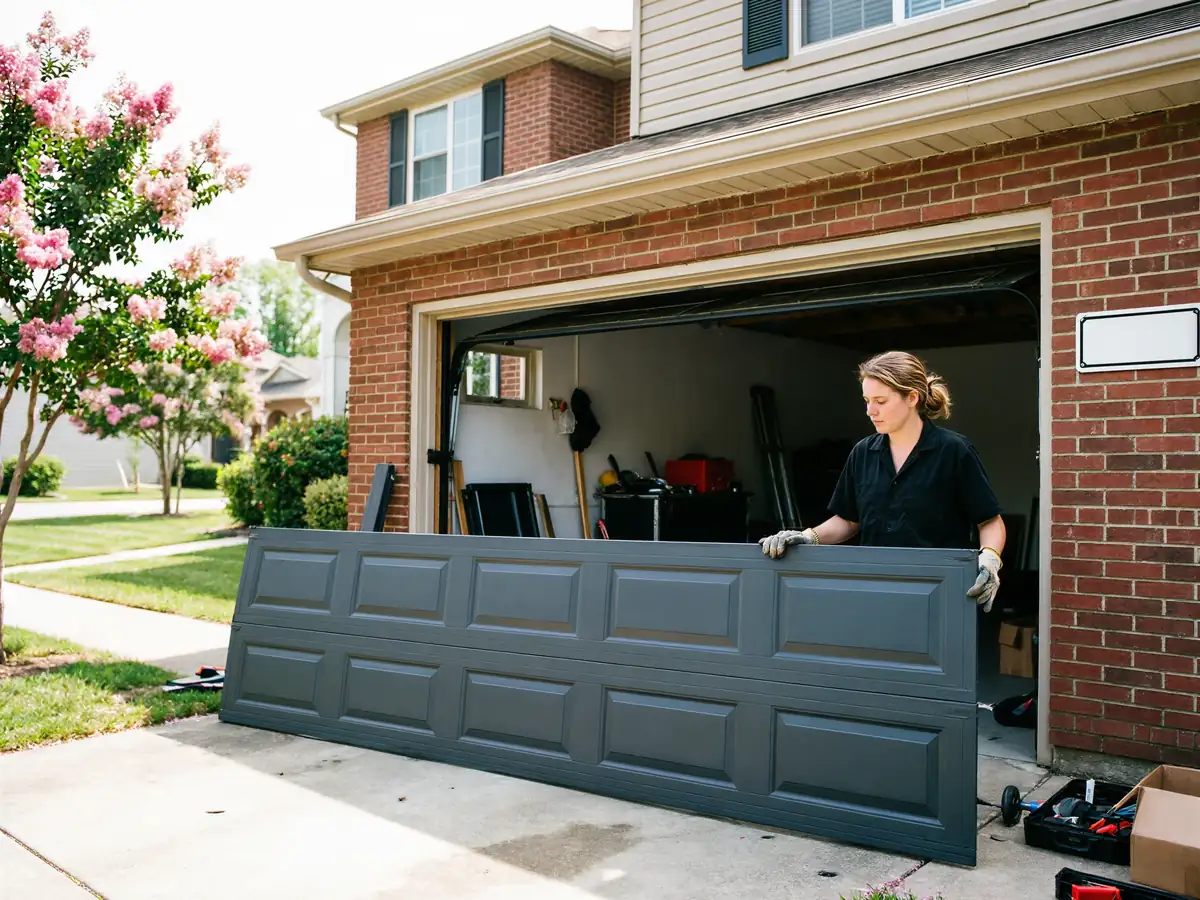
For a spring job: we disconnect the opener, secure the door, remove the broken spring, and install a matched replacement sized to the door's actual weight - not just a reorder of what builder installed, since we check it against the door's current hardware first. Cables and rollers get inspected at the same time, since they're cheap to replace now and expensive to replace as an emergency call later.
For an opener gear or sprocket issue, we open the unit, replace the worn part, and re-test the force and travel settings rather than assuming the old settings still fit. On a door with no major damage beyond the one failed part, most of this work is finished in a single visit.