The Complications
Most houses in Prairie Creek went up around 1990, and in a neighborhood that age
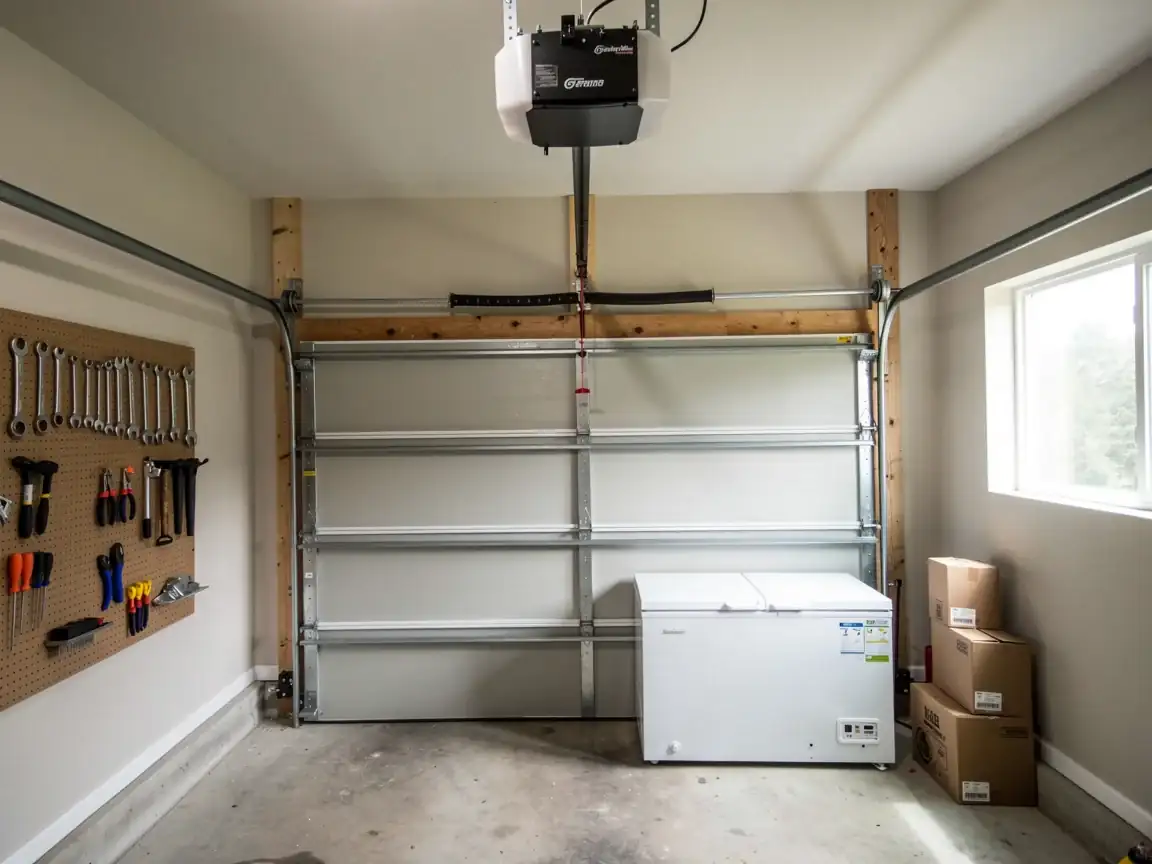
The opener on the wall is very often the one that came with the house. That's over thirty years on the same motor, the same gear set, the same logic board. Nobody's replaced it because it still opens the door most days - until the day it doesn't, or it only half-opens, or it grinds for three seconds before it gives up.
That age brings a specific set of faults
The main drive gear, usually nylon, wears thin and starts skipping teeth. The capacitor that kicks the motor over weakens and the opener hums but won't lift. Circuit boards from that era weren't built for the voltage spikes modern homes throw at them, and in a cold snap - this area sits in a moderate cold climate band - a marginal board can fail outright rather than just acting up.
With only 914 households in Prairie Creek, this isn't a volume call-out area for us
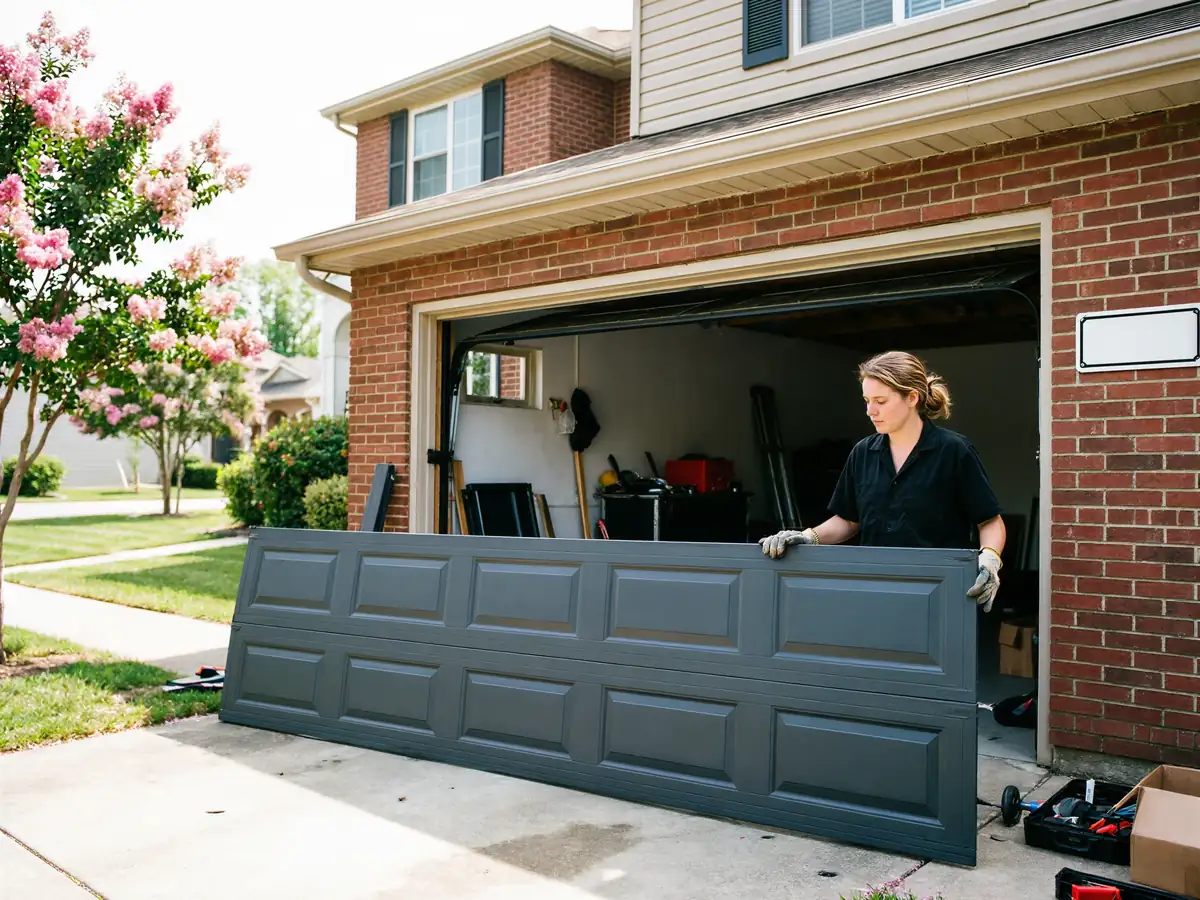
We come out from Rogers, about 5 miles away, for the job itself, not because there's a local office here. What we're looking for first is whether the fault is the opener or the door it's lifting - a tired spring can look exactly like a dying motor from the driveway.
- 914 households
- 5 miles
Stocked Parts
We carry the parts that fail most on opener units from the late 1980s through the 2000s: drive gears and sprockets, capacitors, logic boards for the common chain and belt-drive models of that generation, and safety sensor pairs. If your opener is original to a 1990-built house, odds are good we're carrying what it needs on the truck already.
What we don't stock is obsolete proprietary remotes or control panels for brands that quit making parts years ago. If your unit falls into that category, a straight repair sometimes costs more in parts-sourcing time than a new opener costs installed - we'll tell you that up front instead of running the clock on a special order.
How to Book
Call or request service through the Prairie Creek service area page. Tell us the opener's rough age and what it's doing - grinding, humming, reversing, dead - and we'll bring the parts most likely to match. We travel from Rogers for every call out here, so there's no local branch to route you to; it's one truck, one job.
How Long You Are Without the Door
A worn drive gear or a bad capacitor is usually a same-visit fix once we're on site
The parts are common and the job itself is an hour or so of work. A logic board replacement on an older unit can take longer if the exact board isn't on the truck, since boards for discontinued models sometimes have to be sourced rather than pulled off the shelf.
If the opener itself is original to the house and the board has failed
We'll usually tell you straight that a new opener is the better spend over chasing parts for a thirty-plus-year-old unit. Either way, the door can usually be set to manual operation in the meantime so you're not locked in or out while we sort the fix.
Doing It Yourself
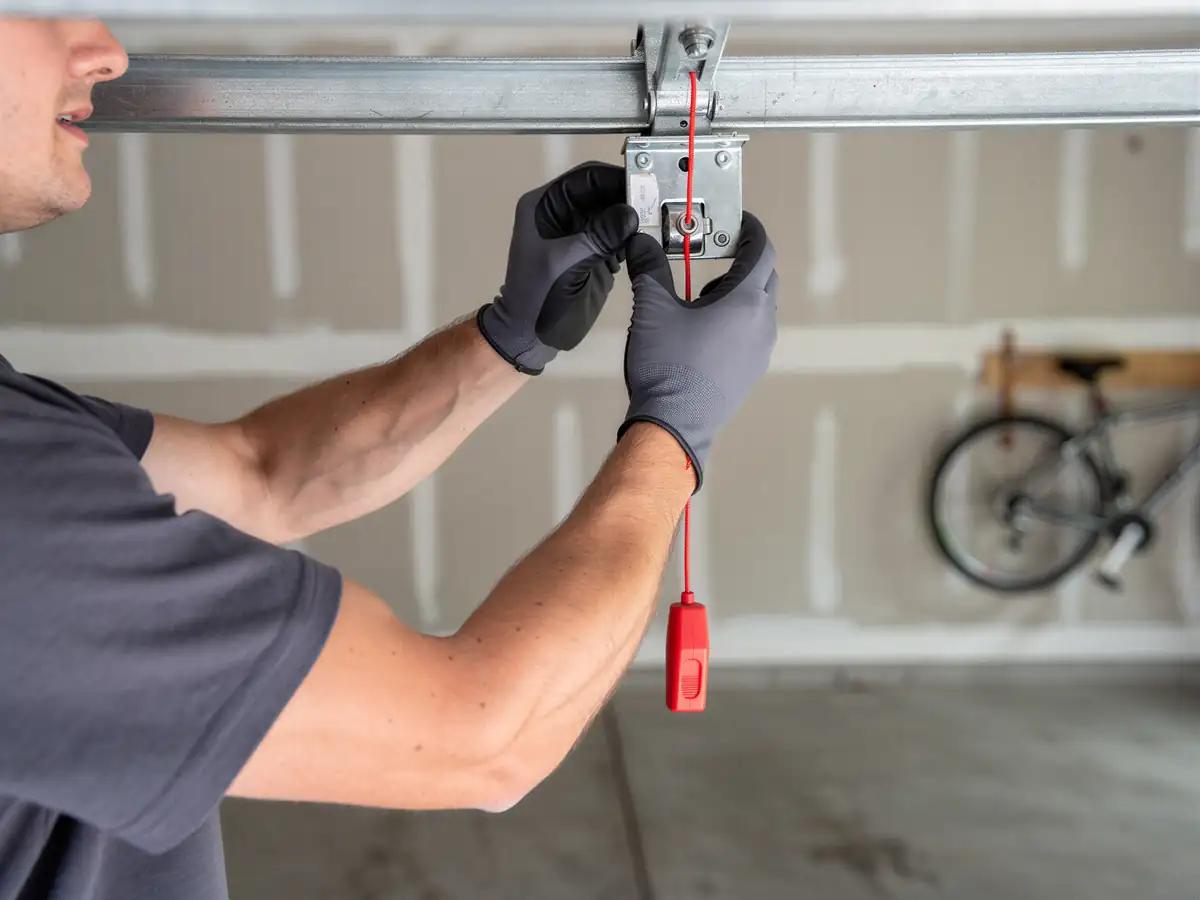
Checking the obvious things first saves everyone a call: make sure the opener is actually getting power, check that the wall switch and remote batteries are good, and look at the safety sensors near the floor track - a knocked-out-of-alignment sensor is the single most common reason a door won't close, and it's a five-minute fix with no tools.
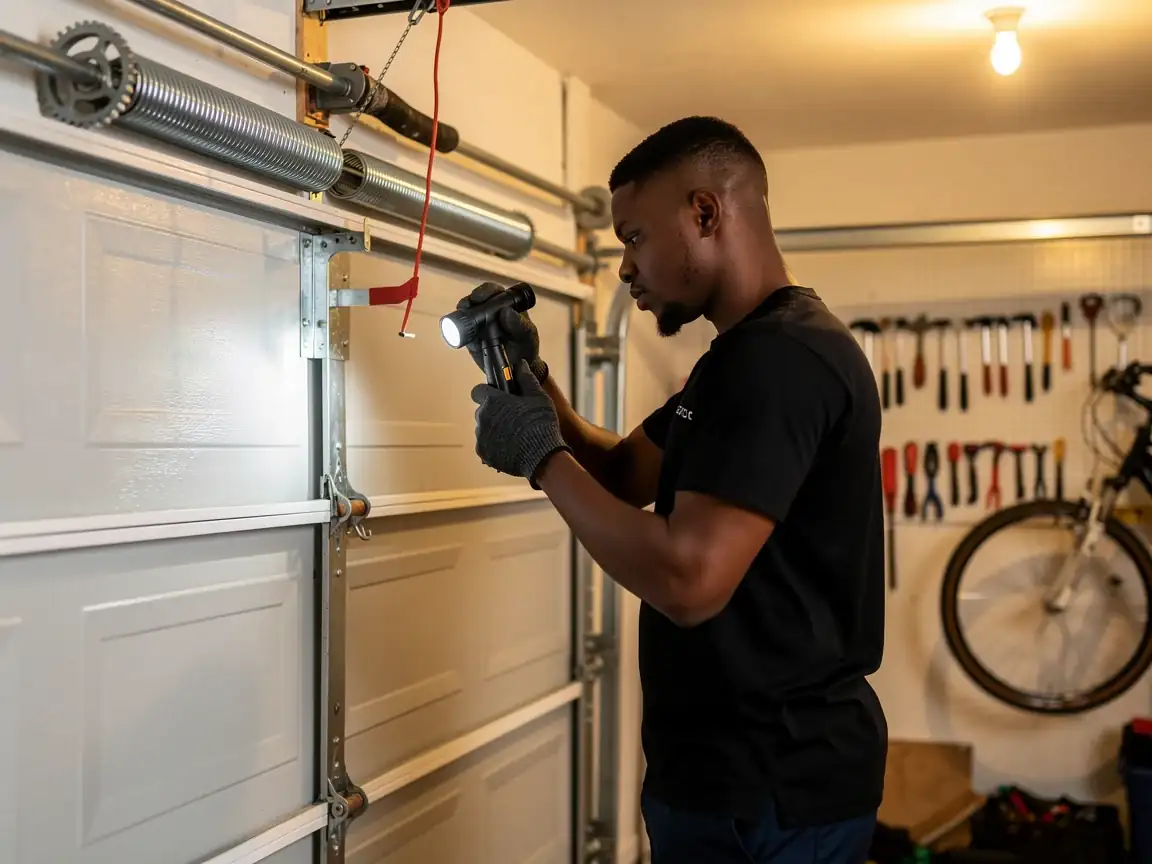
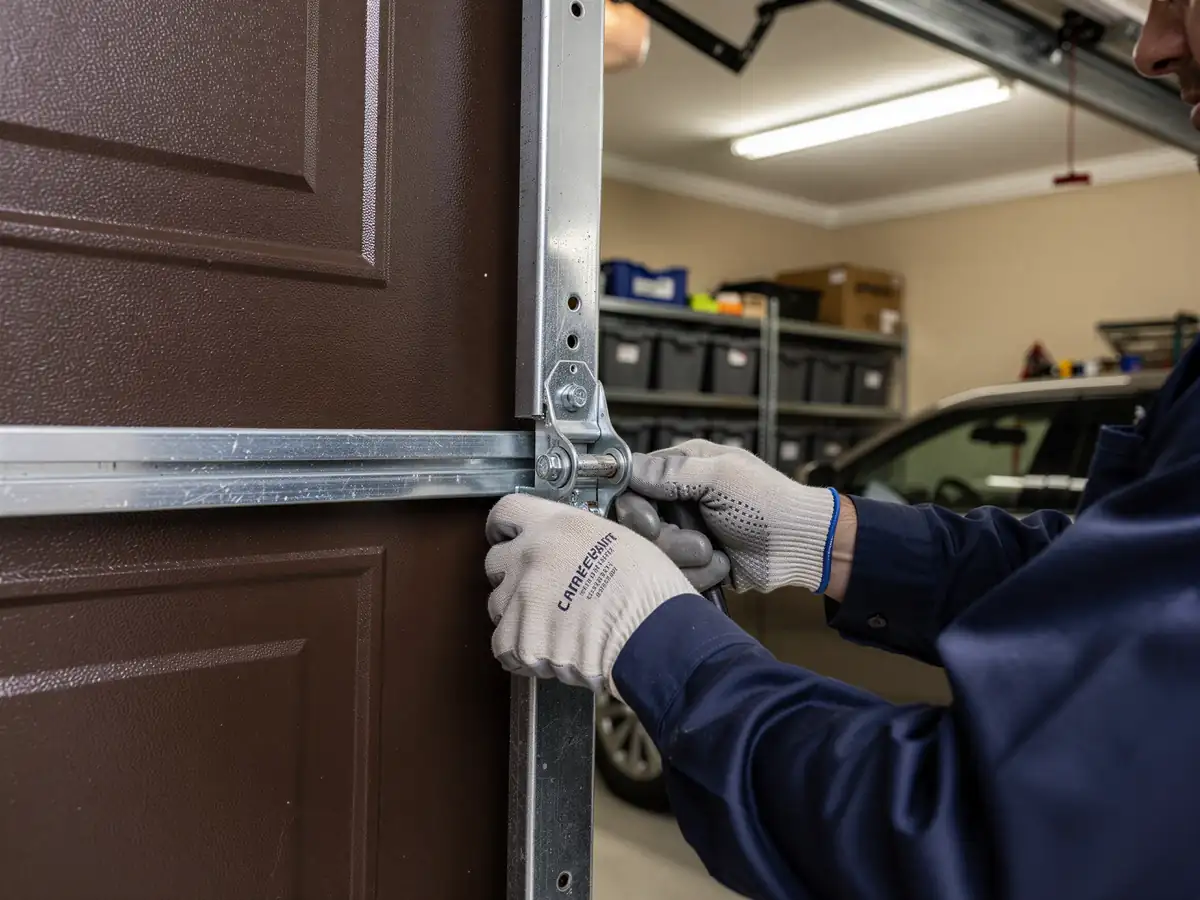
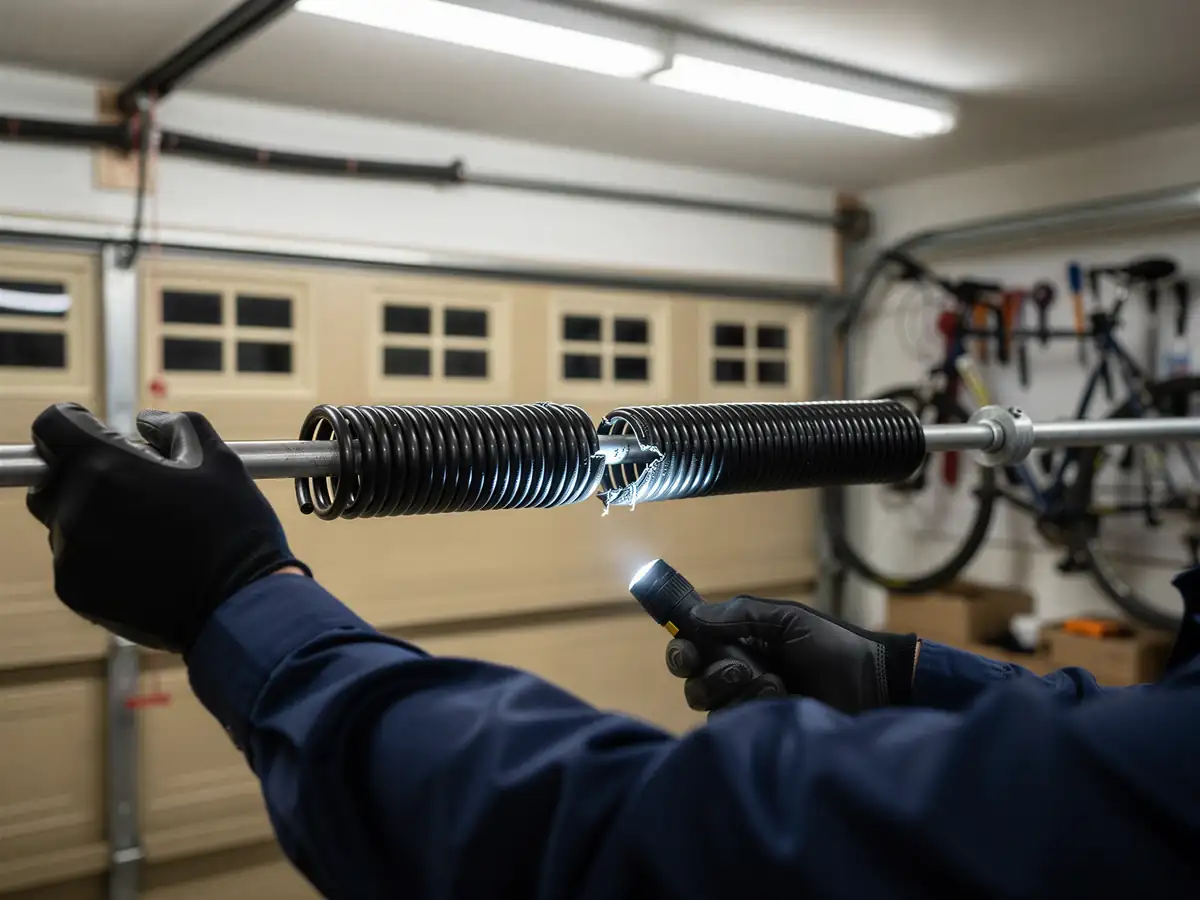
What's not a DIY job is anything involving the torsion spring or the high-voltage side of the motor housing. On a house built around 1990, that spring has had three decades to fatigue, and an opener motor straining against a bad spring is a common way openers in this area burn out early. If the door feels heavy or uneven when lifted by hand with the opener disconnected, that's a spring problem, not an opener problem, and it's not worth risking fingers or a trip to the ER over.
The Symptom
The call we get most from this part of the service area is the door that reverses right before it closes, or stops a few inches down and runs back up. On a 1990-era setup, that's almost always one of three things: a misaligned safety sensor, a close-force setting that's drifted too sensitive over the years, or a drive gear that's worn enough to bind partway through the cycle.
Less common, but not rare out here, is the opener that runs but the door doesn't move at all - that's usually the drive gear failing completely, or occasionally the belt or chain having come off its track after years of flex. We check the mechanical link first, because replacing a logic board on a unit whose actual fault is a stripped gear doesn't fix anything and costs you twice. See the main opener repair page for Rogers for how we handle this across the wider service area.