What the Fix Involves
The fault that brings most Tontitown calls isn't a broken spring out of nowhere
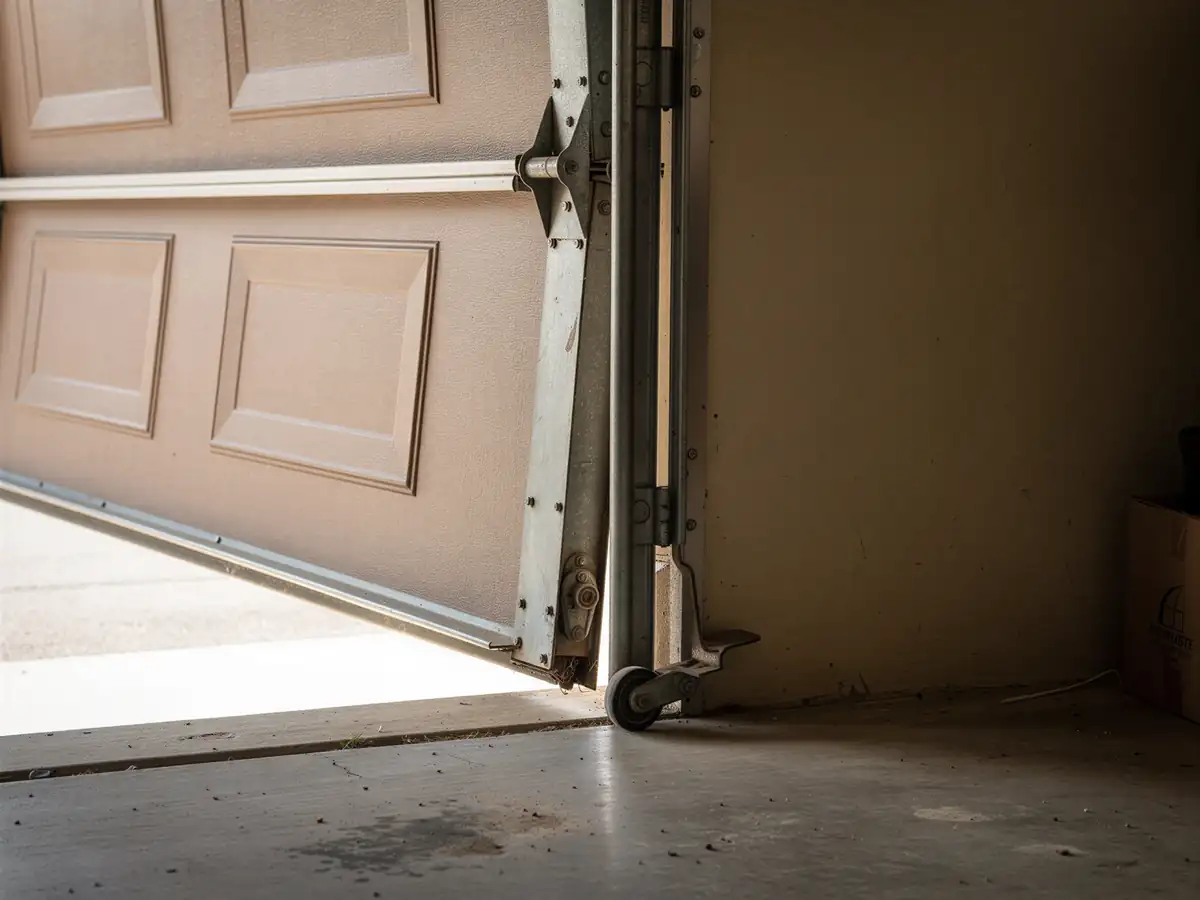
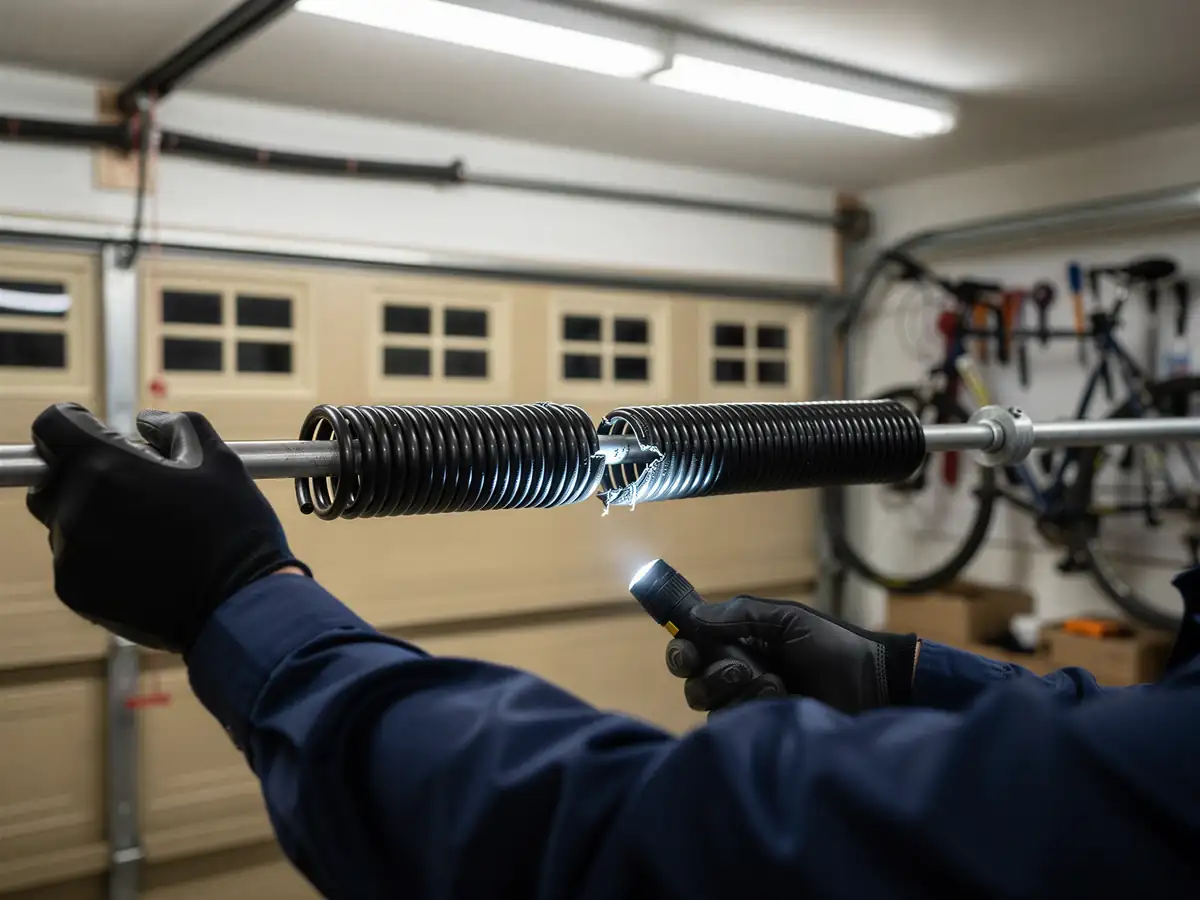
It's a torsion spring that's been winding and unwinding on the same factory lubricant for two decades, going dry, then grabbing on the shaft instead of turning smooth. Steel rollers from the same install age the same way: the grease packed in at the factory turns gummy, then flakes off, and the roller starts chattering in the track instead of rolling through it.
That pattern lines up with when the houses went up
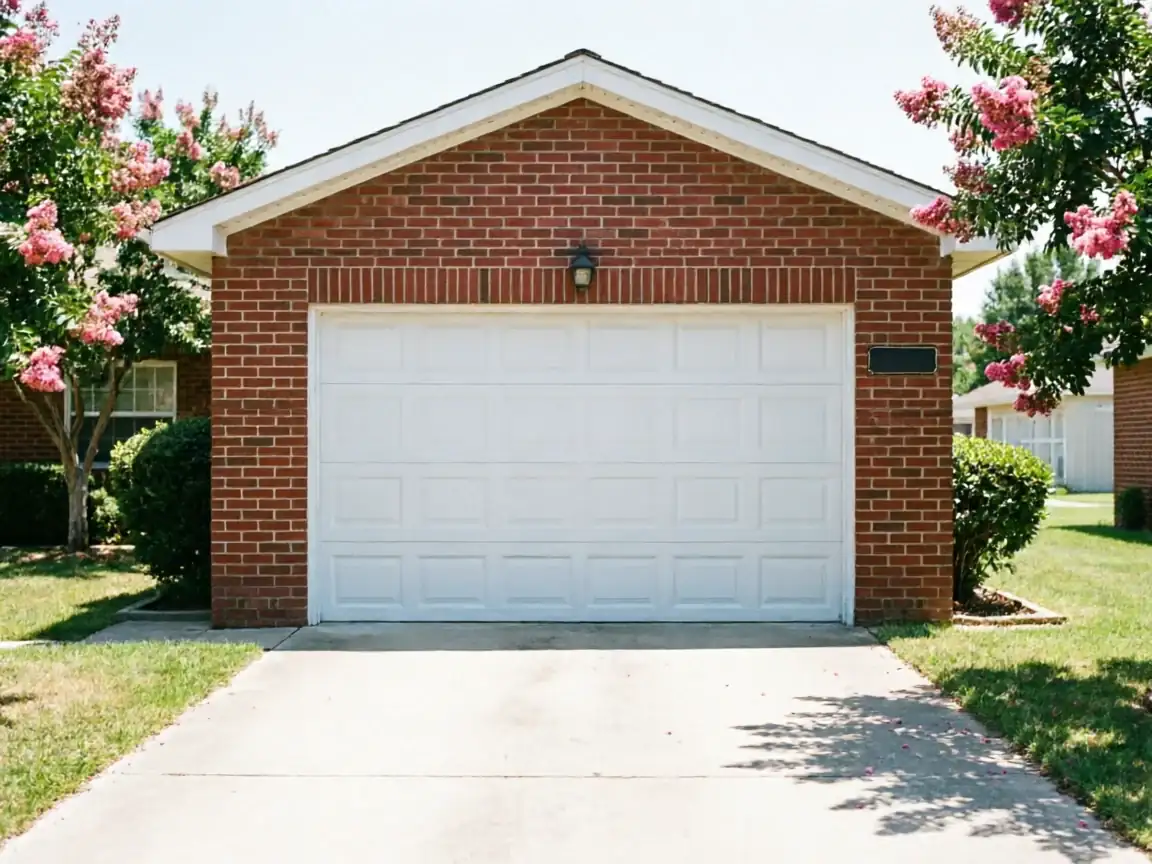
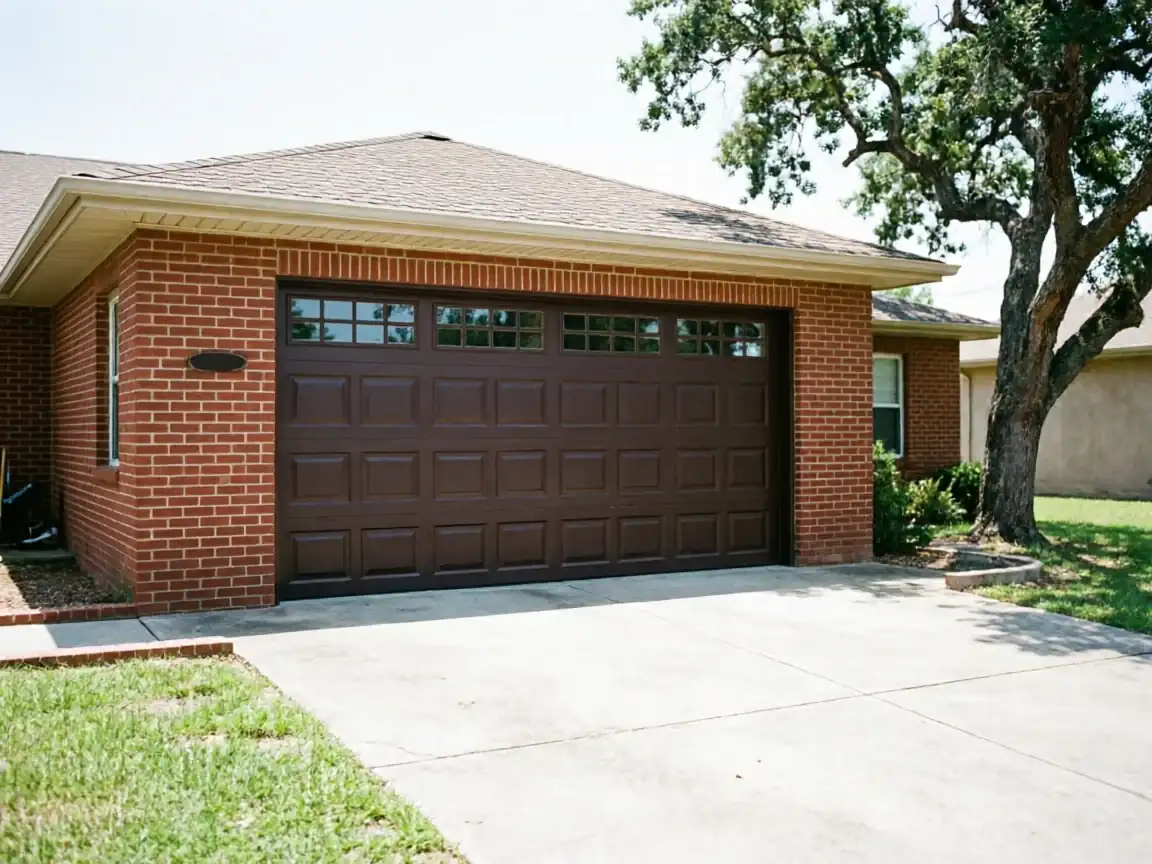
Tontitown's housing stock centers on 1998, right in the middle of the 1987-2013 range across this part of the service area. A door installed when a house was built in the late '90s is now old enough that its original hardware - torsion spring, steel rollers, braided lift cable - is at the point where lubrication stops being optional and starts being the difference between a $20 service call and a $300 spring replacement.
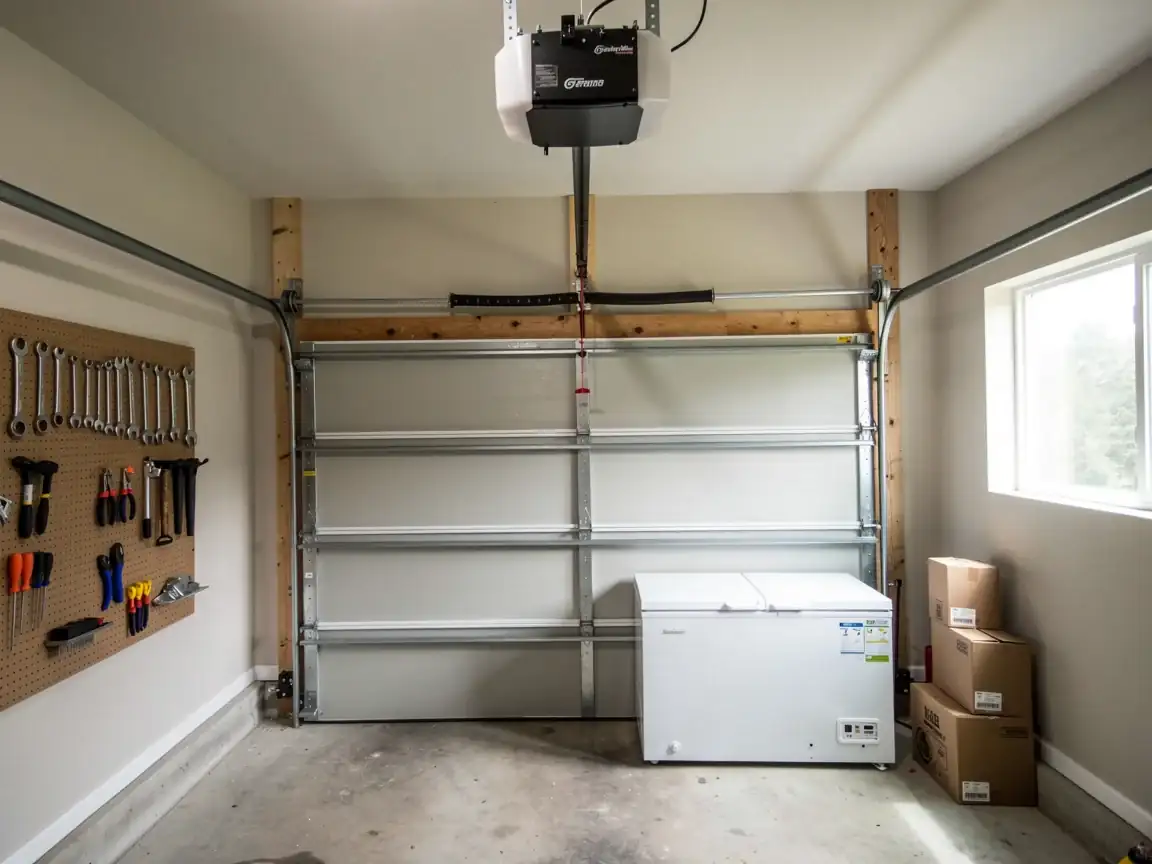
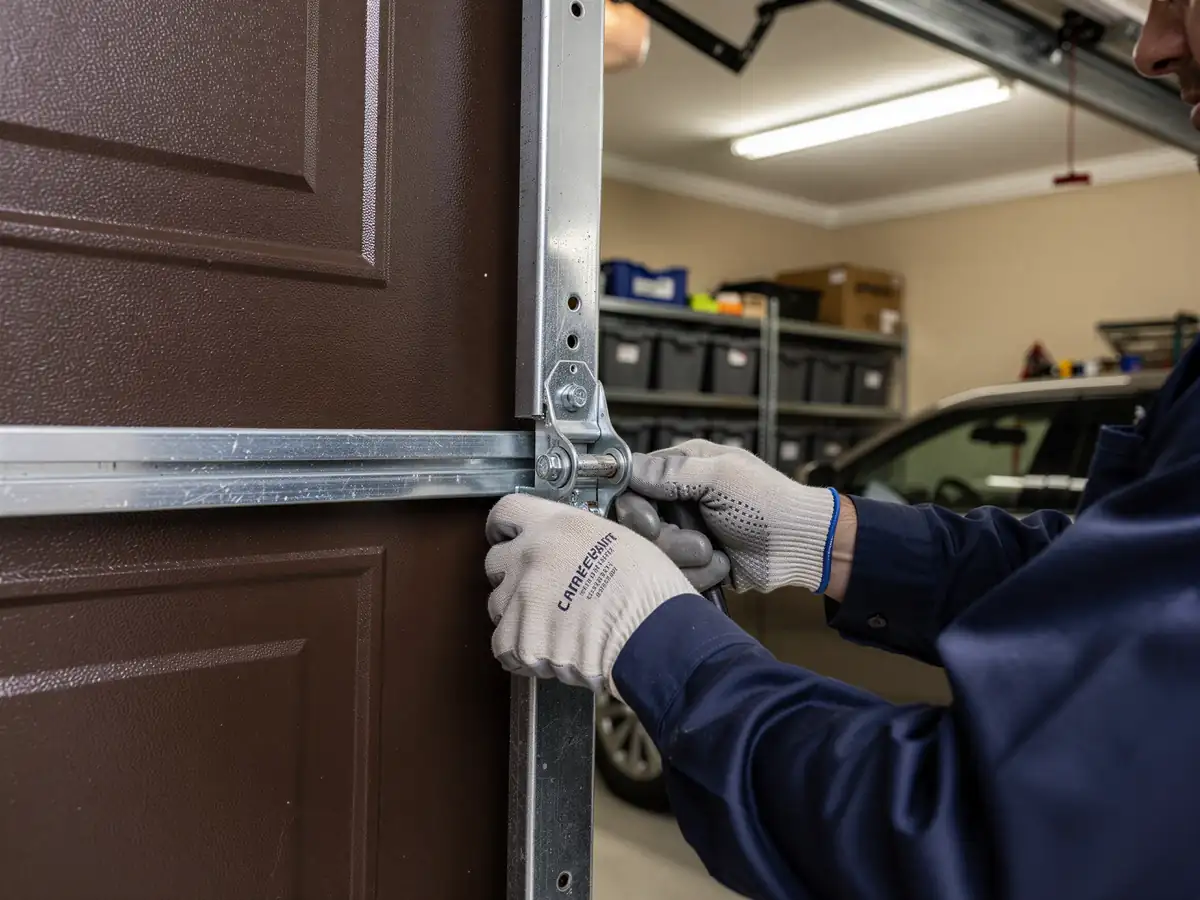
Maintenance on a door this age means working the whole system
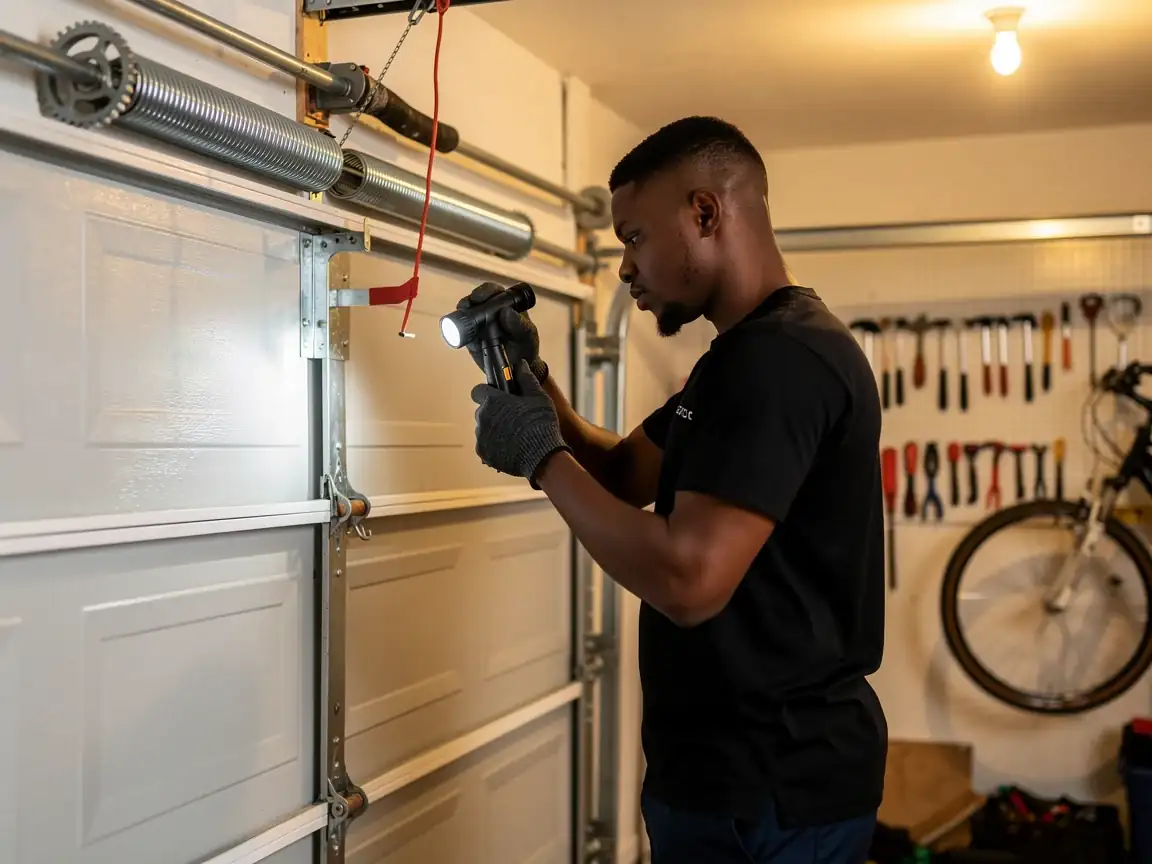
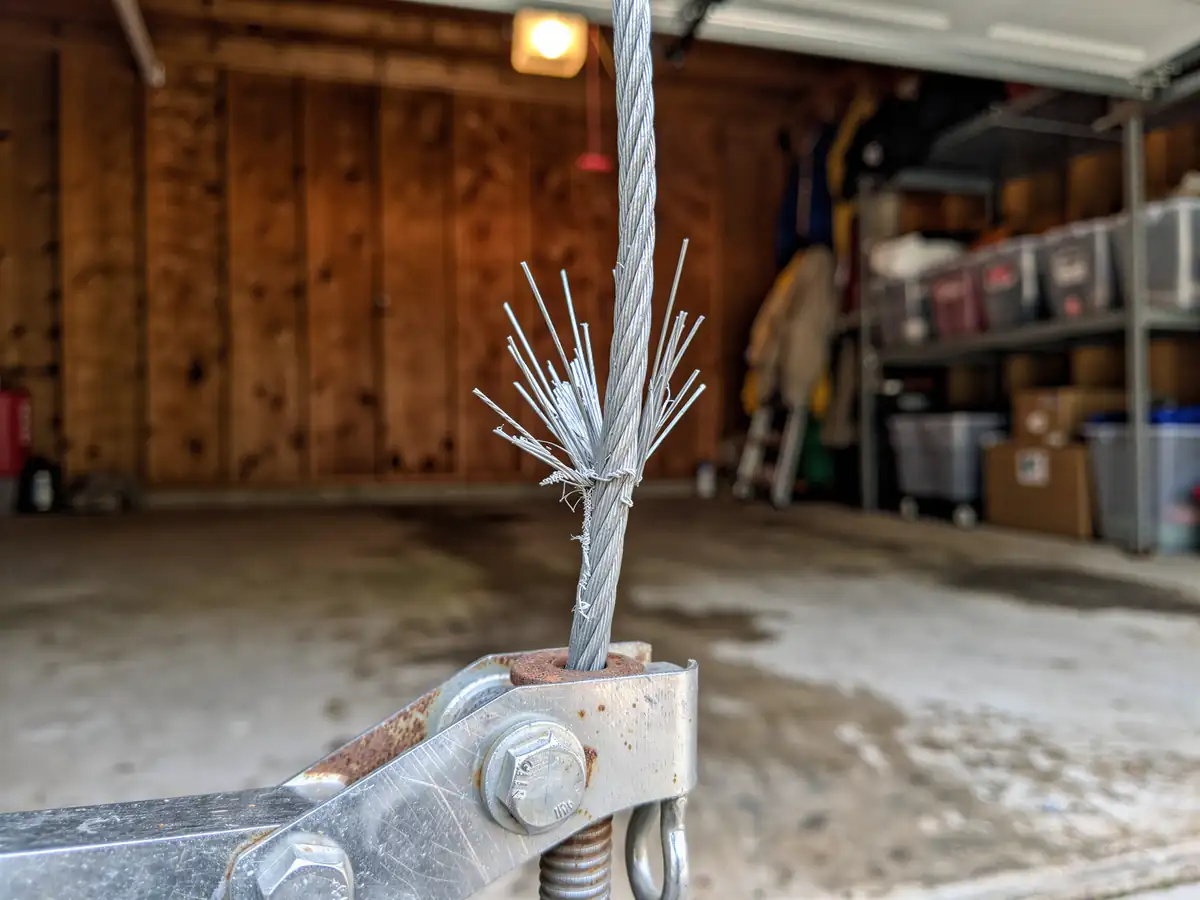
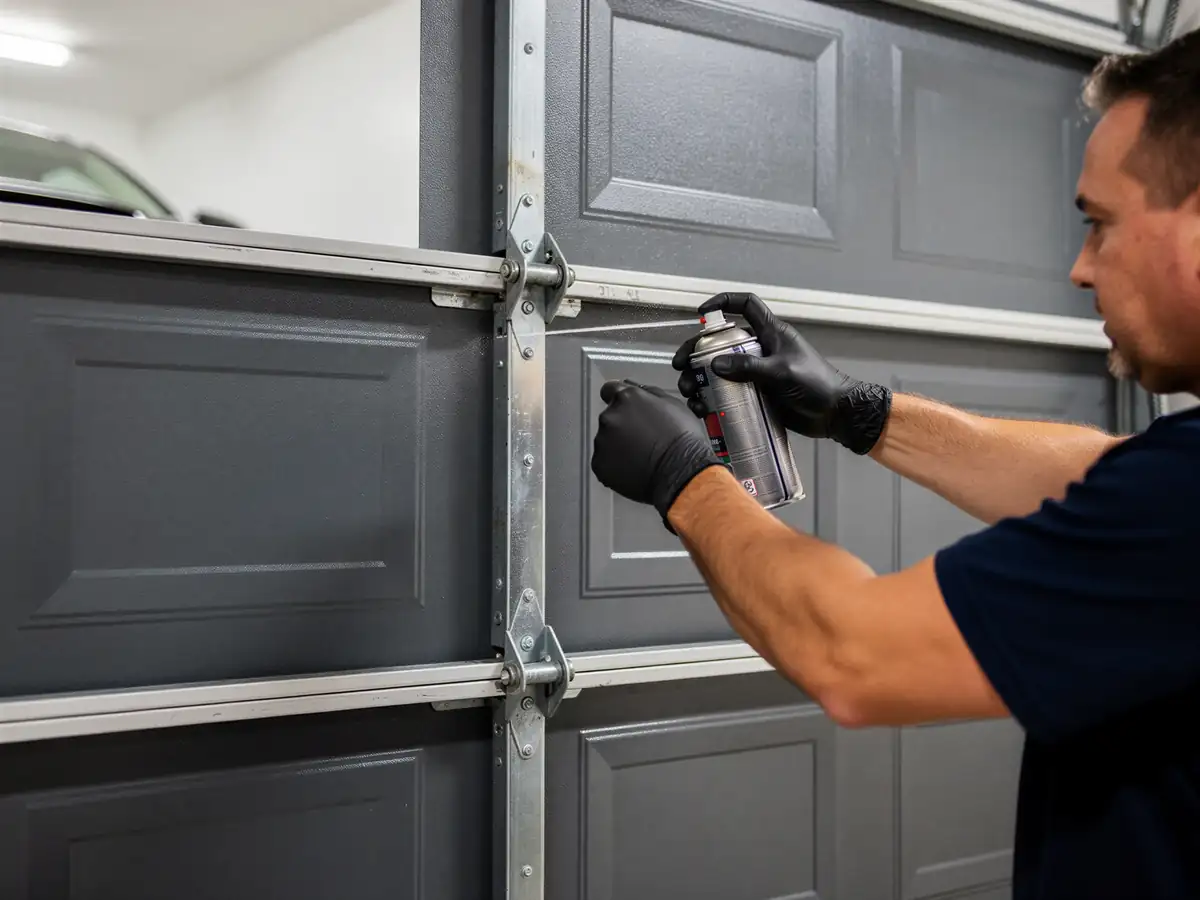
Spring coils, roller stems, hinge pins, the track where the roller rides, and the cable where it wraps the drum. Skip one and the others compensate, which is usually how a sticky roller turns into a snapped cable six months later.
Why This Fails Locally
This area sits in a cold-moderate climate band, which means the garage swings through real temperature changes across a year without the extremes of a true northern winter. That swing matters more to a 1998-era door than people think. Steel contracts in the cold, and a spring that's already dry from age winds tighter and binds instead of flexing. The same swing drives condensation inside the garage on milder days between cold spells, and that moisture sits on exposed track and spring coil long enough to start surface rust.
Rust on a torsion spring doesn't announce itself. It pits the coil from the inside of the wind, and a pitted spring breaks under tension without warning - often while the door is halfway up. On a track, surface rust just means more friction, which means the opener works harder and the roller wears faster, which loops right back into the roller problem that started in the first section.
None of this is unique to one house. It's what happens to any torsion system built in the late '90s sitting through a cold-moderate climate band for twenty-plus years without a lubrication schedule. The fix is mechanical, not seasonal - you can't wait out a dry spring.
Doing It Yourself
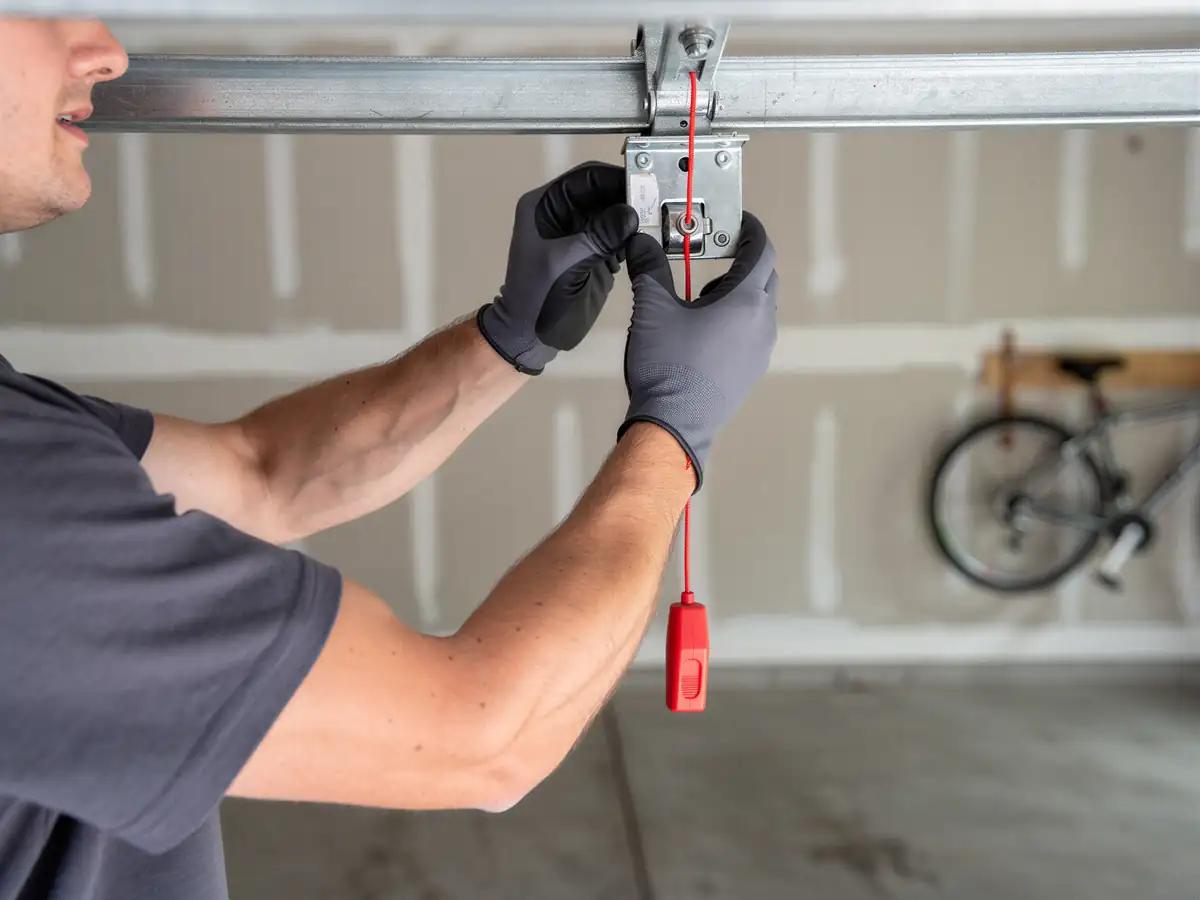
A homeowner can handle part of this. Wipe down the track, check for rust spots, and run a garage-door-rated lubricant (not WD-40, which washes grease out rather than replacing it) along the spring coils, roller stems, and hinges once or twice a year. Listen for grinding or popping when the door runs - that's usually a roller or a hinge pin, not the spring itself, and it's a cheap fix if you catch it early.
What you shouldn't touch is the spring's tension. Torsion springs on a standard residential door hold enough stored force to break a bone or worse if the winding bar slips, and adjusting one without the right tools is not a place to save money. If a door that used to run quiet starts sounding rough, or the opener strains to lift it, that's the point to call rather than keep oiling and hoping.
The honest limit here: lubrication slows wear, it doesn't reverse it. A spring that's already pitted from rust or fatigued from twenty-plus years of cycles needs replacing, not greasing. No amount of maintenance schedule turns a worn spring back into a new one.
The Complications
Tontitown is served from Rogers, about 12 miles out
So there's no local depot here - a maintenance visit means a truck making the drive, which is worth knowing when you're scheduling rather than expecting a same-hour stop. That distance doesn't change the work once the truck's there, but it's part of why a planned maintenance visit, booked ahead, makes more sense than waiting for a breakdown call.
- 12 miles
Parts can complicate things too
A door original to a 1998 build sometimes uses hardware sizes or spring winds that newer stock doors don't carry on the truck, which can mean a second trip for the right part rather than a one-visit fix. That's more likely on original equipment than on anything replaced in the last decade.
With roughly 2,239 households in Tontitown and a median income near $80,987
Somewhat below the wider service area's $87,150 - cost matters, and that's exactly why catching a dry spring or a worn roller early, before it takes the cable or the opener with it, is worth the price of a maintenance call instead of a repair bill.
- 2,239 households