Doing It Yourself
Little Flock's median household income is $56,961
Well under the $87,150 median across the wider Rogers service area. That gap matters the moment a torsion spring snaps or a panel caves in, because it decides whether a repair makes sense or whether you're better off letting the door go. On a house with a typical 1992-era double door, a spring job and new rollers usually pencil out fine. A full opener-and-track replacement on the same house is a bigger bite, and at this income level it's worth asking for the repair estimate before the replacement quote, not after.
Some things are safe to try yourself
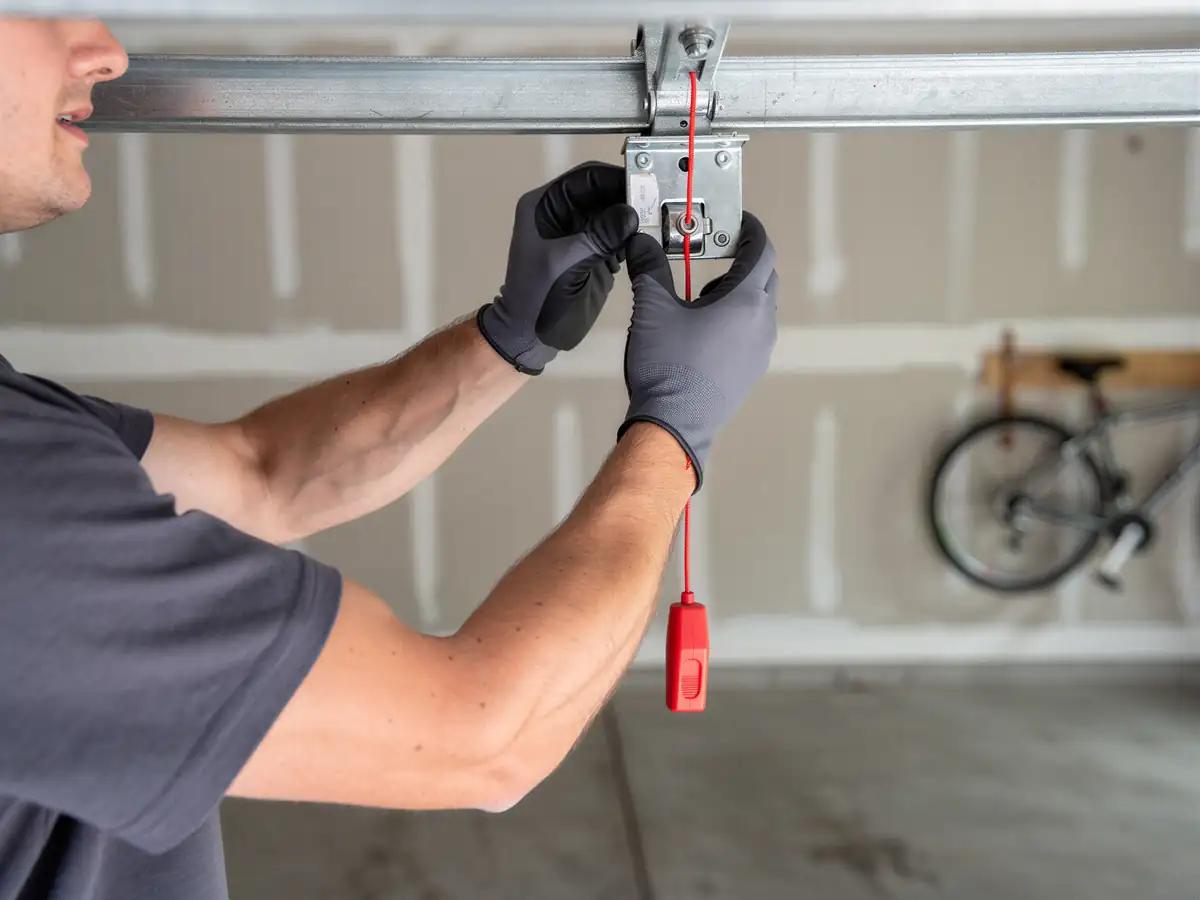
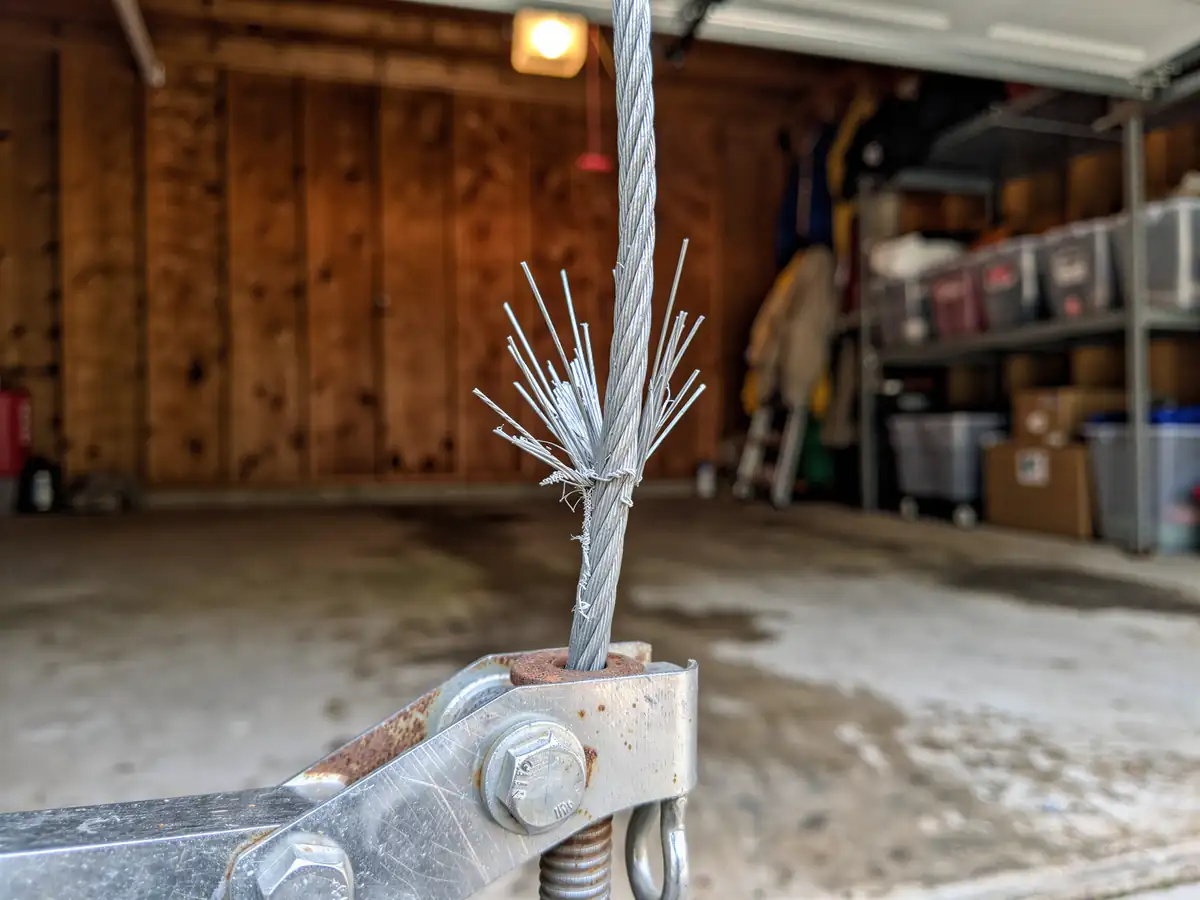
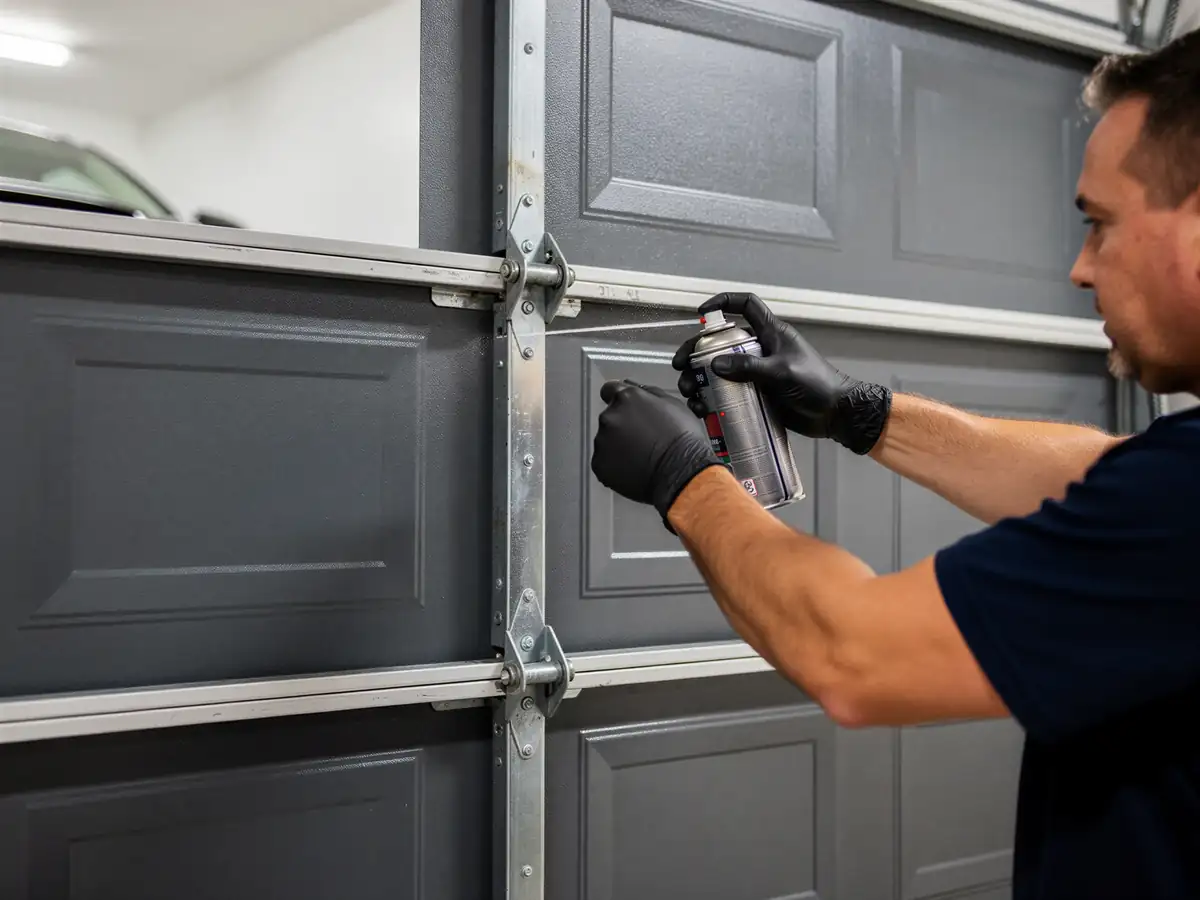
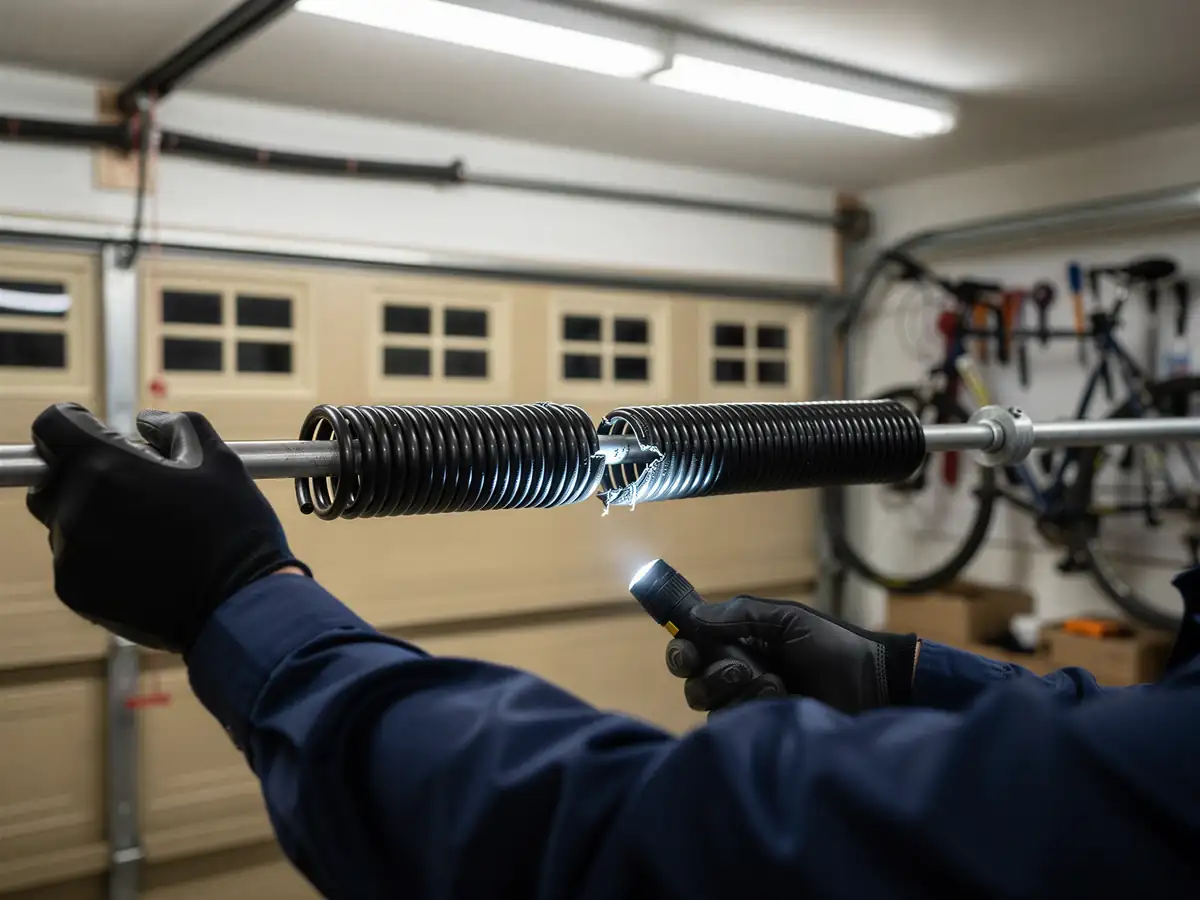
Clearing the photo-eye sensors of dust, tightening loose hinge bolts, lubricating hinges and rollers with a garage-door-specific lubricant. What you should not touch is the torsion spring itself. Those springs are wound under enough tension to break a bone or worse, and on a door this age the spring and its anchor bracket have had thirty-plus years to corrode. If the door won't open, won't close, or slams down fast, stop pulling on the emergency release and call instead.
How to Book
We work out of Rogers, 5 miles from Little Flock, and come out on a scheduled call rather than keeping a branch in town. Tell us the house's build year if you know it, or just the decade, since Little Flock's housing mostly dates to the late 1980s through the 2000s and that narrows down which spring size and which opener era we bring on the truck before we've even seen the door.
Describe the symptom as plainly as you can: does the door stop partway, make a bang, not respond to the remote, or drift back down after the opener shuts off. That detail, plus the approximate age of the door, lets us quote a repair range over the phone instead of guessing on site. You can also go through the service area page for Little Flock to confirm we cover your street before you call.
What the Fix Involves
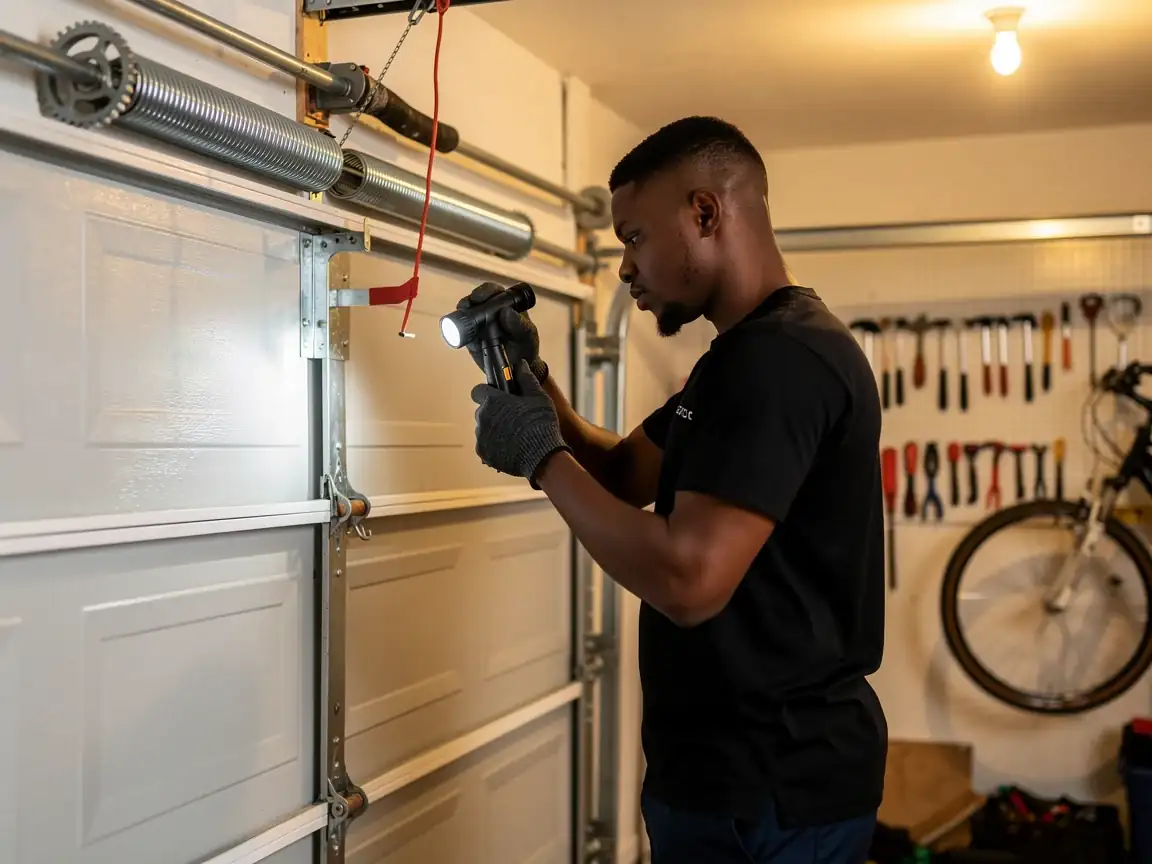
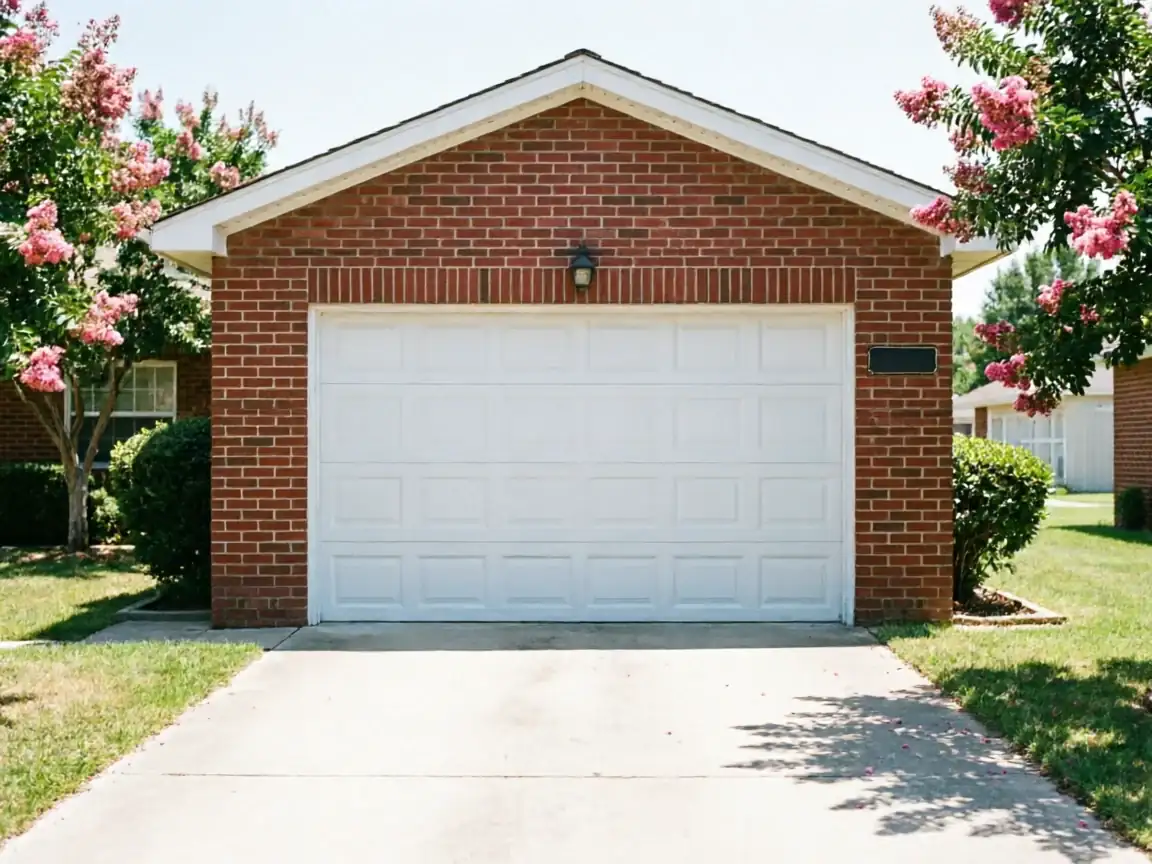
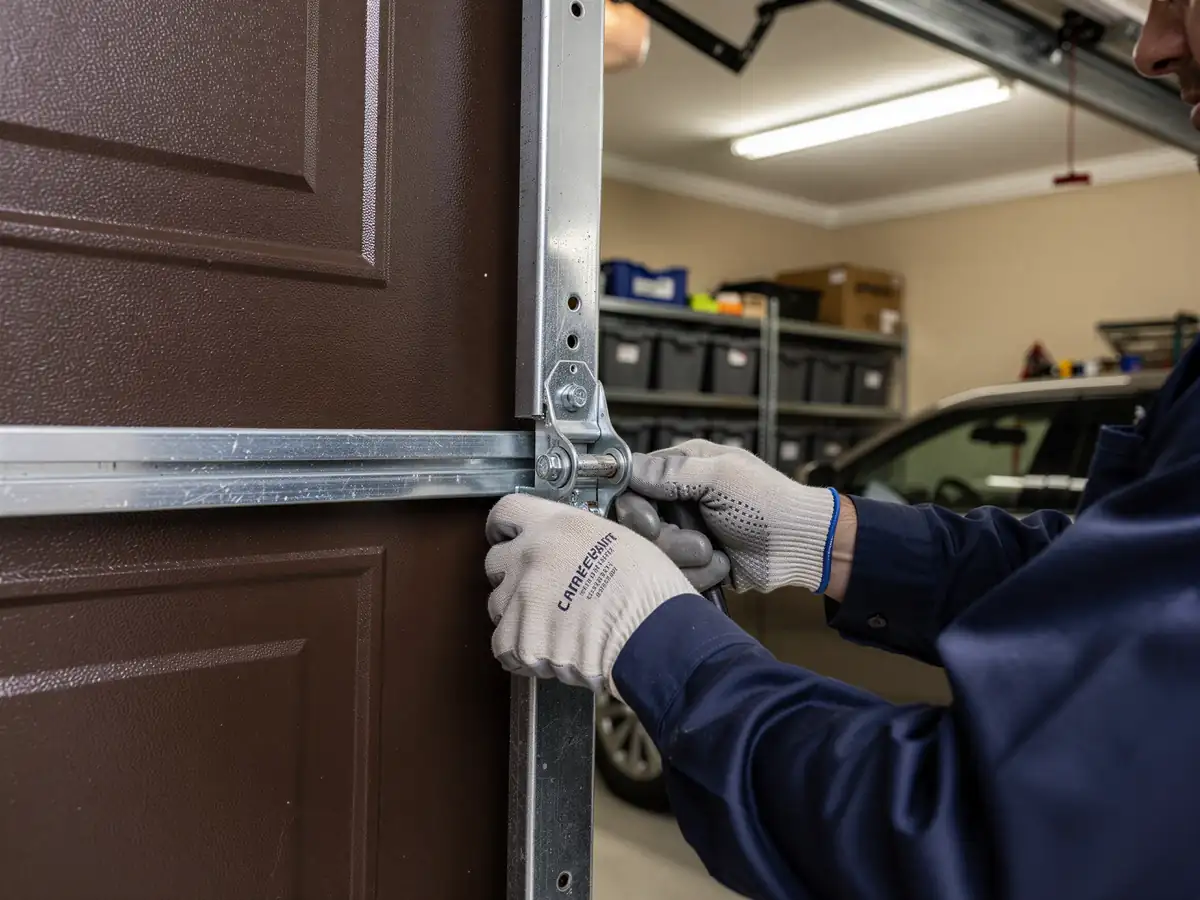
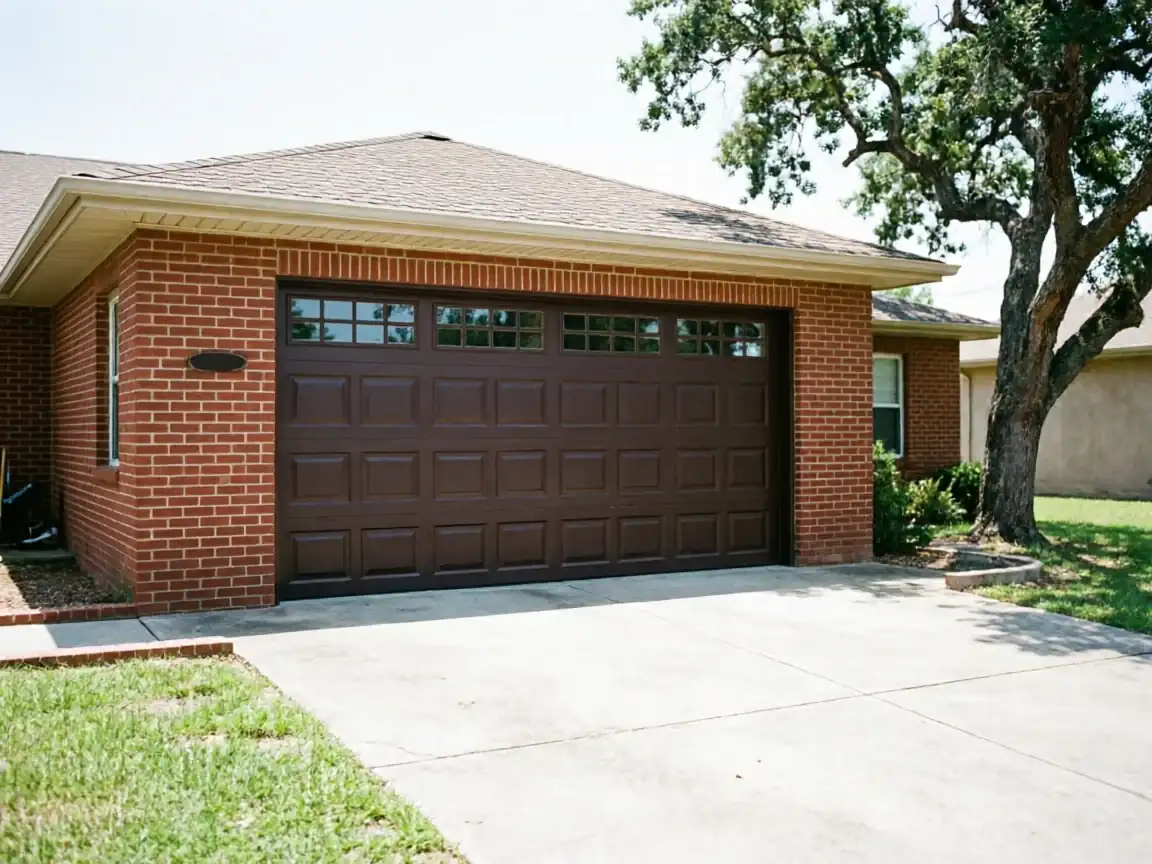
Most Little Flock doors we see are the steel sectional panel type standard to houses built from the late 1980s onward, run on extension or torsion springs depending on when the garage was built. A torsion spring job means unwinding the old spring with winding bars, pulling the shaft, fitting the new spring rated to the door's weight, and resetting the cable drums so the door travels level. That's an hour's work done right, and it's not a job to rush.
On openers, houses from the early 1990s often still run the original chain-drive unit, sometimes with the logic board replaced once already. If the opener itself is the failure point, we'll tell you straight whether a new logic board is worth it against a new opener, rather than stacking repair costs on a motor that's near the end of its life anyway.
One limit worth knowing: if a part is obsolete for a door this old, there can be a wait on it. We'll give you that lead time up front instead of promising same-day on a part we don't have in hand.
The Symptom
A door that reverses before it touches the floor usually points to a misaligned photo-eye or a travel-limit setting that's drifted
Common on openers that have been running since the house was built. A door that's suddenly heavy to lift by hand, or that drops fast the last foot, is a spring problem, not an opener problem, and it tends to show up without warning on houses in this build-year range because the original spring is simply reaching the end of its cycle count.
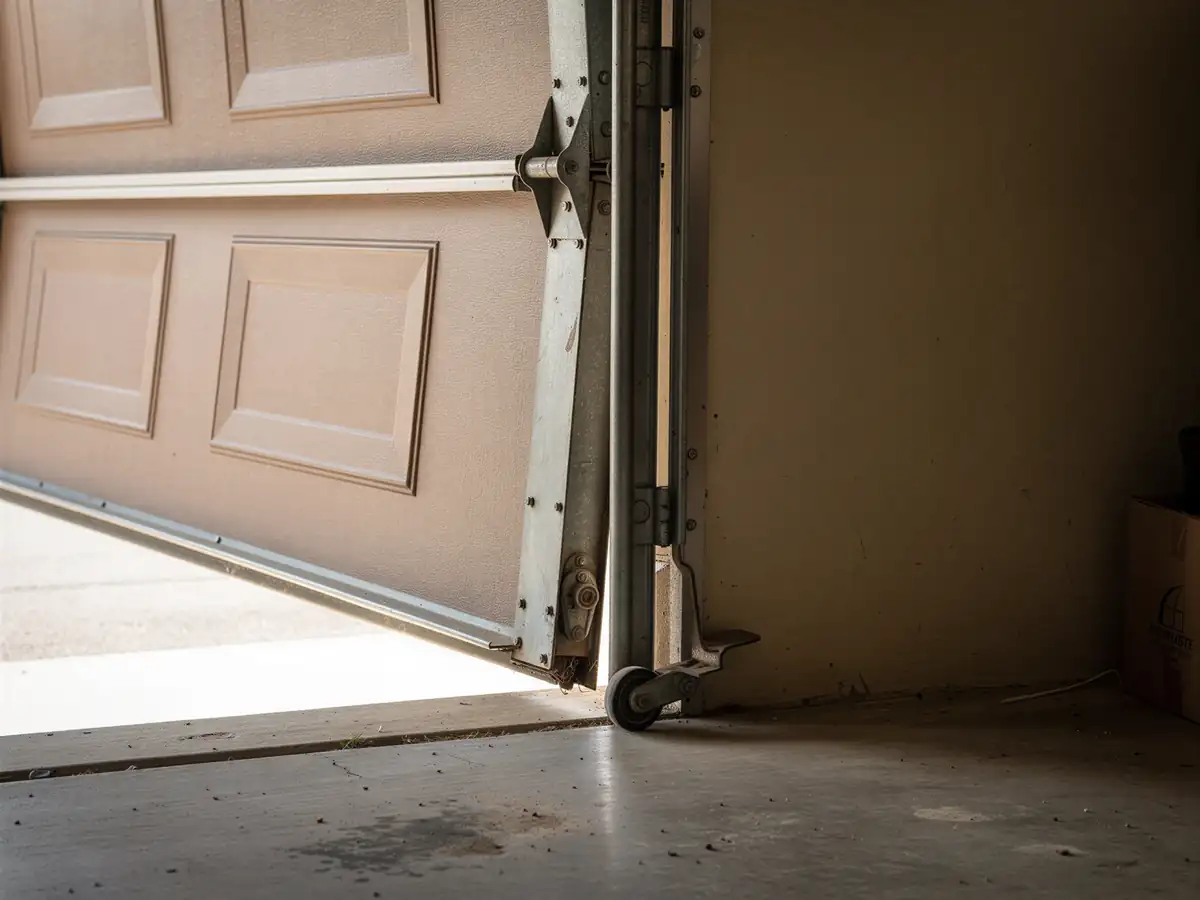
Grinding or a loud bang followed by the door refusing to move is almost always a broken torsion spring
Don't force the door open with the opener in that state; it can bend the track or strip the drive gear. A door that opens but won't fully seal at the bottom, letting in cold air, usually means the bottom seal or the track alignment is off rather than anything structural, and it's worth fixing before winter rather than after the first cold stretch.