The Symptom
Lowell's housing stock is younger than most of the Rogers service area
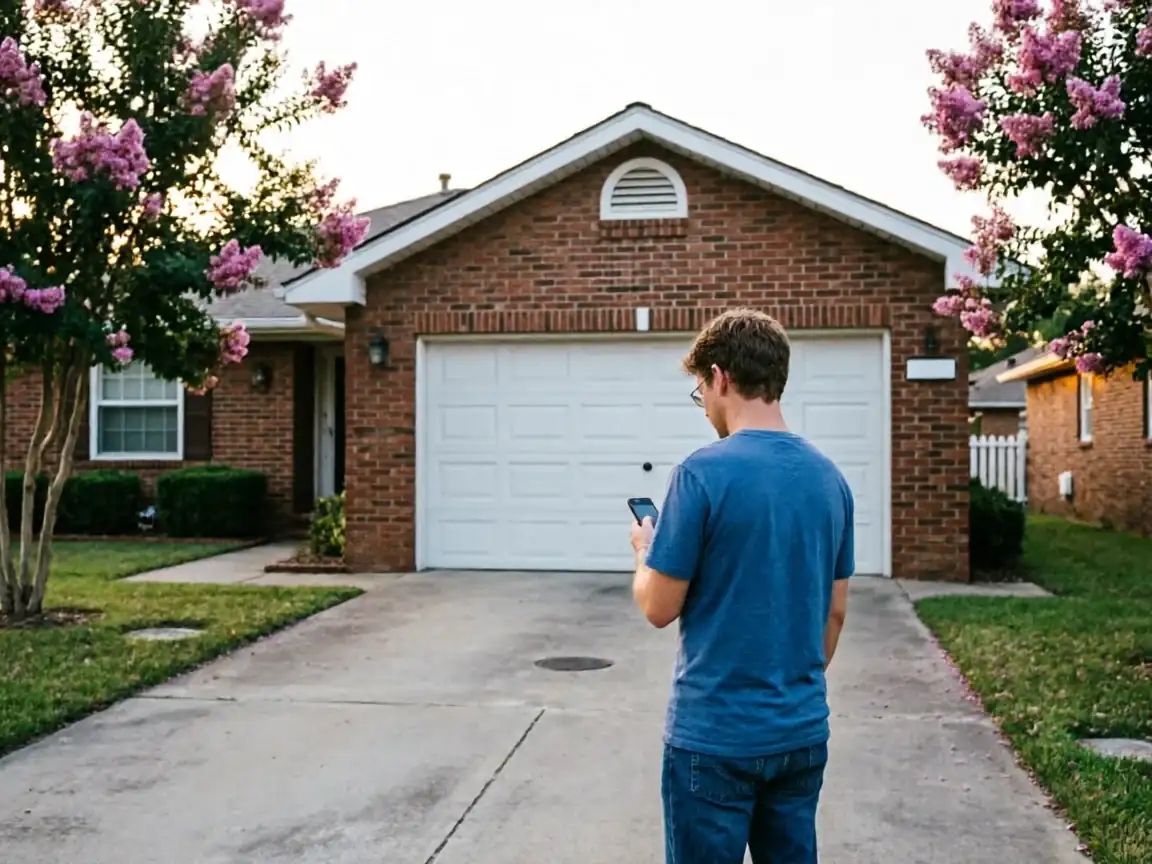
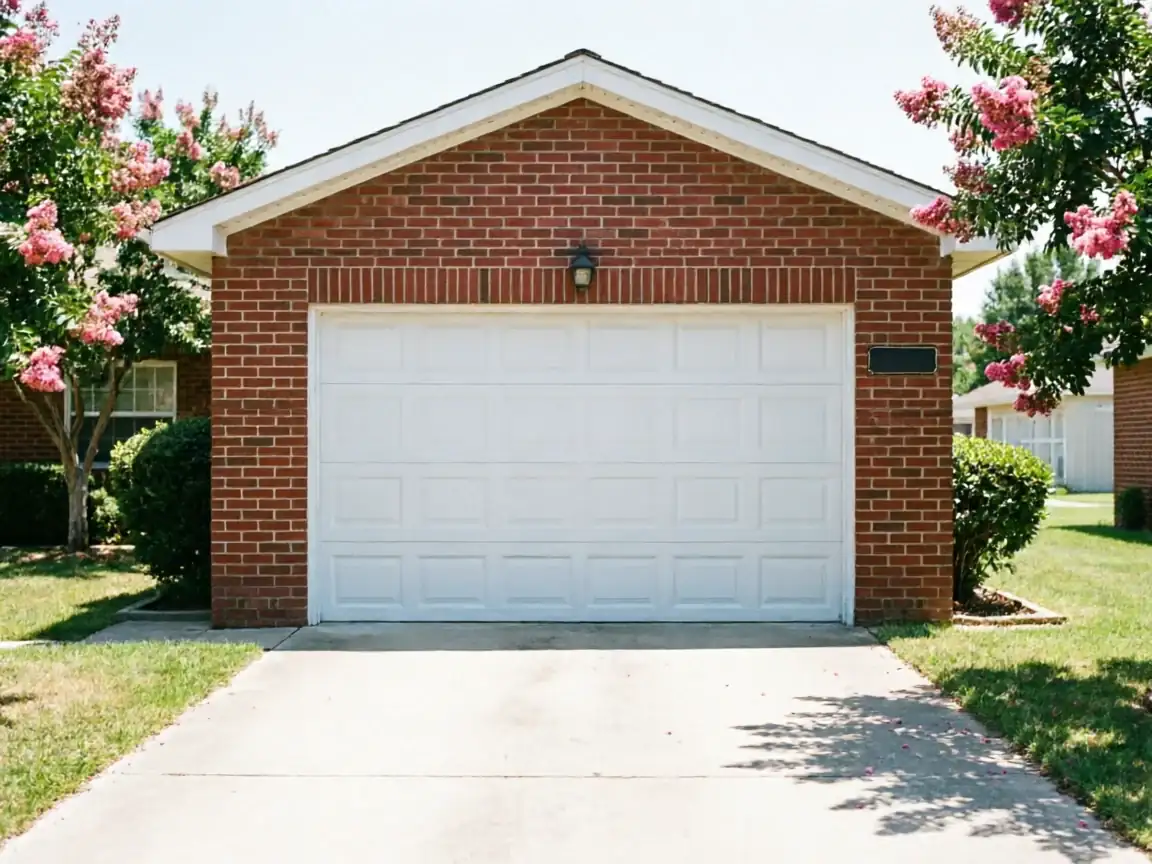
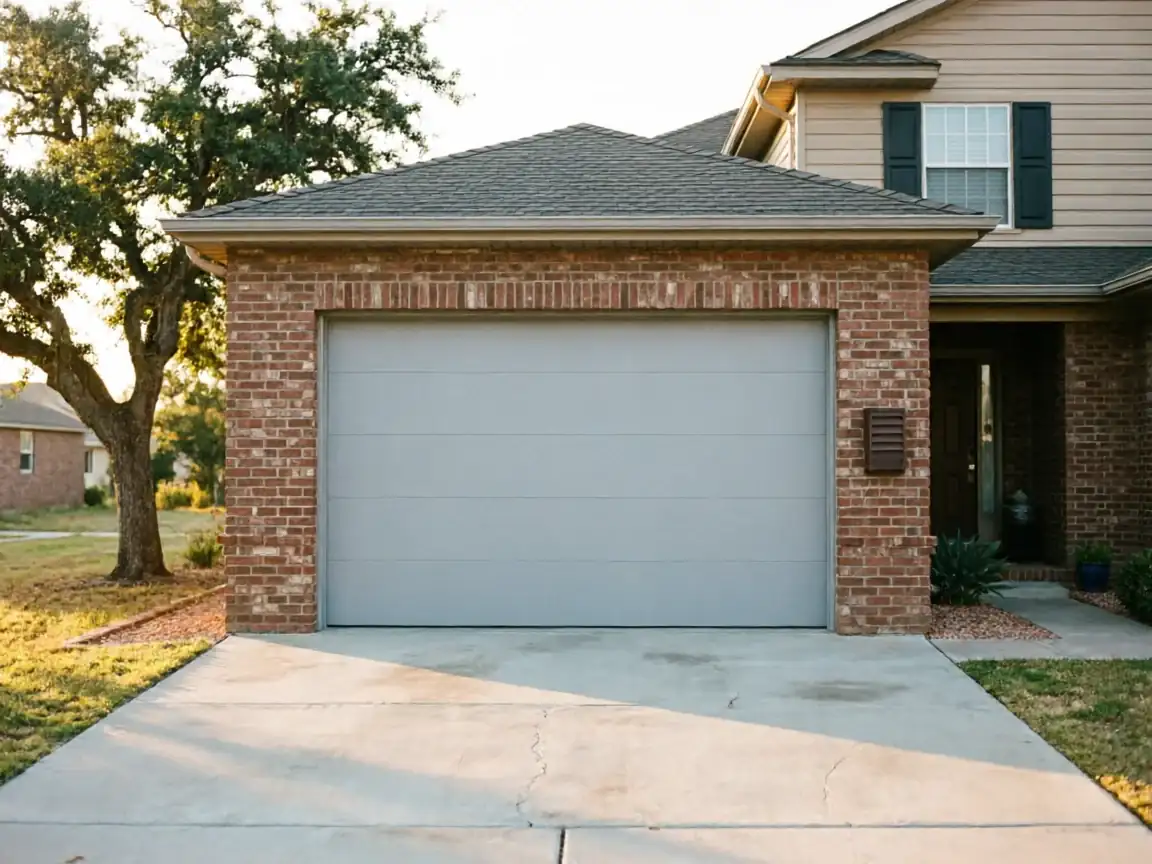
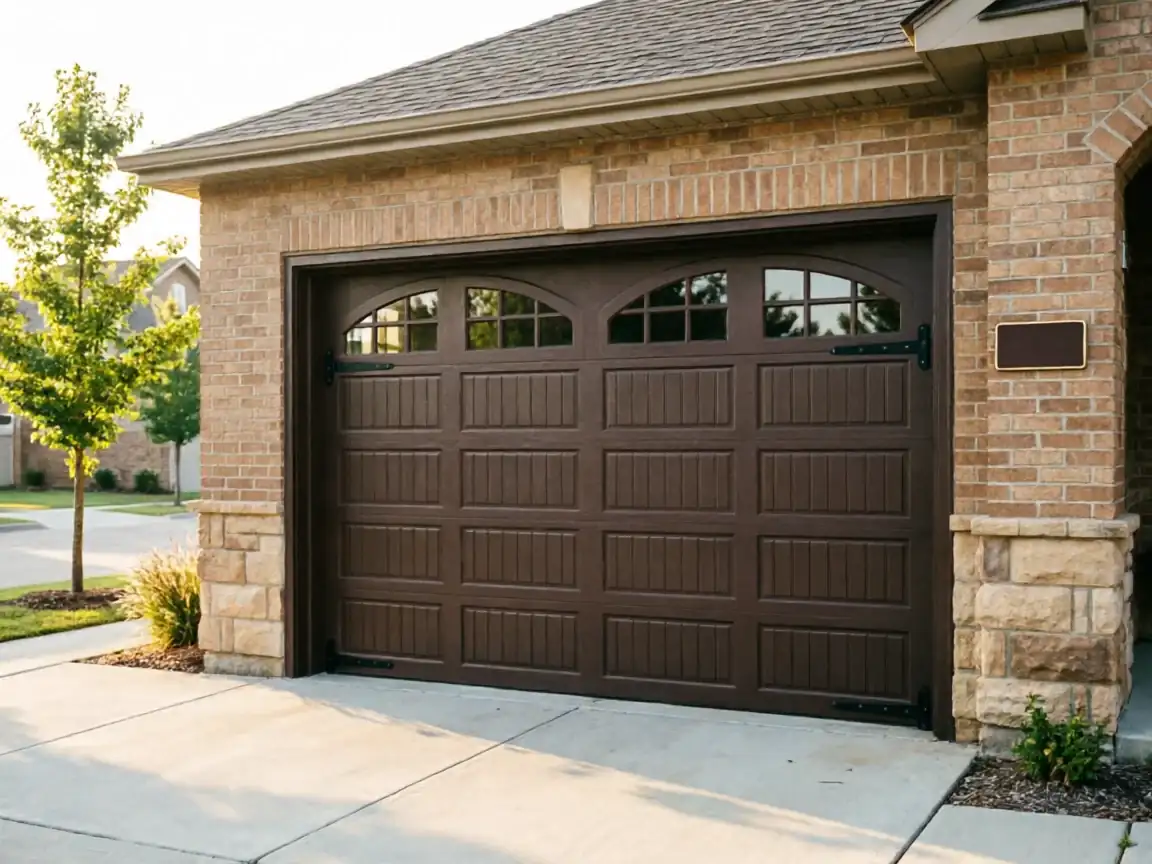
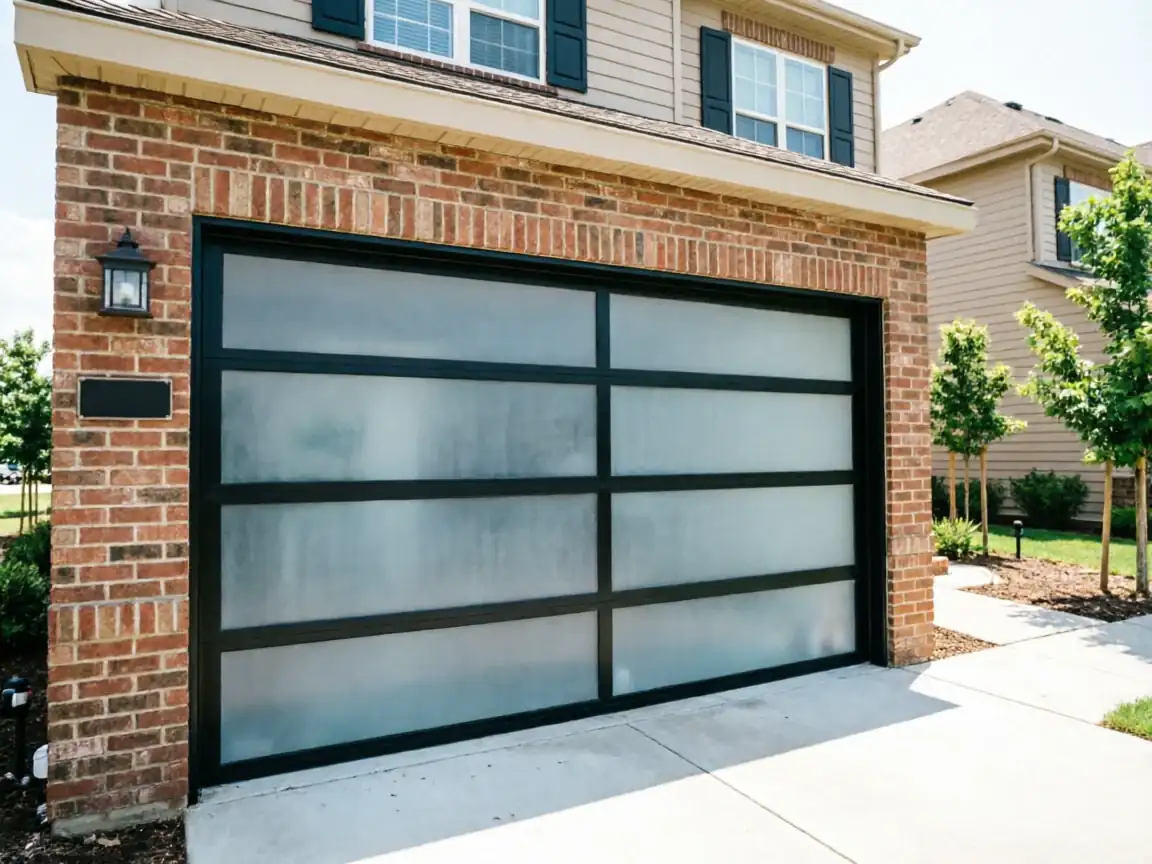
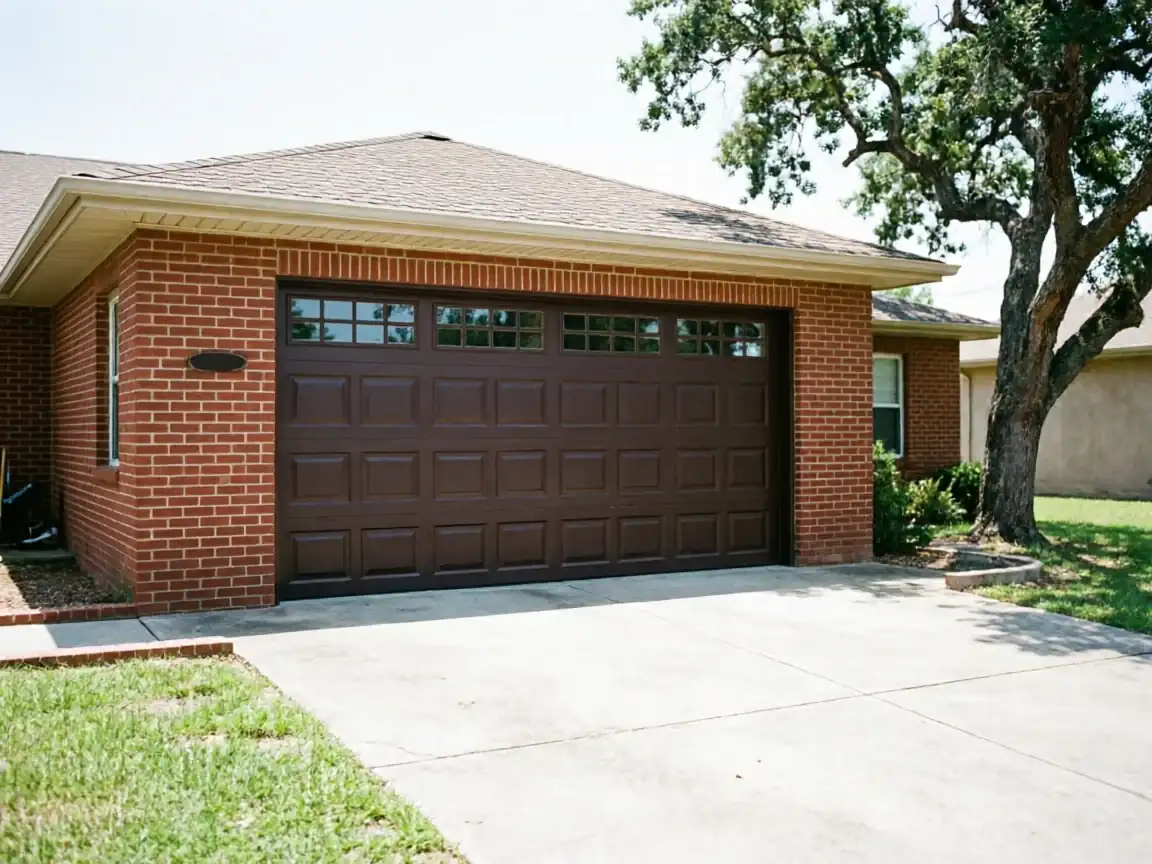
The median home here was built around 2001, a good decade past the 1997 median across the wider area. That matters for off-track calls, because it means the track and rollers bolted to most of these garages have never been swapped out. They're original to the house, pushing twenty-plus years of use on the same hardware, and galvanized track brackets loosen slowly over that span even without a hard hit.
The symptom shows up the same way it always does
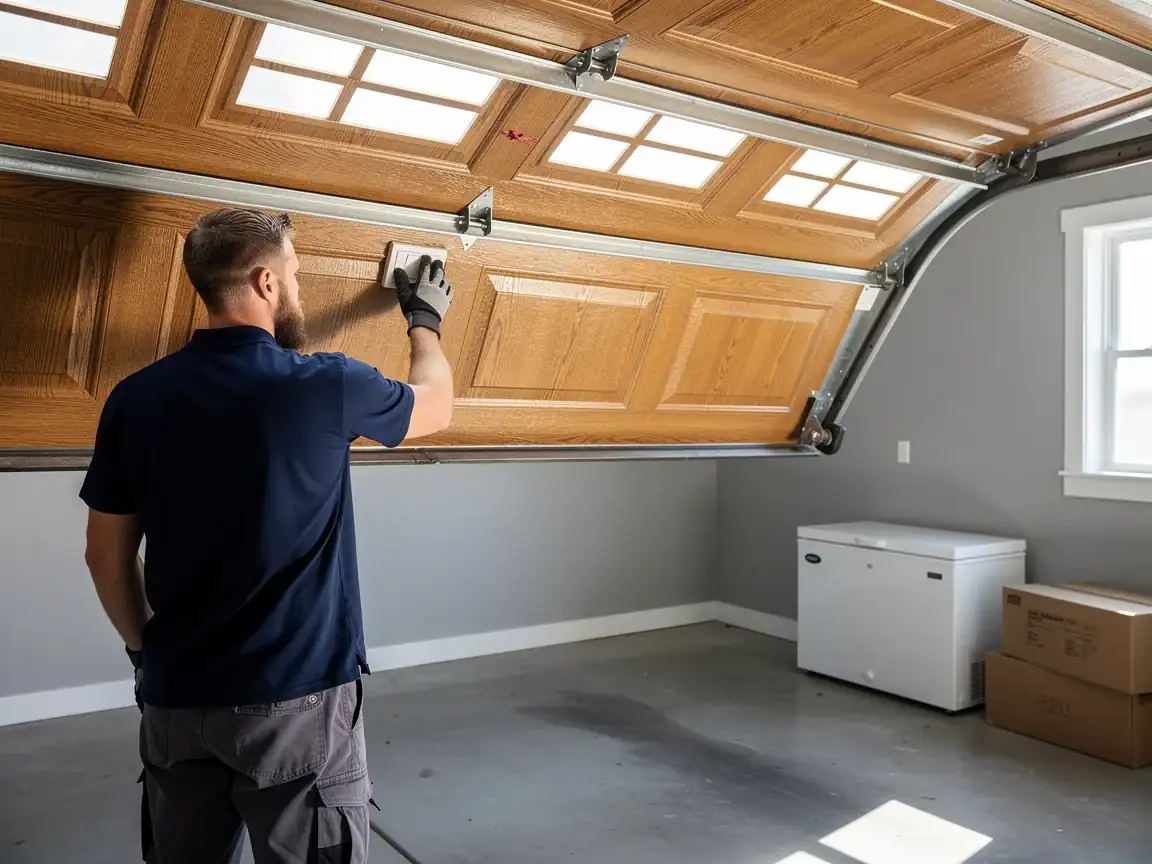
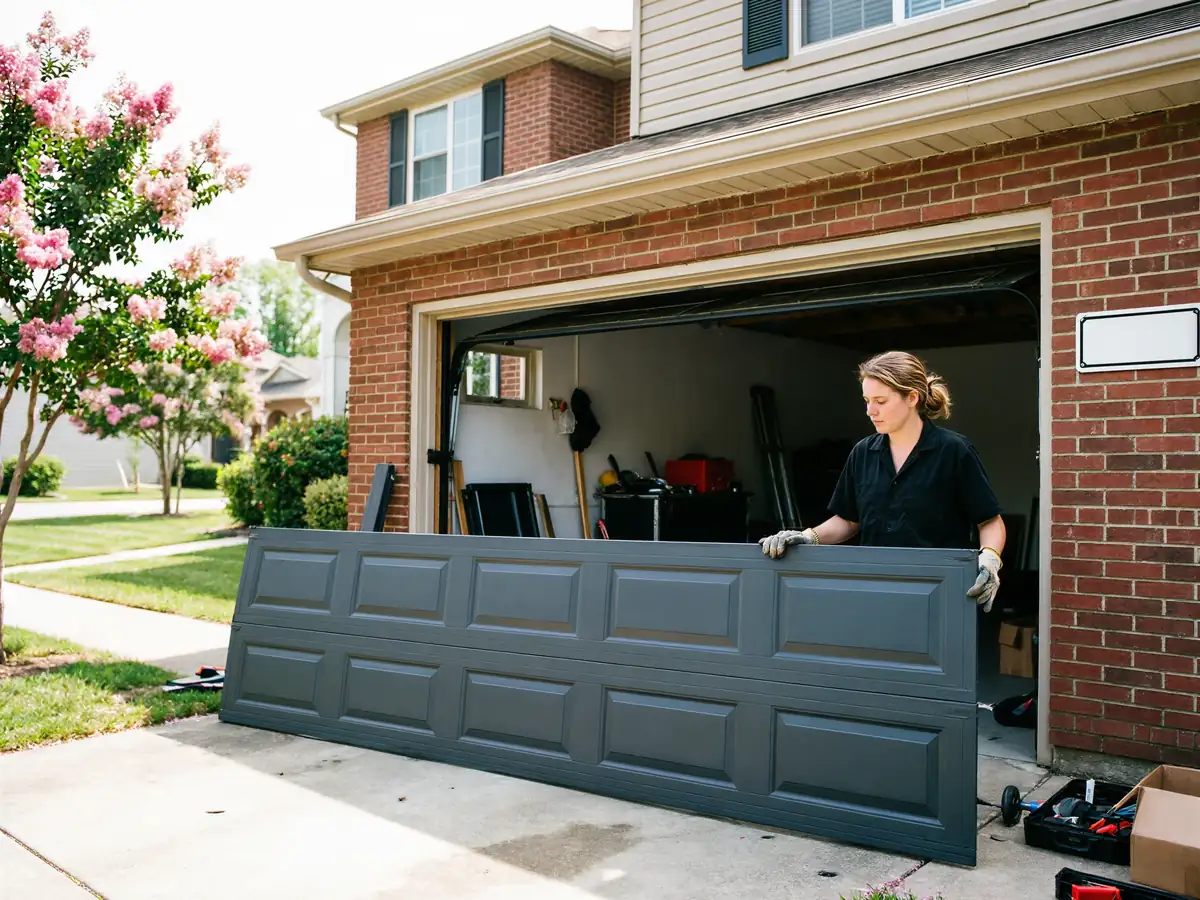
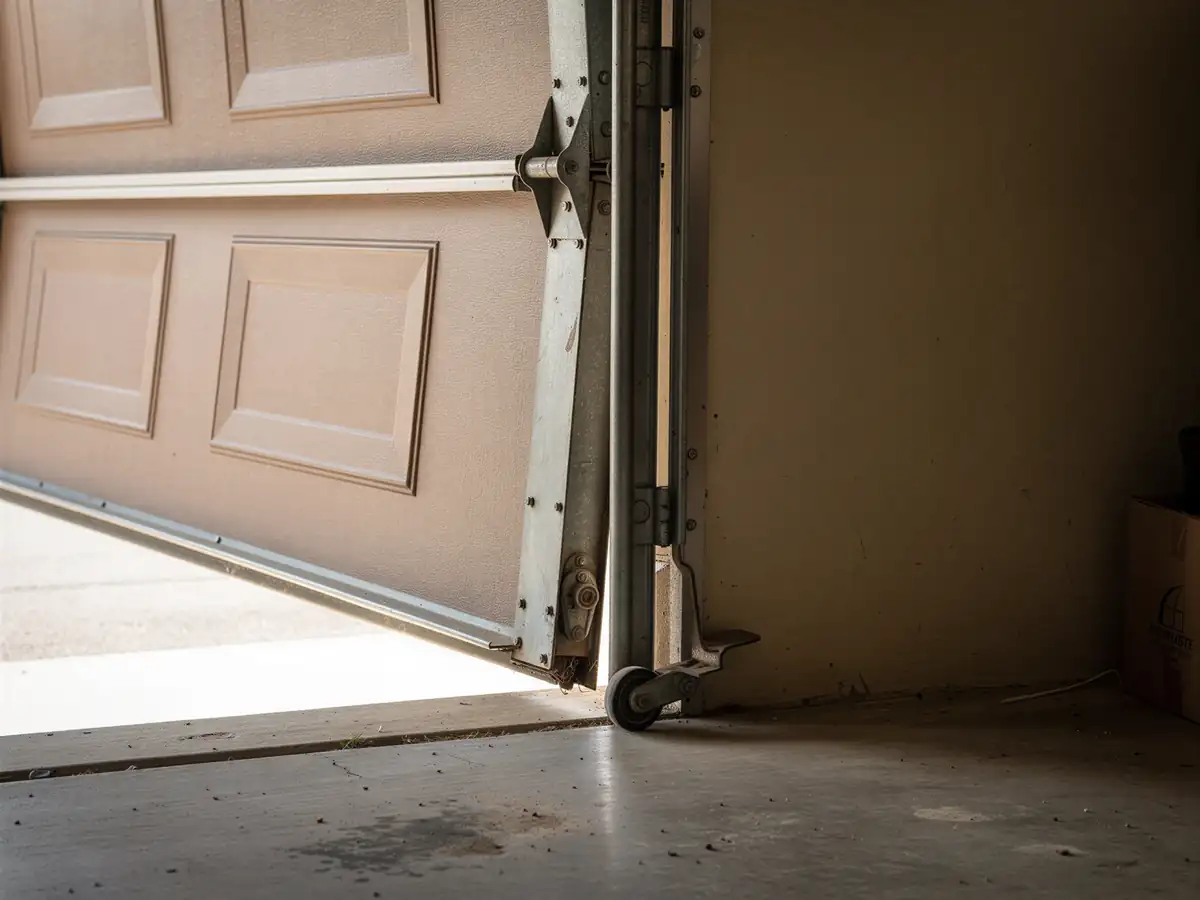
The door hangs crooked, one side rides higher than the other, or it stalls partway and won't move without grinding. Sometimes a car bumper clips the bottom panel and knocks the roller clean out of the track in one shot. More often in a neighborhood this age, it's a slow drift - a bracket that's worked loose a little more each month until the roller finally walks off the rail.
Either way, don't keep hitting the opener button
Running the motor against a door that's off its track puts stress on the opener's drive gear and can bend the track further, turning a bracket tightening job into a track replacement."
The Complications
On a door this age, the off-track roller is rarely the whole story. Houses built in the early 2000s around Lowell commonly have the galvanized steel rollers and stamped track that were standard then, not the sealed nylon rollers you'd see on anything replaced in the last ten years. When one of those old rollers finally fails, the track it's been riding in for two decades has usually worn a groove to match the old roller's wear pattern - so a straight swap-in of a new roller can bind without matching track work.
The cold winters in this part of Arkansas add a second wrinkle. Metal track contracts in a hard freeze, and a bracket that was borderline loose in October can let go entirely in January when everything's shrunk a hair tighter. That's often when we get the call - not because anything dramatic happened, just because the slack finally ran out.
If the door's been run off-track for more than a day or two, check the panels for new dents or a cracked stile. Continued operation off-track is the most common way a simple bracket fix turns into a full section replacement.
Doing It Yourself
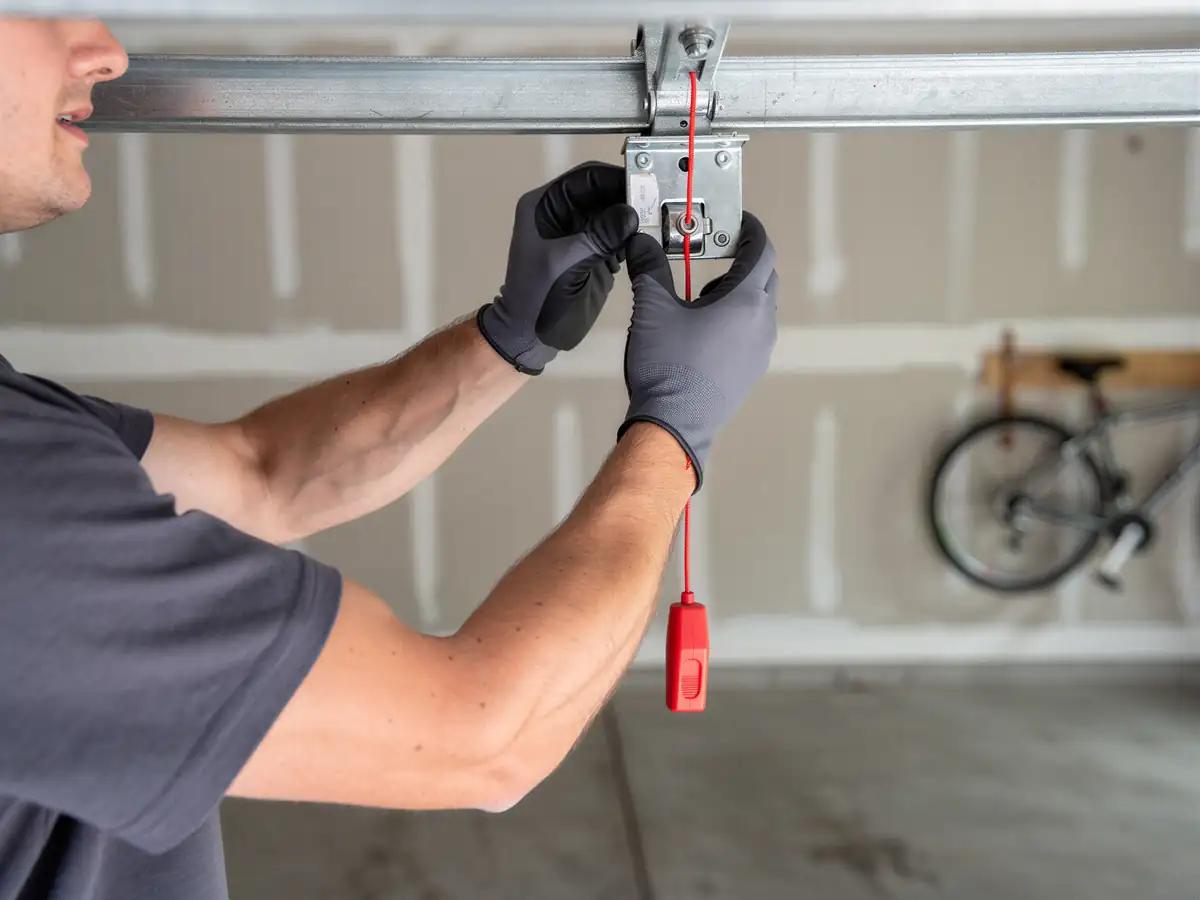
If the door is only slightly off at one roller and the opener is disconnected, you can sometimes walk the roller back into the track by hand with the door manually lifted a few inches. That's the limit of what's safe to try yourself.
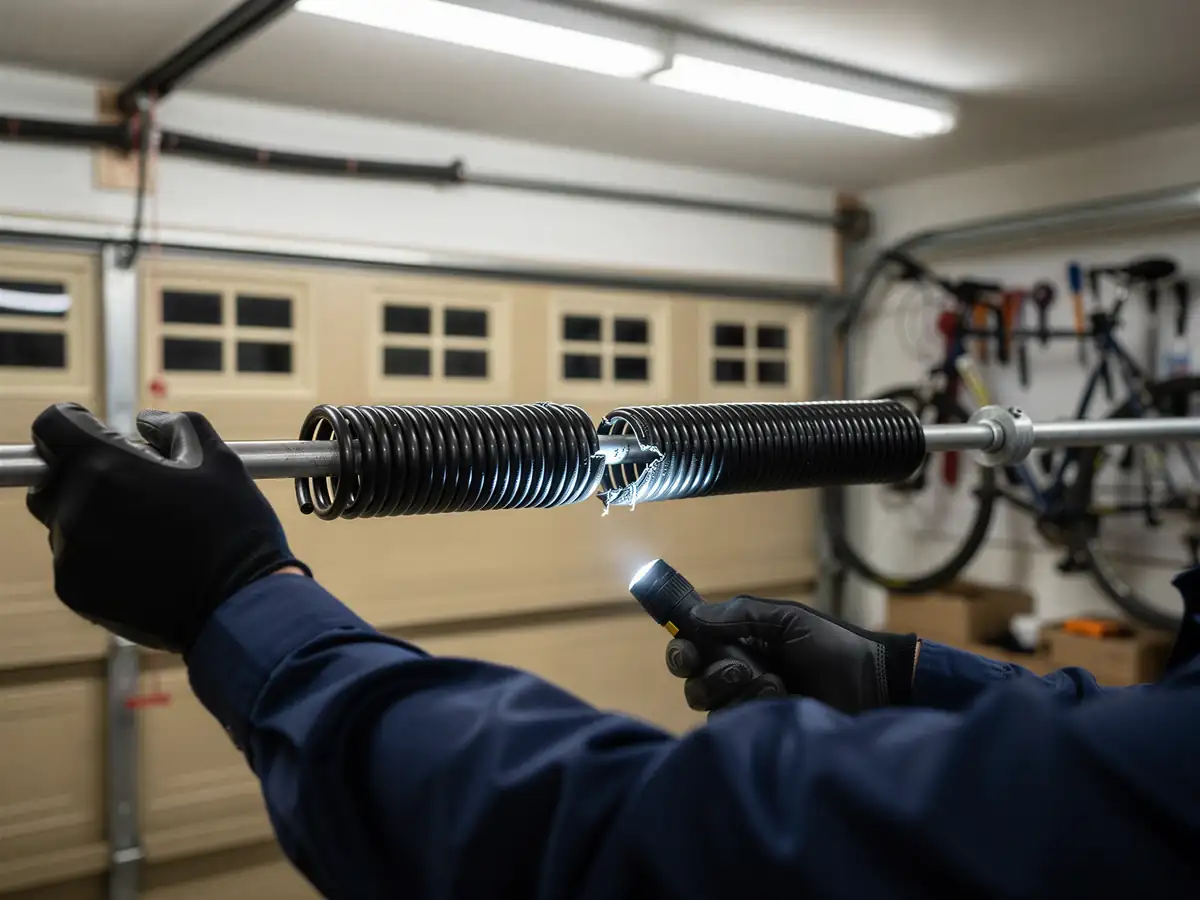
What you shouldn't do: force the door with the opener still engaged, or try to re-tension a torsion spring to get slack out of the system so the door sits level. Springs on a door this age are original too, and they're wound under enough force to cause serious injury if a bracket slips while you're working near them. We don't walk customers through spring adjustment over the phone, and any shop that does isn't doing you a favor.
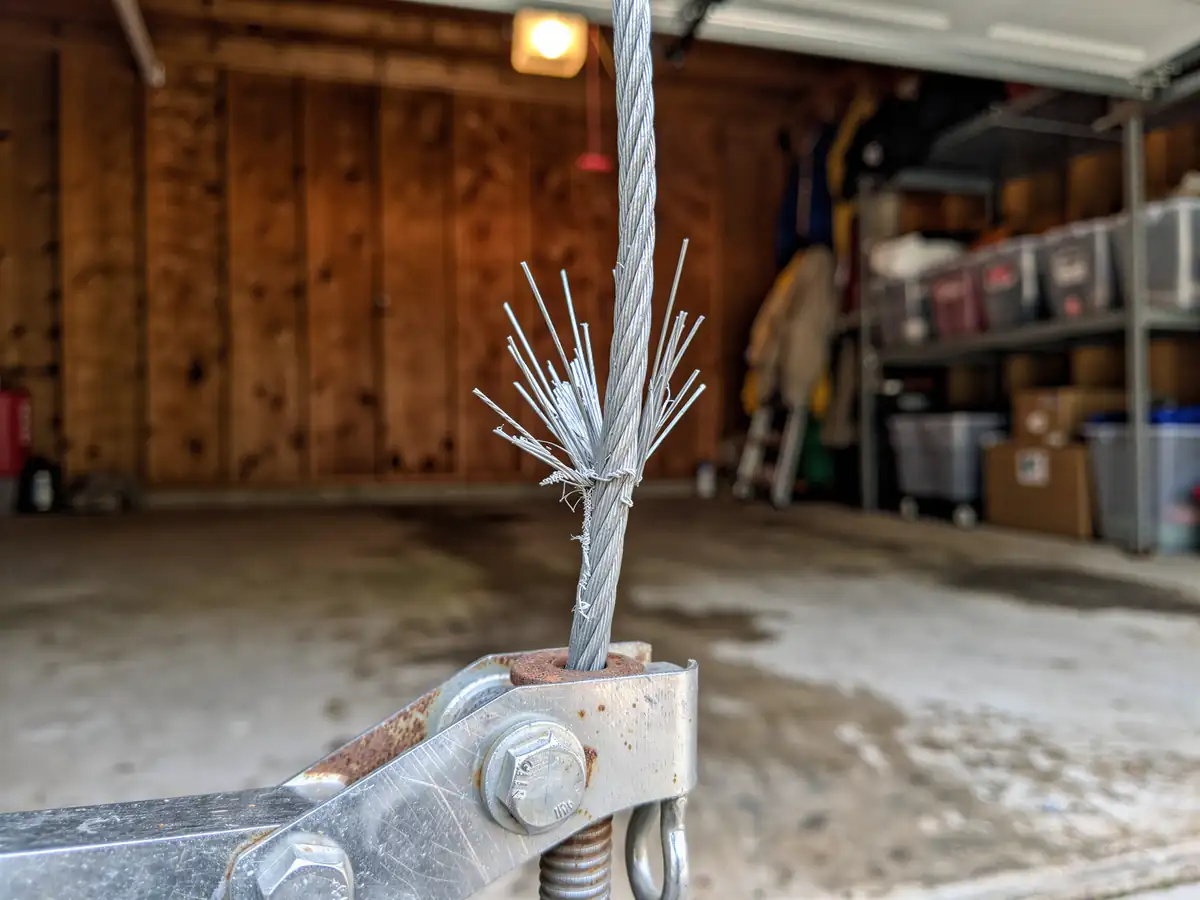
If the door won't move at all, or if a cable looks frayed where it met the drum, stop and call it in rather than working around it.
The Cost of This Job
We don't have a flat number to post here
Because off-track jobs split pretty evenly between a twenty-minute bracket tightening and a half-day track-and-roller replacement, and the only way to know which one you've got is to look at the door. What we can tell you is what drives the difference: whether the track itself is bent or just the bracket holding it has worked loose, and whether the rollers are original steel or have already been upgraded.
Households in this area run a median income a bit above the wider Rogers service area
Which is a factor insurance and warranty terms sometimes ask about but doesn't change what the repair itself requires. We price the job on what's actually wrong with the door, not on the neighborhood.
What the Fix Involves
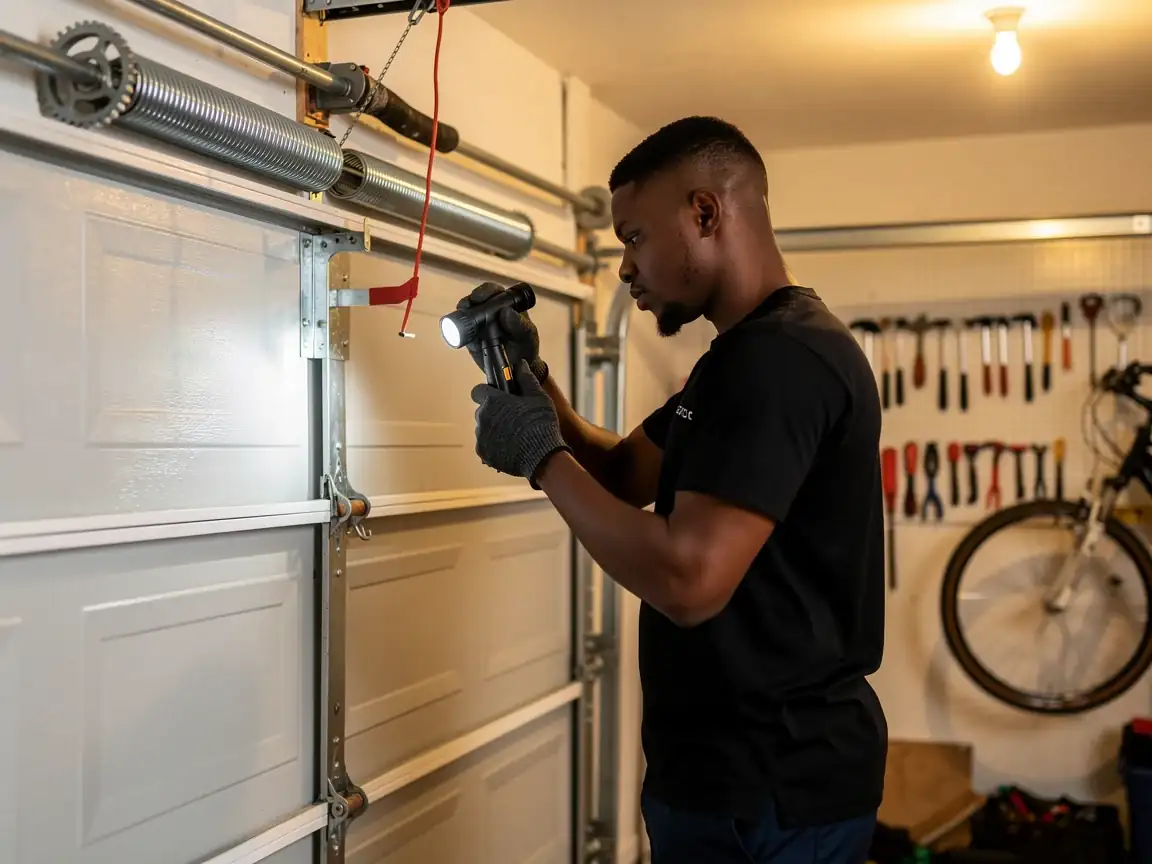
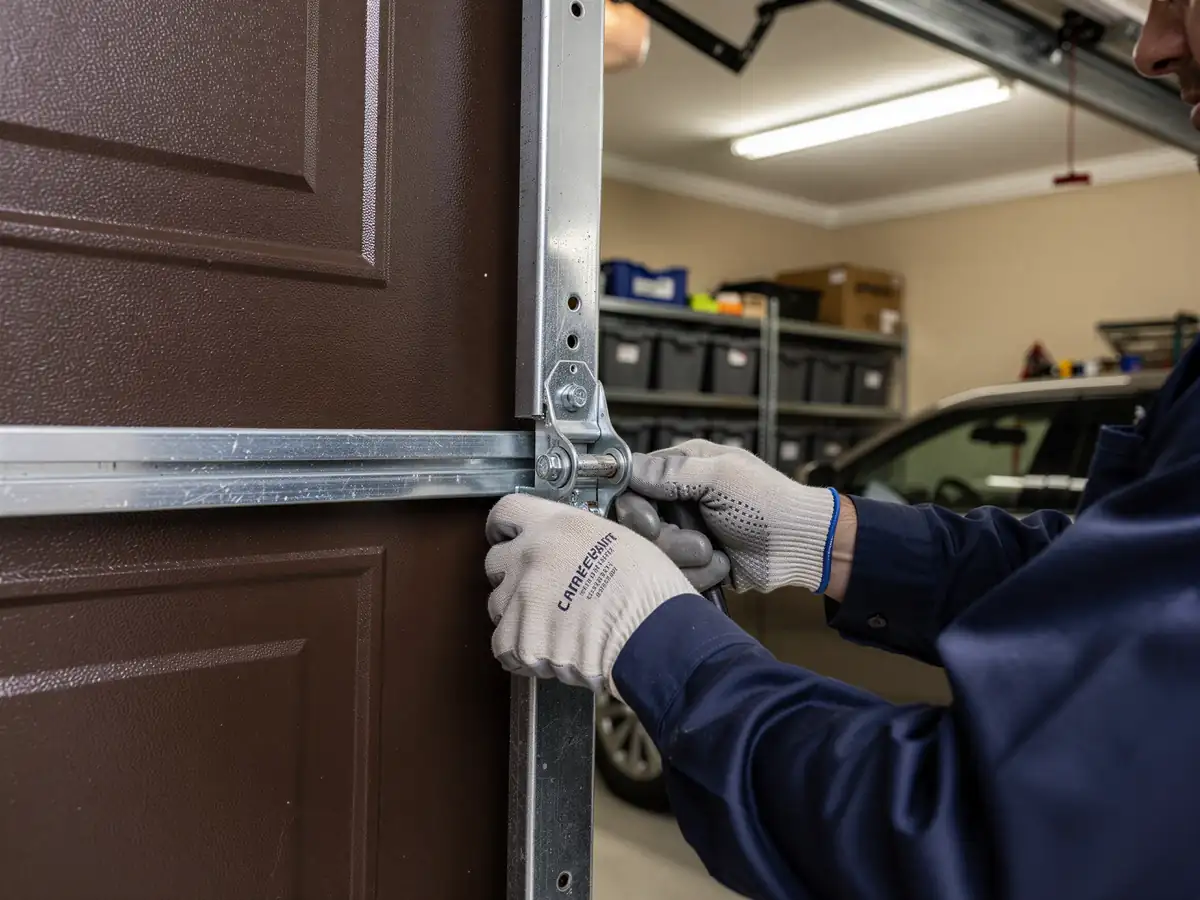
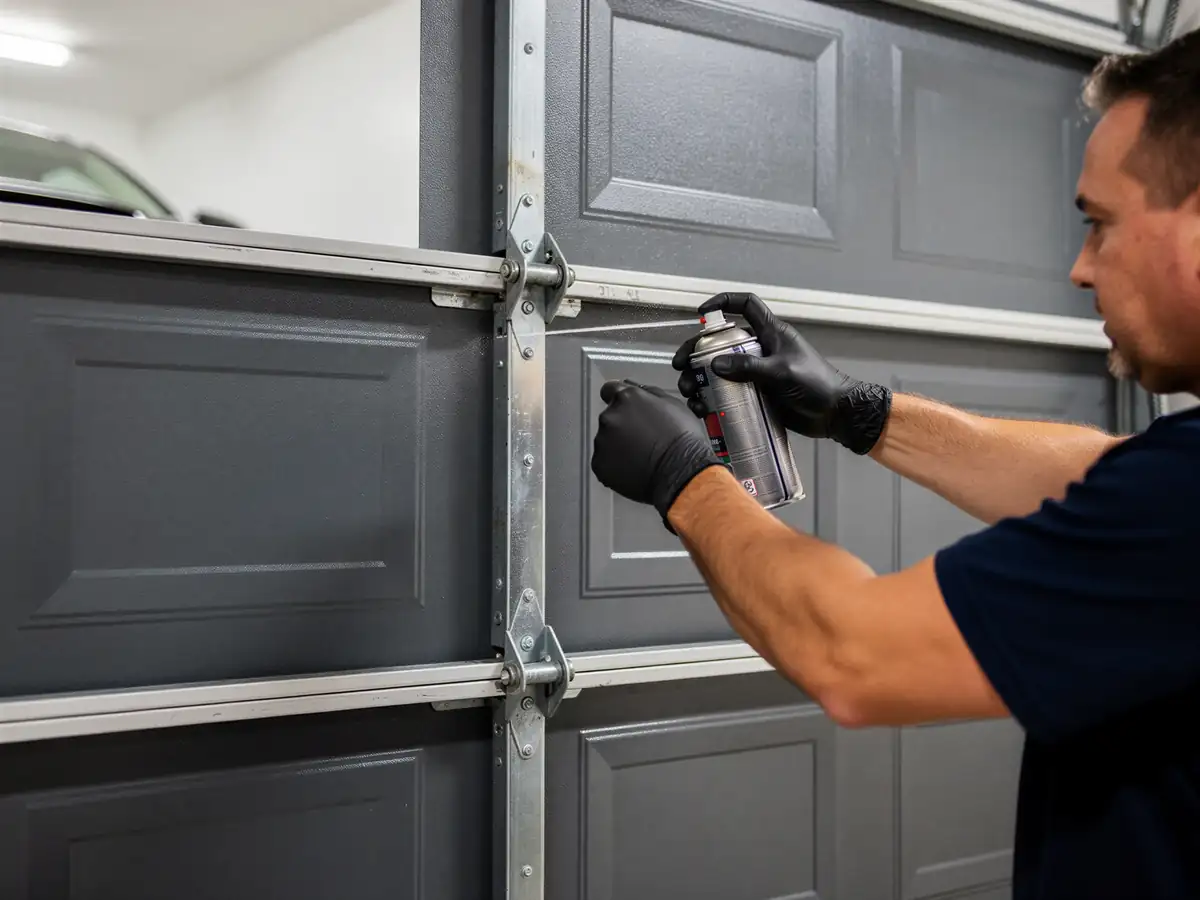
We start by cycling the door manually to see where it binds, then check every bracket along the vertical and horizontal track sections for play before touching the roller. On a house from this era, we expect at least a couple of loose lag screws just from two decades of door-open vibration, even on doors that have never been off-track before.
If the track is bent, it gets replaced in that section rather than hammered back straight - a straightened track looks fine but rarely holds true for long. Original steel rollers that have gone this far usually get swapped for sealed nylon ones while we're in there, since the labor to access them is the same either way and nylon won't gouge the track the way old steel does over time.
Last step is re-leveling the door and running it through a full open-close cycle under opener power to confirm it tracks straight before we leave.